Mary Medlicott, Storyteller and Author - Storyworks

Archive for the ‘Folktales’ Category

Storytelling Starters ~ In need of sunshine

Saturday, October 24th, 2015

Sniffle …snuffle … sneeze. Snuffle … sniffle … sneeze. I’ve had a horrible cold. I’ve still got a horrible cold and it has made me remember a Kenyan story I once came across which I’ve always enjoyed telling to children.

P1010187A Kenyan story: In search of Sun

There was once a boy called Kabebe (though in Jan Knappert’s African Mythology, he’s a man and not named).

Kabebe’s family always had colds. His brothers got colds, his sisters got colds, his mother and father kept getting colds. So one morning early, Kabebe got up (too many sniffles and snuffles around him to sleep?) and, standing by the door of his house, he saw the sun climbing up into the sky. It seemed to rise from a far-distant mountain (imagine the colours, imagine the sight).

‘I’d like to find that mountain,’ Kabebe said to himself. ‘I’d like to see where the sun rises from and I’d like watch as it goes into the sky.’

Without any ado, Kabebe set off. (Imagine the journey – a river with crocodiles in it? Another river with very strong currents? Night falling and the sound of hyenas?) By the time Kabebe reached the bottom of the mountain he’d been aiming to find, the day was over and night was falling. He settled down to try and sleep. (Noises he heard? The fears that he felt?)

As day was returning next morning, Kabebe woke and started climbing the mountain. But by the time he got to the top, the sun was already way up in the sky. (Disappointment?) Yet there on the top of the mountain, what do you think Kabebe saw? A golden palace! (Big? Glowing? I’ll leave the words to you.)  (more…)

Storytelling Starters ~ A Stitch in Time

Saturday, September 26th, 2015

Sewing boxOK, I admit it, I’ve been darning. It’s not a fashionable thing to do. But when warm clothes come out of storage as winter hoves into view, that’s when you spot the frayed ends and the tears – and also in my case the moth holes, moths being a plague in South London.

Hence the darning. It’s something I was taught as a child and, to be honest, I enjoy it. It’s satisfying, it saves on money and shopping and it makes me love my clothes all over again.

Yesterday while sitting darning in a spot of sunshine, I was reminded of the story below. But it wasn’t only the darning that brought it to mind. Among my emails had been a message from someone who’d come on a storytelling course of mine ages ago. I recognised her name as it popped up in my Inbox. We’d exchanged emails for a while after the course was over because she’d wanted to tell me how much she was enjoying becoming a storyteller to children in the school where she worked. And hey presto, she’s still doing it! Her message this week lets me know how much the storytelling means to her following some personal troubles she’s suffered. She describes it as ‘healing’.

No wonder today’s story about a sewing box popped into my mind. I’m fairly sure it wasn’t one that we did on the course she attended. But it’s one I’ve often told to Primary children – sometimes with the effect that afterwards I’ve heard that they’ve been sewing story-titles too!

The story: A Stitch in Time (more…)

Storytelling Starters ~ Signs and symbols

Saturday, September 12th, 2015

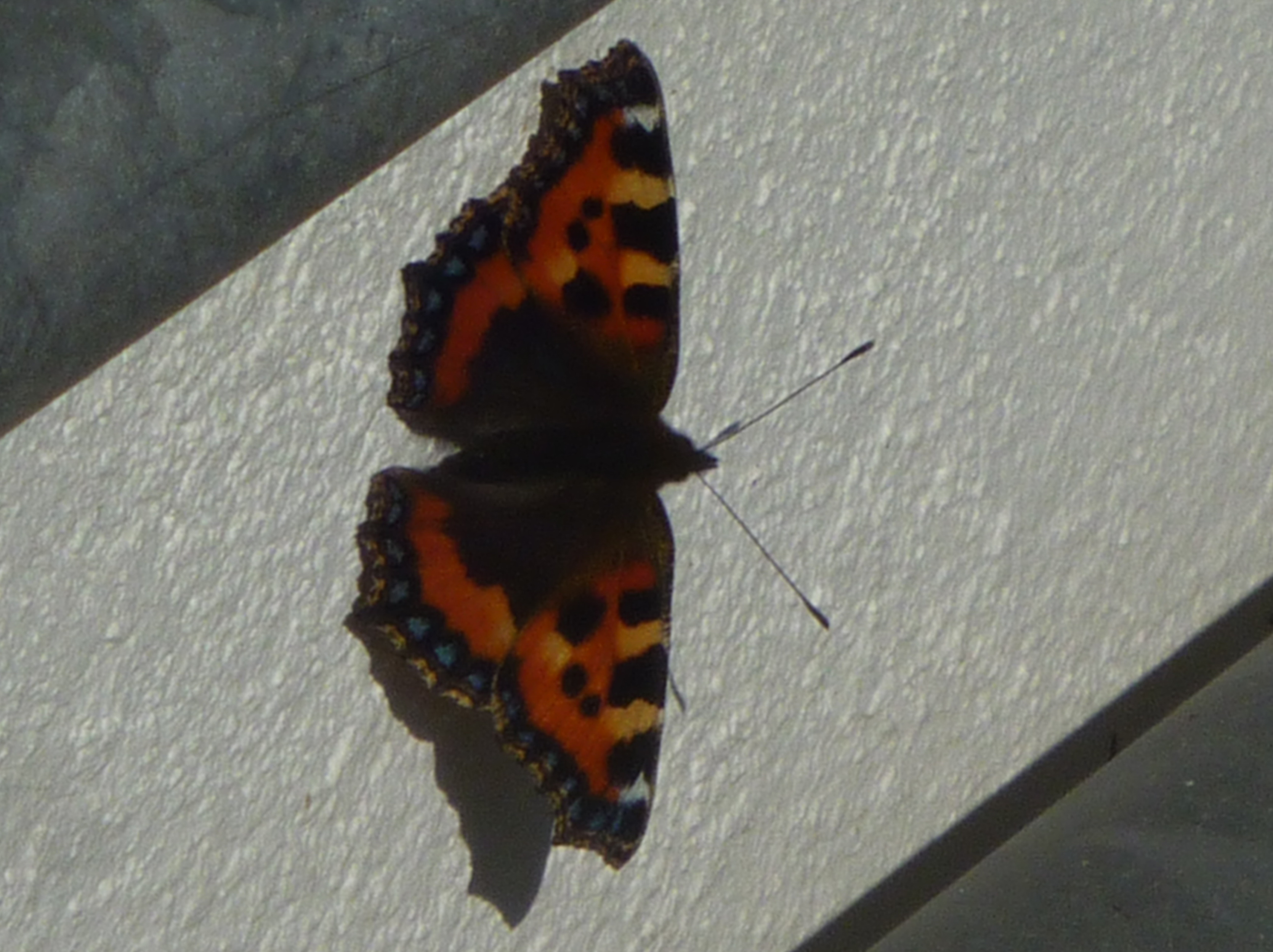
Butterfly artYou may well remember the story. Or perhaps you’ll have retained just some essence of it. Often entitled in print, The Soul as Butterfly, it’s an Irish tale which  I’ve recounted in this blog before. It seems to me to encapsulate something about the kind of symbolism I talked about last week.

A story worth knowing:

A butterfly emerges from the open mouth of a man who lies asleep in a field. His companion who has just woken sees it and, astonished, follows as it flies towards the stream that runs beside the field, then through the reeds that grow at the water’s edge until it comes to a place where the branch of a tree has been placed over the stream to make a crossing.

In its hazy-dazy way, the butterfly flies across the stream and the man who’s been following it follows there too until it reaches a skull that’s lying, whitened, on the ground. The butterfly alights on what must have been the forehead of the creature whose skull this was (it looks like the skull of a horse),  then enters through one of the holes where the eyes would have been. After a long pause, it re-emerges and, in the same hazy-dazy way, makes its way back to the sleeper who still lies prone in the field. Suddenly it’s gone. Now the sleeper’s companion can’t be sure if it’s gone back into his friend’s mouth. What he certainly experiences is his friend awaking, sitting up and saying, ‘I’ve had such a marvellous dream.’ (more…)

Storytelling Starters ~ The Uses of Ambiguity

Saturday, September 5th, 2015

P1070080In the depths of the ocean lived a king. (What was his name? I don’t remember.)

The king longed for company. He lived all alone. (Had he ever had a wife or children?)

One evening as he rode out on one of his tides, the king became aware of sweet sounds of music and, looking up at a house by the sea, he saw two lovely young women sitting in the firelight playing their harps. 

A longing grew in the heart of the king until one late evening on a high Autumn tide, he rode out of the sea on his finest white horse, rushed to the girls’ house and snatched them away together with the harps they were playing. (Were the girls alone when he did that? What were they called?)

When the king of the ocean had brought the two girls into his palace beneath the waves, they first felt fear, then became very sad. They missed their home. They missed the bright light of day. The king of the ocean would ask them to play him their music, but the music they made for him lacked any joy.  

After much sadness and pleading, the king of the sea knew this couldn’t continue. He must show pity. He must listen to the two young women he’d seized and return them to their home on land. But when his white horses brought them in from the sea, just as they stepped onto the land, they changed. (Did the king of the sea command that to happen? Or did the pity that the girls felt for him play a part?)

As they stepped out of the sea, the two lovely girls became transformed.  (more…)

Storytelling Starters ~ The Light of an Eye

Saturday, August 15th, 2015

P1070330My photos this week are of a carved head. But it’s painting that’s on my mind as I write. For when I’ve  posted this, I’ll be going to look at a painting.  A message about it arrived this week from the owner of an art gallery in Fishguard, the town where I spent the first fourteen years of my life. He is in the process of selling a number of works by Elizabeth Cramp, a very fine Fishguard artist who achieved a good deal of success while she lived. As he told me in his email this week,  the works of hers that he is now selling include a painting of my Aunty Mali.

Aunty Mali was a considerable influence in my life. A friend of my parents rather than an actual relation, she was a personality, a music teacher, a choral conductor,  a traveller and, wherever she travelled, an informal ambassadress of Wales and Welsh culture. She was also a redoubtable storyteller with innumerable stories to tell. After her death, Aunty Mali became the subject of my storytelling piece, Travels With My Welsh Aunt. It was my tribute to her. When I performed it in Fishguard, the same art-gallery owner, Myles Pepper, who’s now selling Elizabeth Cramp’s  paintings was the organiser of the occasion.

So when I get to Myles’s gallery,  I’ll see ‘a very fine watercolour painting’  which I didn’t even know existed. What will its impact be? Aunty Mali has been dead nearly twenty years. I have many, many photographs of her as well as boxes full of her papers. But a painting? Will it feel too powerful, as if she’s come back to life? Or might it be a disappointment by not being the Aunty Mali I knew?

The prospect is daunting. What will I see? (more…)

Storytelling Starters ~ The blackbird’s song

Saturday, June 20th, 2015

Know any stories about the blackbird? After racking my brain, I’ve concluded I don’t. But I’d like to. For this year, the blackbirds round us seem more beautiful than ever. With one pair out the front, one at the back, it feels like we’re surrounded by golden song – and it goes on from dawn to dusk. With some friends the other day, we all agreed. Yes, they said – and they weren’t all from round here – the blackbirds are especially brilliant this year. As good as the nightingale, two of us ventured. Maybe even better.

And that put me in mind of a story. You probably need no reminding. It’s the one about how the nightingale got its song. But at first it masquerades as the story of how the birds got their colours.

How the birds got their colours

P1060296One day long ago when the world was new, God sent a message to the birds to let them know that he’d soon be coming to give them colours. He even appointed a day and told them not to be late. The birds became very excited. On the day, they were ready and waiting, fascinated to know what these colours would be.

When God arrived with his suitcase, he got them all to line up. Then he opened his case, arranged his paints, picked up his brushes and began. You should have seen what he did – how beautiful he made them look and how different from each other in different combinations of reds and greens and yellows and blues.

After he’d finished, God was putting his things away when one little brown bird came hurrying up, all dishevelled and sad because he was late. God said he was terribly sorry: all his paints were used up by now, he had nothing left. When the little bird heard this, he was so distressed that God said he’d take another look just in case he could find a little something for him. ‘Ah yes,’ God said as he rummaged around. ‘Here is something, it’ll be just right.’

What God had found was a tiny spot of gold at the bottom of one of his pots. ‘Now open your beak,’ God told the little brown bird as he picked up the gold with one of his finest brushes. When the little bird’s mouth was open wide, God placed that tiny spot of gold right at the back of its throat. And ever since, that otherwise undistinguished little bird – it was the nightingale – has had gold in its song. (more…)

Storytelling Starters ~ A unique story

Saturday, May 23rd, 2015

P1070361In the Africa section of my boxes of stories, I have a file of stories from Benjamin Kipkorir, my Kenyan friend. They’re animal stories in the main, many about clever Rabbit, and they’re the stories Ben and his friends used to tell as children. In the evenings,  gathered round the fire with their elders, they’d rival each other to tell them and – as Ben put it – to tell them well. Ben gave them to me years ago after I’d got involved with storytelling. 

On Thursday morning this week, Paul and I got a message from one of Ben’s twin daughters telling us he’d died the day before, peacefully and surrounded by his family at his home in Nairobi. In the succeeding hours, in the midst of my sadness, I felt another story – the extraordinary story of Ben’s own life and how I’d come to know him – all coming together inside me like a massive part of me that has been there, persisting and enriching, for a very long time.

Short story of a very long friendship

Ben was a member of the Marakwet  people. He grew up a poor boy, walking a long distance to school. When he got into High School, he began to do extremely well. After Makerere University and later Cambridge, where he came to do his PhD, he became a University history teacher. Later, he was appointed Chairman of Kenya Commercial Bank and made a great difference to Kenya’s economy by extending the Bank’s presence to cover the whole country. Then he was made Kenya’s Ambassador to the United States.

I first met Ben when I was 18 and in Kenya doing Voluntary Service Overseas. I met him because one of the unmarried mothers at the convent where I worked arranged for me to meet her friend Lea, the wonderful woman Ben later married who sadly died some years ago. The friendship strengthened when Ben came to Cambridge (I was by then at Girton College) and when Lea came to join him for their wedding. It has survived and grown ever since. It’s very hard to know it has gone – except it hasn’t. Ben’s dear family is still there and my relationship with him and Lea will always live on inside me surrounded by all the awareness of Africa the friendship gave me. 

‘When an old person dies,’ says the African proverb, ‘ a whole library goes up in flames.’ Ben was only in his 70s. But what a huge library his story was. And here’s one of his childhood’s animal tales. (more…)

Storytelling Starters ~ Harbingers of Spring

Saturday, May 9th, 2015

P1070285In folklore, bears are the harbingers of Spring and last weekend, visiting friends in Berlin, I saw a good many of them. Like the painted elephants that appeared all over London in the summer of 2010, these were extremely colourful creatures. Unlike the London elephants, which disappeared at the end of the summer when they were auctioned off for charity, the Berlin bears are there to stay. The bear. after all, is one of the symbols of the city and they are among its new emanations.

Bear stories

Covered in slogans or embellished with pictures, upside down or arms raised in a wave, the Berlin bears kept reminding me of bear stories. One I recalled while walking around is a foundation myth of the Modoc Indians of California. A very touching story, it tells how the little daughter of the Great Spirit is peeping out of the mountain in which they live when a great wind catches at her hair and blows her out of the mountain. After sliding down the snowy side of the mountain, the little girl ends up being found and raised by a mother bear. When she is grown, she marries one of the mother bear’s sons. Their children become the Modoc people.

But alas, when stories are prompted, it’s not always a matter of remembering them fully.  One of the curses of the storyteller is sometimes being plagued by half-remembered things, flotsam from stories that, once encountered, are no longer there in your mind. Back in London, I’ve had to try and catch up. One question that was bugging me had been prompted by my favourite among the Berlin bears, the blue one painted with signs of the cosmos. Wasn’t there a constellation or two that represents bears? And the answer, of course, is yes. It’s a story that occurs in Greek mythology. (more…)

Storytelling Starters ~ The puzzle of time

Saturday, May 2nd, 2015

clock-change-the-timeA young friend of mine was still a teenager when he said to me once, ‘When you tell me a story, the room goes all still.’ How time passes! He’s nearly 40 now.

But I know what he means. When Helen East was at Waterstone’s in Piccadilly telling her London Tales  last week (her book of these is published by The History Press), there was a palpable sense during the storytelling of moving into a different place and time.

A welcome gift?

So what’s to be done when time feels harassed, weighed down by anxieties and things that have to be done? When that’s so – as this week for me – I try and remember Mink, that hero figure in North American Indian legend who brought the sun to the people. Later, according to another story of him – and I see that I told it in this blog four years ago on November 19th, 2011 – Mink also brought time to the land. But after he stole that clock from the white settlers’ house, there was a big downside to the new possession.  From then on, time became something that had to be managed. The story warns that we have to be mindful. Without care, time can dominate.

PuffballA welcome gift?

A wonderful counterbalance comes in those old Welsh folktales where someone sits under a tree to listen to the sound of  birds singing and, wholly enchanted, becomes oblivious of time going by.

Robyn Meredydd is one such fellow in Carmarthenshire lore. It’s a lovely summer’s day, the sycamore tree is in full leaf and the bird is singing so sweetly. But when Robyn eventually  comes to himself, the tree is withered and dead, his farmhouse when he reaches it is covered in ivy and the old man who comes to the door turns out to be his own nephew who confesses that when he was a child, he’d once heard about an uncle called Robyn who had disappeared.

Time is a puzzle. Yet it seems to me that any of it that’s spent listening to the singing of birds is refreshingly worth it –  one of life’s inestimable pleasures. It restores a sense of calm and the confidence to think that, after all, life’s problems can be managed. Certainly it’s a whole lot better than, last night, the sound of the foxes screeching the night away out in the back.

 P.S. I hope you’ll agree that, in their way, both my photos this week are symbols of time. (more…)

Storytelling Starters ~ Proof of power

Saturday, March 14th, 2015

What makes children sit up and listen?

What makes children remember what they’re told?

What makes children respond and comment without being obliged to do so?

Well, storytelling does. The trouble is, if you’re reading this blog, you probably already know the truth of that. It’s how to spread the awareness that is the problem.

All day this last Wednesday came evidence of how children can listen and be gripped. The supply of questions and comments was fulsome and never chaotic (evidence of a good school, I’d say). But the most extraordinary thing was how, all day, children were remembering stories I’d told them before. From Reception to Year 6, there was enormous keenness not just to identify what stories they’d heard but exactly what happened in them.  They also remembered my props. And it wasn’t just one or two children that were doing this, just about all of the children were bursting to say what they remembered.  Only the Nursery children didn’t – but then, they were new to the school.

The school was St Stephen’s in Shepherd’s Bush. I’d been there three times before. In the course of this week’s visit, one girl in one session put her hand up looking troubled. ‘I can’t remember these stories,’ she said. It obviously really bothered her that she didn’t, as if she was feeling really hurt that she’d missed out on something everyone else had experienced. We thought perhaps she’d been off school when I’d come before and she seemed content with that thought. But seeing her face, I realised the power of a communal event in which everybody can share and experience enjoyment. (more…)