Archive for the ‘Symbolism’ Category
Saturday, September 12th, 2015
 You may well remember the story. Or perhaps you’ll have retained just some essence of it. Often entitled in print, The Soul as Butterfly, it’s an Irish tale which I’ve recounted in this blog before. It seems to me to encapsulate something about the kind of symbolism I talked about last week.
A story worth knowing:
A butterfly emerges from the open mouth of a man who lies asleep in a field. His companion who has just woken sees it and, astonished, follows as it flies towards the stream that runs beside the field, then through the reeds that grow at the water’s edge until it comes to a place where the branch of a tree has been placed over the stream to make a crossing.
In its hazy-dazy way, the butterfly flies across the stream and the man who’s been following it follows there too until it reaches a skull that’s lying, whitened, on the ground. The butterfly alights on what must have been the forehead of the creature whose skull this was (it looks like the skull of a horse), then enters through one of the holes where the eyes would have been. After a long pause, it re-emerges and, in the same hazy-dazy way, makes its way back to the sleeper who still lies prone in the field. Suddenly it’s gone. Now the sleeper’s companion can’t be sure if it’s gone back into his friend’s mouth. What he certainly experiences is his friend awaking, sitting up and saying, ‘I’ve had such a marvellous dream.’ (more…)
Tags: butterfly, Irish, lichen, park bench, symbol, The Soul as Butterfly
Posted in Adults, Folktales, Personal experience, Symbolism | No Comments »
Saturday, September 5th, 2015
 In the depths of the ocean lived a king. (What was his name? I don’t remember.)
The king longed for company. He lived all alone. (Had he ever had a wife or children?)
One evening as he rode out on one of his tides, the king became aware of sweet sounds of music and, looking up at a house by the sea, he saw two lovely young women sitting in the firelight playing their harps.
A longing grew in the heart of the king until one late evening on a high Autumn tide, he rode out of the sea on his finest white horse, rushed to the girls’ house and snatched them away together with the harps they were playing. (Were the girls alone when he did that? What were they called?)
When the king of the ocean had brought the two girls into his palace beneath the waves, they first felt fear, then became very sad. They missed their home. They missed the bright light of day. The king of the ocean would ask them to play him their music, but the music they made for him lacked any joy.
After much sadness and pleading, the king of the sea knew this couldn’t continue. He must show pity. He must listen to the two young women he’d seized and return them to their home on land. But when his white horses brought them in from the sea, just as they stepped onto the land, they changed. (Did the king of the sea command that to happen? Or did the pity that the girls felt for him play a part?)
As they stepped out of the sea, the two lovely girls became transformed. (more…)
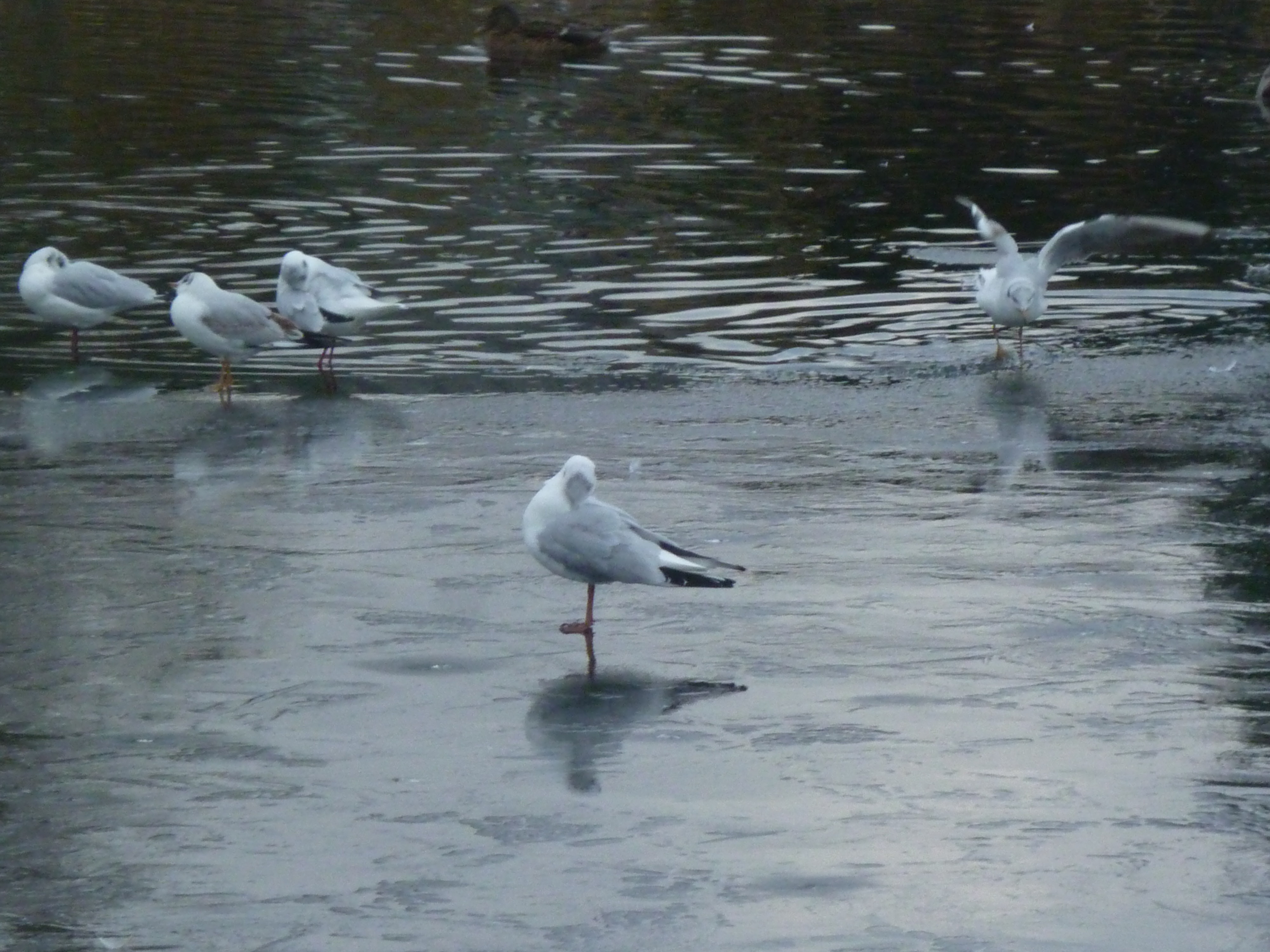
Tags: herring gull sculpture, migrants, seagull, Thames path
Posted in All ages, Folktales, Personal experience, Remembering, Symbolism | 2 Comments »
Saturday, August 22nd, 2015
No good signals have been received from Chris the Cuckoo since 5 August. At that point, Chris the Cuckoo was crossing the Meditarranean Sea after stopping in the Po Valley area of Italy on his annual migration south to Africa to the Congo. Four complete migratory cycles of his have been recorded by the BTO (British Trust for Ornithology) using the tracking device with which he was fitted. Now it is feared he has died and the probable reason is the severe drought the Po Valley area has been experiencing this summer.
Falling – poor cuckoo!
 Severe drought is also what’s causing enormous problems for salmon in the Vancouver area of Canada. As we were hearing from a friend there this week, the rivers are going dry and salmon trying to get upriver to reach their breeding places are not going to be able to do so.
For salmon and cuckoos, it’s a sorry tale. Already the Po Valley area drought is thought to have been responsible for the probable deaths of several others of the cuckoos that the BTO has been tracking this year. To discover the difficulties migrating cuckoos are facing is precisely why their tracking programme was devised. Drought, of course, is one of the worst of the problems: it means the feeding places where the cuckoos stop on their journeys cannot provide them with the sustenance they need for their onward flight.
The cuckoos were much on my mind when we went for a walk around the lovely North Pembrokeshire village of Nevern this week. The 6th century saint, Saint Brynach, founded the church in the village and, among the ancient yew trees leading to the church entrance is the famous Bleeding Yew that attracts many visitors. Nearer the entrance is the beautiful Celtic cross which figures in a sad little local legend in which the cuckoo is central.
On St Brynach’s day each springtime, according to the legend, a service used to be held around that Celtic Cross. Every year, the vicar and the congregation would gather for the service in front of that Celtic Cross and wait until, as invariably happened, a cuckoo would fly down and settle on top of the cross. At that point, the service could begin. One year, however, the people waited and waited until they were on the point of despair. Just as they were about to give up, a very wind-blown and battered cuckoo arrived and settled briefly on the cross only to fall dead on the ground below it as the service started.
Flying – lovely swifts! (more…)
Tags: Aunty Mali, BTO, cuckoo, Nevern, painting, St Brynach, swifts
Posted in Adults, Myth and Legend, Nature stories, Personal experience, Symbolism | No Comments »
Saturday, June 20th, 2015
Know any stories about the blackbird? After racking my brain, I’ve concluded I don’t. But I’d like to. For this year, the blackbirds round us seem more beautiful than ever. With one pair out the front, one at the back, it feels like we’re surrounded by golden song – and it goes on from dawn to dusk. With some friends the other day, we all agreed. Yes, they said – and they weren’t all from round here – the blackbirds are especially brilliant this year. As good as the nightingale, two of us ventured. Maybe even better.
And that put me in mind of a story. You probably need no reminding. It’s the one about how the nightingale got its song. But at first it masquerades as the story of how the birds got their colours.
How the birds got their colours
 One day long ago when the world was new, God sent a message to the birds to let them know that he’d soon be coming to give them colours. He even appointed a day and told them not to be late. The birds became very excited. On the day, they were ready and waiting, fascinated to know what these colours would be.
When God arrived with his suitcase, he got them all to line up. Then he opened his case, arranged his paints, picked up his brushes and began. You should have seen what he did – how beautiful he made them look and how different from each other in different combinations of reds and greens and yellows and blues.
After he’d finished, God was putting his things away when one little brown bird came hurrying up, all dishevelled and sad because he was late. God said he was terribly sorry: all his paints were used up by now, he had nothing left. When the little bird heard this, he was so distressed that God said he’d take another look just in case he could find a little something for him. ‘Ah yes,’ God said as he rummaged around. ‘Here is something, it’ll be just right.’
What God had found was a tiny spot of gold at the bottom of one of his pots. ‘Now open your beak,’ God told the little brown bird as he picked up the gold with one of his finest brushes. When the little bird’s mouth was open wide, God placed that tiny spot of gold right at the back of its throat. And ever since, that otherwise undistinguished little bird – it was the nightingale – has had gold in its song. (more…)
Tags: birdsong, blackbird, gold, nightingale, Welsh folksong
Posted in All ages, Folktales, Nature stories, Personal experience, Symbolism | 1 Comment »
Saturday, May 9th, 2015
 In folklore, bears are the harbingers of Spring and last weekend, visiting friends in Berlin, I saw a good many of them. Like the painted elephants that appeared all over London in the summer of 2010, these were extremely colourful creatures. Unlike the London elephants, which disappeared at the end of the summer when they were auctioned off for charity, the Berlin bears are there to stay. The bear. after all, is one of the symbols of the city and they are among its new emanations.
Bear stories
Covered in slogans or embellished with pictures, upside down or arms raised in a wave, the Berlin bears kept reminding me of bear stories. One I recalled while walking around is a foundation myth of the Modoc Indians of California. A very touching story, it tells how the little daughter of the Great Spirit is peeping out of the mountain in which they live when a great wind catches at her hair and blows her out of the mountain. After sliding down the snowy side of the mountain, the little girl ends up being found and raised by a mother bear. When she is grown, she marries one of the mother bear’s sons. Their children become the Modoc people.
But alas, when stories are prompted, it’s not always a matter of remembering them fully. One of the curses of the storyteller is sometimes being plagued by half-remembered things, flotsam from stories that, once encountered, are no longer there in your mind. Back in London, I’ve had to try and catch up. One question that was bugging me had been prompted by my favourite among the Berlin bears, the blue one painted with signs of the cosmos. Wasn’t there a constellation or two that represents bears? And the answer, of course, is yes. It’s a story that occurs in Greek mythology. (more…)
Tags: bear, Bear Skin, Berlin, Greek myth, Modoc myth, Thinking about memory
Posted in Adults, Folktales, Myth and Legend, Personal experience, Remembering, Symbolism, Themes | 2 Comments »
Saturday, January 31st, 2015
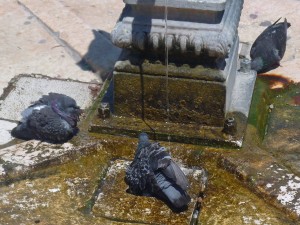 Nice to be asked back. New stories required. This will be the third time – or maybe the fourth, I must check my notes – that St Stephen’s School in Shepherds Bush has invited me to come to tell stories. This visit will be for a day in their Arts Week in March and I’m thinking fresh stories would be a good idea – for me as much as for them. Even as this thought occurs, I’m also thinking that the process of preparing new stories could be a good subject for a new series of blogs. So here goes: Repertoire Refreshment (for humans rather than pigeons)! Let me know if my approach appeals. Maybe you have a different perspective.
Step 1 – choosing a story
I’ve already started thinking about a story I read in a book. Now which book was it? It was ages ago. One I reviewed for School Librarian? Was it Middle Eastern tales? Palestinian perhaps? I’ll check my shelves. Meantime, I’m asking myself why this story in particular has come back to my mind. I’m trying to remember what it’s about.
A young woman with two brothers. Her brothers disappear. There’s evil in the air and also magic. The young woman must get those brothers back, she loves them, they’re an important part of her life. There’s a mountain she’s going to have to climb – it’s literal and symbolic and a big risk. But she sets out with courage and passion. First she succeeds in saving one brother. Then she manages to save the other. Despair and determination give way to joy. (more…)
Tags: closure, jubilation, Ysgol Dewi Sant
Posted in Adults, Folktales, Personal experience, Preparing, Symbolism | No Comments »
Saturday, October 11th, 2014
 Doors have so many meanings, signal so many different things. At the end of the Second Branch of the Mabinogion (see below for details), there is a brief account of a marvellous journey. Seven chieftains are returning from Ireland bearing with them the head of Bendigeidfran, their leader. He has told them to bury his head on the White Hill in London. This will give protection to this island for the future (and by the way, it makes me think that, if his head is still there, we really have no need of Trident.)
On the way, the seven chieftains are twice delayed, once at Harlech in North Wales where, for seven years, they are enchanted by the singing of the birds of Rhiannon. Then they move on to the island of Gwales (it’s what we now know as the island of Skokholm off the coast of Pembrokeshire). On that island, there is a royal dwelling in which they find a large hall in which there are three doors. Two doors are open. One is closed. And Manawyddan, who is one of the seven bearers, says it must not be opened.
For 80 years, the seven chieftains do not open the door and in all of that time, they remain oblivious of all the sorrows they’ve ever seen or suffered. Nor do they age – and all the while the head of Bendigeidfran, provides good company to them as he had promised. Then of course – for it has to happen – one of the seven men opens the door that’s been shut and at that point they all know they must move on. (more…)
Tags: door, exercise, Mabinogion, Sioned Davies, visualisation
Posted in All ages, Myth and Legend, Symbolism, Visualisation | 4 Comments »
Saturday, May 10th, 2014
Last week, I was so chilled out – or rather, so warm and relaxed – on holiday on the island of Lanzarote, that I felt I had nothing to say. By today, I’m positively burning to go on about the value of personal links. After all, we’ve all got them in one form or another.
Good days, personal links:
 One of our best days on Lanzarote involved a visit to an astonishing Cactus Garden. Another was a pilgrimage to the house of José Saramago, the Portuguese writer and Nobel Prize Winner who spent the last 18 years of his life on the island. Both days arose because of personal links, the first because, back here in London, my husband has an amazing collection of cactuses, the second because a very good friend of mine was Saramago’s English translator and, because of her, we have read his books.
Personal links create that extra degree of interest which can make you bother to take journeys, actual and symbolic. I became doubly aware of the truth of that this week when my main task and pleasure has lain in preparing the talk I’m to give next Monday to the Historical Society in St David’s. The society was founded by my father and the link with him is one reason for my sense of anticipation.
Shemi the storyteller (more…)
Tags: cactuses, D. J. Williams, father, Lanzarote, Saramago, Shemi, St David's
Posted in Adults, Personal experience, Personal Tales, Preparing, Remembering, Symbolism, True tales | No Comments »
Saturday, April 26th, 2014
“All tommorrow’s flowers are in the seeds of today.” Spelling mistake included, this was the thought on a hand-written sign in a florist’s shop I passed on Friday.
The thought kept jangling in my mind. Where had I come across a similar idea? Surely it was only a few days ago? Surely I could remember? Then, this morning just before sitting down to write this blog posting, I did.
“Life is funny sometimes – how small acorns of an idea grow into something so much more and take on a life of their own.”
The comment was in an email earlier this week from a teacher I’d worked with a few years ago. At that time, she took up storytelling with her class in a big way. It’s great to hear that evidently she has stuck with it. Obviously, it’s grown into something important for her.
Both comments made me remember a story.
The story: Tomorrow’s flowers
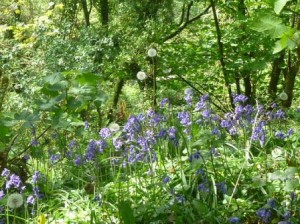 Once there were two water pots. One was whole. One was slightly cracked. Each day, their owner, a farmer, would sling them over his donkey, one each side, to go and fetch water from the well.
On the way to the well every morning, the uncracked pot would mercilessly boast to the other. ‘I’ve got no cracks but you’re rubbish. I don’t know why our farmer doesn’t chuck you away.’
And so on…and on … Every day it was the same (and I think there are some people who are just as destructive in the way they put others down.)
In the end, the pot with the crack burst out to the farmer: ‘I can’t stand it any longer. I’m no use at all. You should throw me away. Who would want a pot that is cracked?’ (more…)
Tags: benefit of stories, flowers, water pots
Posted in Adults, All ages, Folktales, Nature stories, Personal experience, Symbolism | No Comments »
Saturday, December 14th, 2013
Why is it that the stars in the sky especially draw our attention in winter? In the deep darkness of this part of the year, they seem to shine all the brighter.
 As well as playing a prominent part in the story of the birth of Jesus, stars are present in so many of our Christmas traditions – at the top of the Christmas tree, in street decorations, on Christmas cards. For me, they are a vital theme in stories for this time of the year.
Stars are about the magic of looking up into the sky and feeling an immensity that’s beyond our imagining. Yet our imaginations lengthen and widen in the very act of looking.
Loawnu Mends the Sky: a Chinese story
One star story I love telling to children is about how the stars first got into the sky. I came to know it in a beautifully written version which was sent to me by Vivienne Corringham for possible inclusion in my collection of stories, Time For Telling.
Time For Telling came out in 1991. It proved very popular and ‘Loawnu Mends The Sky’ deserved its place there. It’s very well worth looking up. If you can’t find Time For Telling, (it’s out of print but is still held by many libraries), you might be able to track down the two paperback volumes into which it was later divided. ‘Loawnu Mends The Sky’ is included in the volume entitled, The Big-Wide-Mouthed Toad-Frog. What follows is my summary of it – but it’s really not difficult to imagine how to fill it out for a full telling. (more…)
Tags: filling holes, Loawnu Mends the Sky, stars, Time For Telling, Vivienne Corringham
Posted in Christmas, Early years, Folktales, Primary, Props and Resources, Symbolism | No Comments »


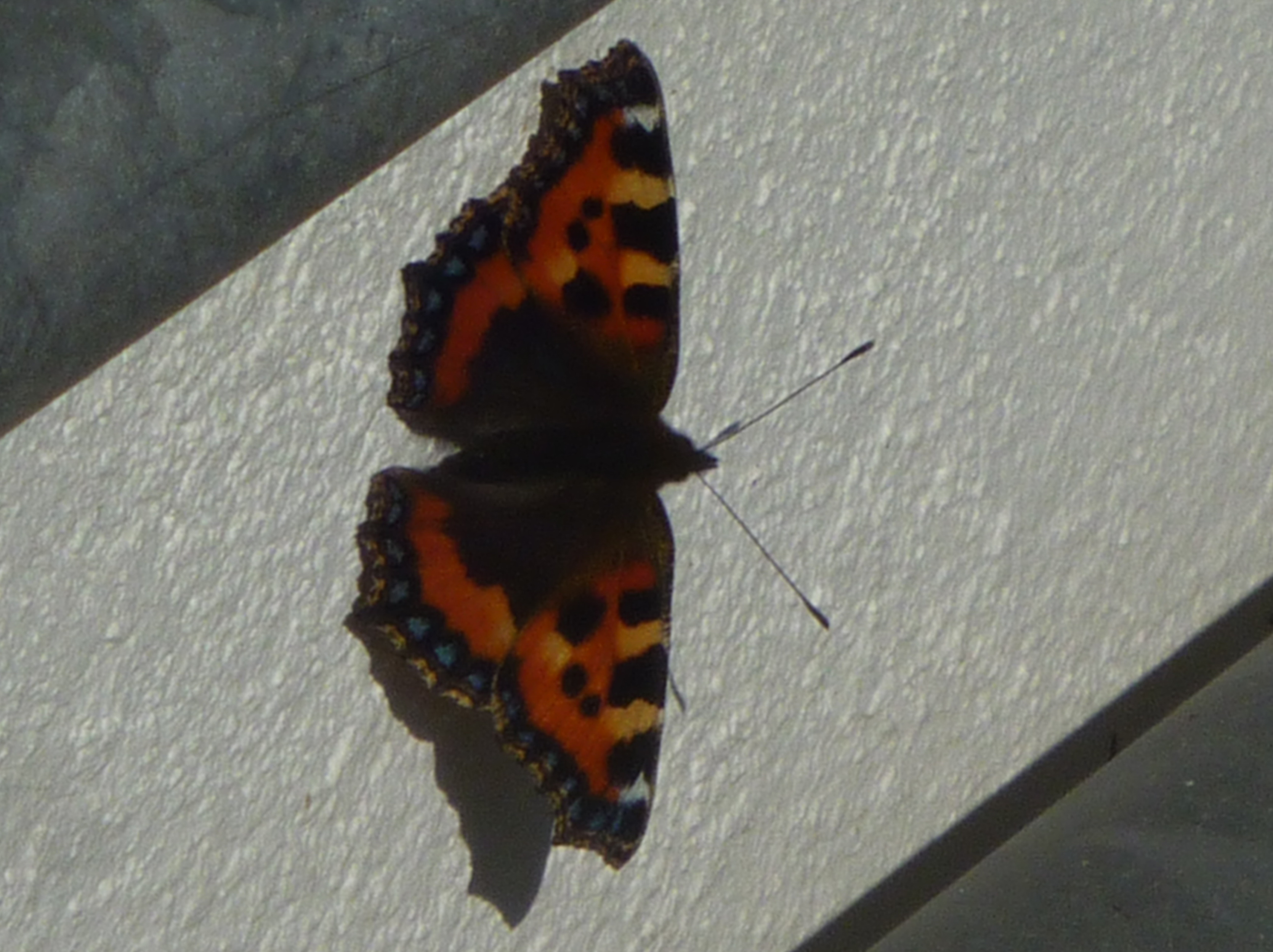 You may well remember the story. Or perhaps you’ll have retained just some essence of it. Often entitled in print, The Soul as Butterfly, it’s an Irish tale which I’ve recounted in this blog before. It seems to me to encapsulate something about the kind of symbolism I talked about last week.