Mary Medlicott, Storyteller and Author - Storyworks

Archive for the ‘Storytelling in Education’ Category

Storytelling Starters ~ Wintering Out 2

Saturday, December 1st, 2012

A chance encounter

Wow! Coincidence and Storytelling in Education – two of my favourite themes in one chance encounter. There I was, on the train back from Cardiff last Saturday after watching New Zealand beating Wales at rugby (alas!) when, falling deep into conversation with the woman sitting next to me, I soon learned that she was American, a school librarian currently working in Germany and also – amazing! – a committed storyteller.

So all the way back through flooded Southern England, we exchanged experiences and ideas. Back in the 8Os she’d fallen in love with storytelling when she was sent to the big Jonesborough Festival that happens each year in Tennessee. Since then, as everything she said attested, she has developed a deep awareness of its power with children. More than that, she too believes that storytelling is especially important at this time when, spending so many hours on their Gameboys and watching TV, children have so much less of the vital experience of engaging with other people.

Reason for action

We know it to be true, all those of us who’ve told stories with children. It is such a powerful thing to do. It creates engagement, develops imagination and encourages language. But it’s in dire danger of falling by the wayside at this time when social media and the internet are getting overwhelming attention. Not that Twitter and Facebook and Google are not also marvellous for the sharing of stories and communication. What they do not have, however, is the face-to-face, ear-to-ear immediacy that storytelling gives.

So please spread the word.

It’s time for everyone who is committed to storytelling in education to speak to their friends about it and to think about what they can do to bring it back to public attention. Otherwise I fear the experience of a whole generation of storytellers who have gained a huge amount of know-how in the schools and libraries of our country is about to be lost.

This week’s seasonal tale

This little tale – The Little Fir Tree – went into my Blog at about this time last year. I’m repeating it now for two reasons – first, because I like it, second because it is about finding value in what can so easily be overlooked. (more…)

Storytelling Starters ~ Wintering Out 1

Saturday, November 24th, 2012

The evenings are getting darker and I’m starting a new series of postings. Wintering Out is the title and it starts with Dark, Dark Tale, a Story Chant that’s great with children and also with adults as a piece of fun in workshops. Next week and in the run-up to Christmas, I’ll bring other seasonal tales and chants into the mix.

Storytelling in Education: good news and bad news 

But first, to continue my recent theme of Storytelling in Education, let me give you my week’s good news and bad news. Both came in the same email from a Literacy Adviser in Pembrokeshire for whom I’ve done loads of work in the past, including a series of extended teacher courses. On one of those courses, now quite a few years ago, I told the Pembrokeshire legend of Skomar Oddy and I remember how much it appealed to one of the teachers. The children in her class  loved this particular story and she based lots of writing and art work on it.  Well, my Literacy Adviser’s email told me that when she recently went into that school, there was a whole new fresh display on the Skomar Oddy story. This was music to my ears. It shows that teachers who fall in  love with storytelling can make really good use of it year after year and that a good story never goes out of fashion.

The bad news was that, in these current times, there’s no longer any central funding in Pembrokeshire for the kind of storytelling in education work that I did so much of there. It’ll now be down to individual schools. That’s it – at least until people realize once more how important it is to fund this kind of work! Another worrying and retrograde step.

Dark, Dark Tale: a Story Chant for Winter

Once upon a time there was a dark dark wood.
In the dark dark wood, there was a dark dark path.
Along the dark dark path, there was a dark dark gate.
(Shall we go in through the gate?)

Behind the dark dark gate was a dark dark garden.
In the dark dark garden, there was a dark dark house.
In the dark dark house, there was a dark dark door.
(Shall we go in through the door?)

Behind the dark dark door, there was a dark dark hall.
Along the dark dark hall, there was a dark dark room.
In the dark dark room, there was a dark dark box.
(Shall we open it up?)

Oh my goodness! What was that? (more…)

Storytelling Starters ~ Giant Children

Saturday, November 17th, 2012

I’m currently reading a Welsh novel, Y Storïwr, by the journalist, broadcaster and author Jon Gower. Published in 2011, its title, translated, means The Storyteller and I’m fascinated. For one thing, the baby that’s born at the start of the book is so like the baby Taliesin in the ancient Welsh story I told at the London Welsh Centre as part of the Bloomsbury Festival just a couple of weeks ago. In the old Welsh legend, the little Taliesin is found inside a leather bag floating on the waters of a magical weir and he begins to speak almost as soon as he’s found. First he declares his name – and then, since he is destined to become a renowned Welsh poet, when he goes on speaking he naturally does so in the recognisable metres of Welsh poetry.

A Magical Future?

In Jon Gower’s novel, the baby that emerges to the working-class world of an extremely character-full South Wales village is born with the birthmark of a dragon. His future is obviously destined to become extraordinary and he is certainly surrounded by a cast of legend-like people. How will the baby turn out? I have few clues yet except that, on his first day in school, having already acquired through diligent research a quite phenomenal vocabulary and having already demonstrated a striking capacity for unusual speech, the little boy aged only four stands up when the teacher is going round her class asking children their names and tells a long, gripping story (in theory about an ancestor). For doing this – not altogether surprisingly – he earns the hatred of the other children.

What is going to happen to Gwydion, for that is what Jon Gower’s hero is called, he having been named because of his birth-mark after the magician figure in the Mabinogion?

I shall be finding out. Meantime, for some reason – perhaps the preternatural flash of intelligence, perhaps something about being associated with the giant figures of Welsh mythology – Jon Gower’s book has reminded me of an incident with an Early Years class of children in Pembroke which I think I’ve mentioned in this Blog before. It’s one of the pieces of evidence I would put into any dossier of evidence I assembled about the value of storytelling in education. Now I’ve written it up as one of the true-life tales I’ve recently been focusing on. I’ve called it – not surprisingly – Giant Children.

Giant Children

The morning was part of one of my storytelling training courses for Pembrokeshire teachers. I loved these courses. Each involved a small group of teachers coming together from different schools. The work was immediate, practical and engaging and – one of the things I liked most about it – it was always up to the teachers how they interpreted it and carried it on when they were back in their own classrooms. Another thing to be appreciated was that, luxuriously by current standards, we were able to meet on so many occasions, five half-day sessions over the course of a term. It was a brilliant way to embed the work and on each occasion of meeting, before and after going into the classroom, the teachers had time to share with me and each other what they were making of the stories and the telling.

This was one of the classroom sessions where the participating teachers would come with me into a classroom to observe me telling the day’s story to the particular class of children which had been selected as the focus for that particular course. It was a Reception-age class, so they were all young children of about four years of age, and now they were gathered on the carpet before me in the regular place we’d established for our storytelling. The visiting teachers had dotted themselves round the edges and I was sitting as usual on a low child-size chair, higher than the children but not so far above as if I’d been on an adult-size chair.

The story on this day’s occasion was one I always refer to as Little Bear on the Long Road. It’s a good one for this age-group and, whenever I tell it, I feel grateful to the person from whom I originally heard it. This was the wonderful Japanese storyteller, Kyoko Matsuoka, who told it to me on an occasion when we’d arranged to meet to talk about the work of Eileen Colwell, the pioneering English storyteller who’d been an inspiration to both her and me and, of course, to so many others.

So there we were in the British Library Tea-room, (more…)

Storytelling Starters ~ C for Campaign

Saturday, November 10th, 2012

It’s not been a brilliant week. A good friend and colleague with whom I was chatting has just learned that the funding streams for some of her very well-established work with Early Years children and staff have been cut for next year. Then at the end of the week, I got the news that storytelling workshops I was due to do at a conference in London next Thursday were being cancelled due to insufficient take-up. Two swallows do not make a summer and two pieces of disappointing news do not denote a bad winter. But they do give pause for thought.

C for Campaign

Time for a Campaign about the importance of Storytelling in Education? I think so. Even the seaweed on a beach where I walked this week seemed to be in agreement. In another sense, so was an email I received from the Headteacher of Brady School in Rainham. I’d written to let him know about the Blog where I talked about those wonderful letters that had come from children at his school following the Local Legends project I’d done there back in 1997. His email said he remembered the project and its impact. ‘The quality of work from the children showed just how much they became integrated into the project.’

It’s exactly this kind of point that Arts people are currently making in the press and elsewhere about why the arts in schools are important and why their place should not be diminished. Like visits from authors, artists and theatre companies, storytellers coming in to schools can make a huge impact on children. It gives them something to remember, something that awakens their imagination, something that can work in their memory-banks long after the particular occasion where the seeds of new thought and ideas are planted.

C for Coincidence

Pondering the many ways in which storytelling has been able to thrive in education, I thought about Storytelling Clubs in schools and the dedicated work my storytelling friend, Debbie Guneratne, has been doing in that area. I wrote about it in Mirror, Mirror, one of the personal tales I’ve recently been working on. Mirror, Mirror is a story about stories and storytelling. As well as an extraordinary coincidence, it figures an African folktale I very much love. I hope you enjoy my piece of writing and tell the tale to someone else.

Mirror, mirror

Debbie, has been one of the country’s pioneers in setting up storytelling clubs in schools. On several occasions I’ve gone along to give talks when children in her clubs have been participating in celebratory events where, typically, they tell their stories to invited listeners – teachers, parents and other school children. On each occasion when I’ve done such a talk, I have of course told a story.

Once, the story I chose was an African story that I’d heard some years before from another storytelling colleague, Karen Tovell. Although it’s never become a regular part of my repertoire, it’s a story that often comes to my mind because of the way it draws attention to the beauty of the natural world and the way artists can help bring that beauty to other people’s awareness. (more…)

Storytelling Starters ~ Storytelling in Education

Saturday, November 3rd, 2012

This week in Wales, the big feature of my morning walks has been the flocks of birds whirling round the sky, wings whirring as they go over my head. Right now, a whole lot of them are perched in the tree behind the house. They chatter ceaselessly in some kind of group talk. ‘It’s getting colder,’ I think they’re saying. ‘Soon it will be time to go. Remember the age-old way.’

The excitement is palpable. So too is the purpose. I wish I could send them right now to all those places where school curriculum is decided. The message would be: ‘Please pause awhile in your deliberations and consider the place of story in children’s lives. In particular, take a look at the potential of the told story and require teachers to give room for it in schools and also learn how to do it themselves if they don’t already know.’

Comment from Hilary Minns:

Hilary Minns teaches storytelling at Warwick University. As a guest storyteller, I’ve visited the courses she runs over a number of years and on each occasion it has been abundantly evident how all her students love her and how keen they have become to follow her example. She is an inspiring storyteller and an inspirational teacher. The Comment she sent in to my Blog on Principles and Practice is an important contribution to the evidence I’m starting to gather on Storytelling in Education. 

Hilary’s comments matter. She began working life as an infant teacher, later moved on to teach 7 and 8 year olds, then became headmistress of an Infant School in Coventry. She is also the author of the influential book: Read It To Me which followed the reading lives of five young Coventry children. One part of her Comment relates how she herself began telling stories. It was while she was on teaching practice. She ‘wanted to share some Hans Andersen stories with my class of 6 year olds, but the stories were too difficult and too long to read aloud, so I adapted them and told them orally with the help of pictures I drew on the blackboard.’

Flexibility … imagination … belief in the power of story … the determination to share the sources of your own inspiration: I think these are all vital qualities for teachers to have and I read them all in what Hilary says. How many times have teachers said to me after a storytelling session when they’ve seen how children have sat up and listened and participated: ‘This is why I came into teaching. Why did I stop doing this kind of thing?’

One child’s response

Hilary’s comments include a short description of one child’s response to a John Burningham story. ‘ “Mr Gumpy shouldn’t have let them all in the boat,” says four-year-old Anthony as he looks at Mr Gumpy’s Outing and sees everyone falling into the river. That bit about “shouldn’t let them all in” isn’t in the story. John Burningham would never pass judgement on his characters. But Anthony has engaged with the story and responded in his own way.’

Anthony’s is the kind of freely-offered insight teachers love to hear. It’s a frequent experience when time and importance are given to stories. So isn’t it terrible to hear what Hilary also says in her Comment: ‘The students who take my module Stories and Storytelling at Warwick University often tell me that stories are given a low priority in their schools; in particular, those who work with KS2 children sometimes report that there is no longer any time for personal storytelling, the telling of traditional stories or even stories taken from beautiful picture books.’

No time for stories

More Primary School teachers than I could count have said the same thing to me: ‘There’s no time for stories in our school.’ To me, this is as lamentable as failing to give children decent food. It’s like feeding them only on turkey twizzlers, leaving out the healthy stuff. (more…)

Storytelling Starters – Bringing Up The Evidence

Saturday, October 20th, 2012

Last Sunday morning, inspired by the previous day’s episode of Clare Balding’s Ramblings on Radio 4, we didn’t hang about. We got going quickly on our way through London and down the A13 to seek out Rainham Marshes and, specifically, the RSPB Centre there.

The day was a terrific adventure. Clare Balding had been talking on her programme with the actor Sam West, a passionate birder and frequent visitor to the Rainham Marshes Centre. Together they did an excellent job of inspiring me for one. But in my particular case they were only part of the inspiration. Even while listening to the programme, I’d been remembering that, years ago (in fact in 1997) I’d done a storytelling project with some Rainham children as part of a much larger project on Local Legends with children in Havering schools.

The inspiration of secret places

One of my aims in my Local Legends project had been to get the children thinking and talking about their locality by remembering their secret places where they liked to spend time. I wanted them to think about these play places both as an end in itself and as a springboard to creating new stories of their own. The aim bore fruit: it was evident how greatly they seemed to enjoy this approach. One particular boy – and I’ve never since forgotten that he was from Rainham – showed a degree of pleasure that gave me some pause for thought. His passion for Rainham Marshes moved me. I loved the sense of secret adventure he communicated as he talked about the wetlands, the intimacy of the love he felt for the dens he’d made there and the pride with which he used his private knowledge to create a new story around his experience.

So when we set off for Rainham on Sunday, that boy was vividly in my mind. Then as we got to the area where I thought the RSPB Centre must be, I began to get another very strong feeling as we drove back and fore along Wennington Road, trying in vain to find the place. We’d been so keen to set off, I hadn’t even looked up directions or a specific address! We were still searching when, suddenly on Wennington Road, I spotted a school called Brady School. ‘I’m sure I’ve worked in that school,’ I told Paul. (more…)

Storytelling Starters ~ Principles and Practice

Saturday, October 13th, 2012

It’s been a good week for thinking. There have been some lovely Autumn colours and I’ve been diverted from the new series I’d planned.

When I made the suggestion last Saturday that future BASE awards should include some that relate to storytelling in education, I started a hare in my own train of thought. Three comments that arrived in the course of the week have made me pursue it.

The proposed new English curriculum:

The comment from Mary – see below – notes that a stated intention of the proposed new English curriculum is that young people should learn to be confident speakers. I thoroughly agree with Mary’s feeling that we should all be celebrating this and finding out more about it. I also think she’s right to suspect that it probably means being able to give a speech and talk well at job interviews rather than storytelling – storytelling  no longer being on the agenda:

Storytelling in schools in decline:

The second comment from Jean notes how, in her own recent experience as a storyteller, longer and more substantial storytelling projects in schools have become so thin on the ground as to be just about non-existent. Even one-off day visits to schools have declined. The third comment from Liz says she is thinking of approaching local schools to see if she can go in to do stories with the children. Her inspiration is based on the belief that children need stories.  

So where are we headed?

Back in the 1980s the National Oracy Project pushed forward a huge new awareness of the value of the oral in education. I know from my own involvement how much exciting pioneering work was done at the time. The positive results were  just beginning to be disseminated when they were swamped by the sudden introduction of the National Curriculum. Gradually over succeeding years storytelling began making a comeback in schools. By the first decade of this century, there was a great deal going on. My own work gave me abundant evidence of how much , including in Early Years work, work with ESL children and the training of teachers.

But what is happening now? Over the last ten or fifteen years, a big expansion has taken place in what is now usually described as ‘performance storytelling’. Storytelling clubs for adults, festivals of storytelling, storytelling evenings – all these have mushroomed. And that’s great for everyone. After all, many storytellers who work in schools and community situations also do performance work. However, I do feel it’s time to think hard and aloud about the implications of this development, especially now that ‘celebrity’ has become so phenomenally important in the world around us. Is storytelling going to become largely a celebrity art? Does the performance side mean that less attention (and less support) will be given to the less visible kinds of storytelling work that take place in schools?

Some responses from me:

Here are a few of the ideas I’ve had while pursuing that hare in my own train of thought. Please do add to these or comment upon them as you see fit. (more…)

Storytelling Starters ~ Reflections and Moonshine

Saturday, October 6th, 2012

Well, the BASE awards happened last Saturday and it was all very interesting. I didn’t get the Lifetime Achievement Award – it went to Sheila Stewart, the Scottish Traveller singer/storyteller who has been storytelling for nearly 60 years. But I came away full of reflections. These include the suggestion I shall be making to the BASE organisers, who are keen to develop the awards for the future.  

Storytelling in Education

My suggestion is that there should be some awards for storytelling in education. A teacher-storyteller award? Or one for work with different ages of children or children with disabilities or school-refusers? Or maybe an award for the most enterprising school storytelling project? Or indeed for training teachers in the art.

Storytelling in education is vital. Anyone who has ever done it –  if they know what they are up to and have an appropriate way of working –  knows how much difference it can make. It makes a difference for children and can also transform teachers’ work. The problem now  is to develop support for what should be a national campaign on the subject. It’s a pressing need (especially at this time when the overwhelming emphasis is on targets and exams). How can we make the general public and  the politicians aware of what can be done through taking the more creative approach that storytelling offers?

Is there anyone out there who shares this concern? Please get in touch if you do. (more…)

Storytelling Starters: Time for Action?

Saturday, July 14th, 2012

Wimbledon over, the Olympics coming up, I’m now thinking about a new series of Body Stories to go into this Blog. But I’m not planning to start them till next week. This week, I want to say thanks for all the wonderful things people have been saying about me in their nominations for me to get a Lifetime Achievement Award (see last week’s Blog). If I was able to channel the power of their words and use it for a greater good, I’d employ it to bring about a greater awareness of the need for support for storytelling in these straightened times – especially in education.

On Tuesday 19 June in the Guardian, the journalist and education consultant Mike Baker made a heartfelt plea for ‘breadth and freedom’ in the curriculum. Oral storytelling gives exactly the kind of breadth and freedom I think he was talking about. I would even go so far as to claim that storytelling should be seen as a vital part of the core curriculum, an essential way to develop the language arts that are involved in reading and writing as well as the thinking skills that are required for everything else. (more…)

Storytelling Starters ~ Nature stories

Saturday, June 23rd, 2012

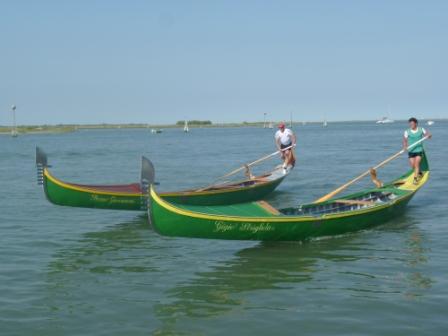
Back from Venice, I’ve been thinking – as you do! – about what were the best bits in a very good ten days.

One of my favourite things was something I saw just a few steps away from our hotel in Cannaregio.

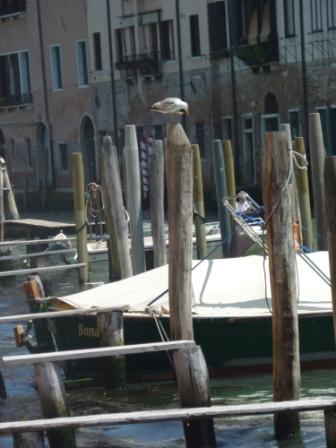
Funny, you don’t get many trees in Venice. Yet everywhere there’s so much wood.

Boats of all sorts…

Huge wooden pylons to mark the routes boats must follow…

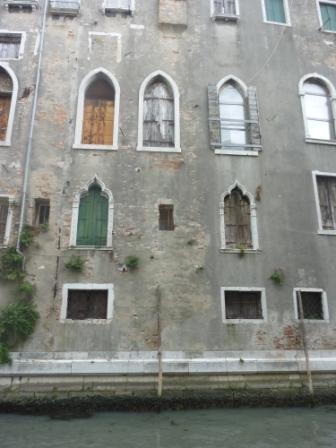
Window shutters and doors…

But then I saw a little sign hanging on a little tree not far from our vaporetto stop. (more…)