Mary Medlicott, Storyteller and Author - Storyworks

Archive for the ‘Themes’ Category

Storytelling Starters ~ Mouth No. 3

Saturday, September 1st, 2012

Last week I promised details of how to vote for the shortlisted candidates (including me!) for the new BASE awards. But there’s no sign yet of the new BASE website with the details. Hopefully it’ll be up by next week, so I’ll come back to the subject then.

Meantime back to Mouth – and Mouth is, of course, central to oral tradition. The phrase By Word of Mouth even won me a bottle of champagne when I came up with it as the possible title for the TV series on storytelling that I proposed and devised for Channel 4 at the end of the 1980s. The series at that point was almost completed. All we lacked was a title. The production company offered the champagne. I remember racking my brains in the bath. As soon as I thought of  By Word of Mouth,  it sounded obviously right.

Don’t children often say it: ‘Tell me a story out of your mouth’? They love the directness of telling and this week’s two stories quite literally add a twist to the telling. They take you back to the fun that you get as a child when some lovely silly adult makes hilarious expressions at you. Combine the facial expressions with a good story and the story gets asked for again and again. This week I’ve got two stories to choose from.

And by the way, I hope you love my photo illustration as much as I do. If you don’t know who its subjects are, go to the bottom of my Blog for details. (more…)
Storytelling Starters ~ Mouth No. 2

Saturday, August 25th, 2012

A few days ago I got the news that I’ve been shortlisted for that Lifetime Achievement Award. More on that subject – including how to vote – next week.

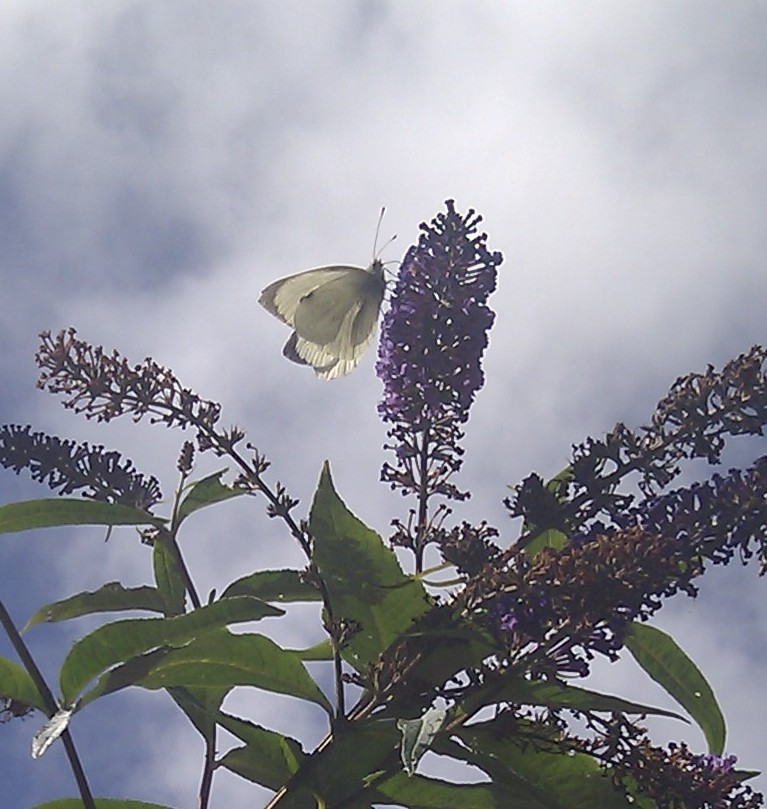
Last week, to introduce Mouth, I offered some sayings and quotes on the subject. This week’s offering is a story in which a butterfly comes out of an open mouth, then goes on a journey and returns. The butterfly, of course, is frequently seen as a symbol of Soul. Yet in several comparable stories of which I’m aware, it’s not a butterfly that comes out of the mouth but some other strange creature that is almost a little manikin.

The variants:

One of the variants is an African tale. It talks of a very sick man who is lying, fevered and thirsty, on the bed in his room. As he falls asleep desperately craving some water, his mouth falls open and a tiny little creature comes out. The creature hops across to the jug of water that stands beside the sleeper’s bed and there takes its fill of the water before hopping back to the sleeper and re-entering his mouth. At that point, the sleeper wakes up feeling much better and greatly refreshed.

Another variant comes from Wales and here it’s haymakers who are taking a mid-day break from their labours, sitting in the hedge at the side of the field, when one of them falls fast asleep. When one of his companions observes a monkey-like creature coming out of the sleeper’s mouth, he calls his companions’ attention and they watch as the strange little being crosses the field to the river that flows along beside the field and takes its fill of the water before returning to the sleeping hay-maker and disappearing back into his mouth.

Why I especially like the Welsh story:

I find the Welsh story very appealing in the sense that it reminds me of two separate occasions in my childhood when I saw hay being cut by hand with scythes, once in the couple of fields that my grandfather owned, once on the smallholding that belonged to my uncle. On each occasion, I remember the haymakers coming together from neighbouring farms to lend their help and at mid-day being brought their mid-day food. On the second occasion, I vividly recall, I travelled home perched on top of the hay-wain, my nostrils filled with the warm smell of the hay. My great-aunt had given me some odds and ends of beautiful ribbon to play with and I clutched them in my hands, feeling their texture, all the way back to my grandparents’ house. It was one of the happiest days of my life.

Why I tell the butterfly version:

But it’s the butterfly version I tell. And why? Because of it’s strange, mystic atmosphere. Because I love the visualisation. Because it works on a double level and it’s very much a story about dreams. The butterfly version as I give it below originates from Ireland. Here I’ve adapted it slightly from the version given by Kevin Crossley-Holland in his excellent collection, British Folk Tales, where it appears in the section entitled Enchantment, which I think is very apt. (more…)

Storytelling Starters ~ Mouth No. 1

Saturday, August 18th, 2012

Welcome this week to my new blog and website banner. About time too, you might say! My hair has been short and silver ever since it grew back following my four months of chemotherapy treatment in 2010. It’s taken me till now to update myself. Many thanks to those that have helped – Dominick Tyler for the new photo, Olwen Fowler for the new banner, Tim Howe for amending the website and my lovely husband Paul for his constant support.  A big kiss to each of them!

There are numerous excellent stories about Mouth. Next week and the week after I’ll be giving you two of my favourites.

This week, however, I thought I’d do something new, which is to start on the Mouth theme with some sayings and quotations about it. The ones below are all drawn from the stocks of items that I keep in mind for throwing into a storytelling session or workshop where one of them becomes appropriate. Proverbs, sayings, interpretations, quotations: I find they can prove of interest to all types of audience, children and adults. They are like juicy little extras to savour in the tasting.

Sayings:

I especially like this chewy saying:

Stories are not there to be believed; they’re there to be eaten.

And here’s another which suits my taste because, like me, it comes from Wales:

And this story went from mouth to mouth so that one day my Grandmother learned it, and it’s from her that I heard it.

The first saying comes from Michel Hindenoch, one of the storytellers behind the storytelling revival in France. The second is a traditional way of ending a story which was included by storyteller Sam Cannarozzi (who lives in France) in When Tigers Smoked Pipes, his collection of story beginnings and endings which the Society for Storytelling published in booklet form in 2008. A most useful and fascinating resource it is too, even though I say it myself as one who participated in the editing of it. (more…)

Storytelling Starters ~ Body Parts / Hand 2

Saturday, August 11th, 2012

This week, I’ve been struck by the number of Olympic athletes emphasising  that they could never have achieved what they have without the support of the team around them. Working together: that ‘s the moral and it was the theme of my story last week. This week, I’ve got another favourite Hand story with a similar theme. It’s called Five Companions and, in my experience, it works especially well with children. What gets the children is the idea that in one hand – their own hand! – there can be such a diversity of strengths and that when these are combined, there’s no end to what a hand can do. But of course there are two sides to the potential: hands can work for good or for ill. Whenever I tell the story, I try to let that  fact be seen.

Five Companions: the background

It’s not always essential for a storyteller to know where a story began. Sometimes, you hear a good story and never find out where it originated. Sometimes, as time passes, you forget where you got it. And sometimes, if you do check back with your source after many times of telling the story, you realise – as I did with Five Companions that you’ve made a few changes along the way.

The story of the Five Companions originally comes from Burma – and, to be honest, I did have to look back through my files of printed sources of stories in order to check that fact out. When I read through my copy, I immediately saw that I’d adapted the tale in one or two ways. I’d made small changes to some of the characters’ names. I’d also given more emphasis to the fact that hands can be responsible for bad deeds as well as good ones.

Five Companions: a hint on telling

Before starting the story don’t reveal that this is a story about your own hand. Let that be discovered when the story has ended. (more…)

Storytelling Starters ~ Body Stories / Hand

Saturday, August 4th, 2012

As Olympic gold medals mount up for Britain,  my favourite body-parts story has come back to my mind. It’s a story about the way the different body-parts connect and how all of them have to work together. But they cannot function properly as a unit without the operation of thought. I don’t know if the story has a title (told stories rarely do!) but here I’m calling it Give Me a Hand.

Give Me a Hand: the background

Where I heard Give Me a Hand was at an Australian Aboriginal storytelling concert at the South Bank in London some years ago. The concert was an event to accompany a major exhibition of Australian art at the Hayward Gallery.

The Dreamtime paintings of Australian Aboriginal painters are bold and beautiful and very earthy.  They feel very connected to the earth we inhabit and at the same time they give a very real sense of what makes the Australian earth unique. Listening to the stories at that South Bank storytelling, it began to feel like the stories themselves were creating the landscape.

The two storytellers were women on that special occasion. What ensured that I’d never forget it was that, towards the end of the concert, they suddenly announced that they were now going to hold a public mourning event. At first, I had no idea what this could possibly be. Members of the audience were invited to come up on stage if they wished to join in and then the keening began. It  had a spine-chilling quality which at first I found extremely uncomfortable. I felt terribly excluded from it. Then I began to understand.

The mourning, as the storytellers explained it, was for those members of their peoples whose bones had ended up in museums in England. Their wish was that the bones be taken back to Australia so they could be properly buried. Suddenly I realised what this was all about. To the museums that held them, the bones were of archaeological and anthropological importance. To the Aboriginal peoples, they were the remains of real people – remembered relatives such as aunties, great-aunties and great-grandparents.

So here’s the story, Give Me a Hand. Of course, when I heard it, I imagined it happening in the Australian bush as conjured up in the Dreamtime paintings. The words of my telling may not do that for you. But however you visualise it, I think you’ll agree that the story is striking. (more…)

Storytelling Starters ~ Body Stories/Amazing Eyes

Saturday, July 28th, 2012

In many sports, keen eyesight is crucial. Reading last week about the Tour de France, however, it was interesting to come across something Mark Cavendish was quoted as saying – that beforehand he ‘sees’ every kilometre, every bend on the course. It’s visualisation, of course. The very thing that storytellers do! Yet with sportspeople as with storytellers, seeing with the inner eye must be matched by the experience of the physical eye, its accuracy and its alertness.

Eye stories make one of the themes that I love. I remember talking about them with storyteller Kate Portal who never made her blindess a bar to her making her way to the Drill Hall Workshops I used to run with colleague Karen Tovell. Did Kate dislike eye stories? Did she mind people telling them? No, she answered. She was quite emphatic. She enjoyed collecting such stories herself. Why wouldn’t she be interested? It was an important theme for her – to think about how people see and how people such as herself find ways to replace the act of physical seeing. What she disliked was people becoming mystical about blindness, as if it was a special blessing.

A good story about eyes:

My story today is one I refer to as The Crab with Magic Eyes. I came across it in a most useful book, Twenty Tellable Tales, by American storyteller and storytelling teacher, Margaret Read MacDonald. The book has been in my library of story books for a very long time. Published in America in 1986, it contains strong simple stories that are good for telling to a wide age-range of children and also to adults. The way it sets them out is tremendously helpful. The style looks a bit like poetry: refrains and repetitions are indented which make it easy to see the patterns.

In her notes in Twenty Tellable Tales, Margaret Read MacDonald says she began telling The Crab with Magic Eyes (she entitles it Little Crab and his Magic Eyes) after hearing it told just once at a festival by storyteller Augusta Baker.

Her version, she said, had probably changed from the one she’d heard. She didn’t know where the story originated although she herself had traced similar tales in various languages, including German. In a similar way, my version has also changed a bit from the Margaret Read MacDonald version. On checking the book, I see I’ve particularly adapted the rhyme used by crab to make his magic eyes work. The change is marginal. But storytellers have to settle on what works for them.  The right rhythm  is crucial. (more…)

Storytelling Starters ~ Nature Stories

Saturday, June 30th, 2012

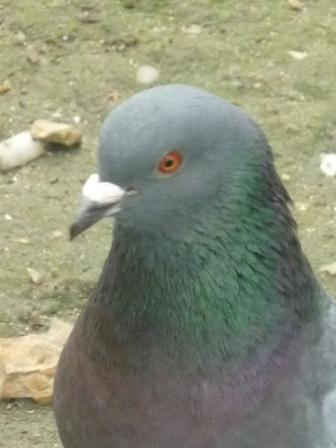
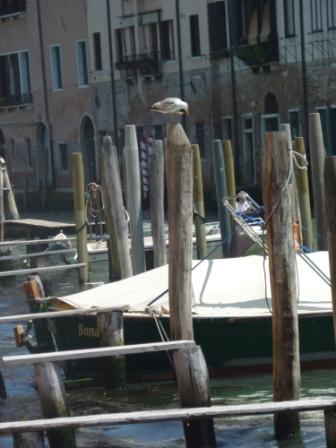
Well, the photos this week are of birds – three of a pigeon in Venice plus a picture out of my photo archives of seagulls over the Thames.

But the theme of the words is not just birds but cuckoos.

Why cuckoos?

A while ago, a good friend of mine who is also a storyteller got me interested in sponsoring a cuckoo. To do what, you might very well ask? The answer is that the British Trust for Ornithology is keen to find out why cuckoo numbers in Britain have been on the decline and why cuckoos from Scotland and Wales have been doing rather better than cuckoos from England. So they’ve been tagging cuckoos and, by tracking them on the fantastic journeys they annually make from the UK, down across Europe into Africa and back again to where they set out, they are hoping to discover what problems the different cuckoos face.

Last season, I sponsored an English cuckoo who’d been awarded the name of Kaspar. Alas, he didn’t return from the 16,000-miles or more that  these cuckoos normally travel. This season I’ve sponsored a cuckoo from Ceredigion  in Wales who is yet to be awarded a name. I’ve written in, along with many others, to suggest what name might be chosen for him.

My suggestion is Taliesin. Taliesin was one of the earliest Welsh poets. He lived in the second half of the 6th century and I’ve often told audiences the magical legend about him that appears in the Mabinogion.

Taliesin still sings, I said in my email, and hopefully the soon-to-be-named cuckoo will sing for a long time too.

I recommend the BTO website. Like the tree-sign in my last week’s blog, the material on cuckoos (and other birds too) is a story in itself.

A cuckoo legend:
By tradition, it’s on April 7th that the first cuckoo’s song of the year is heard each year in Pembrokeshire which is my native part of Wales. The 7th April is St Brynach’s Day and, in the village of Nevern where St Brynach eventually settled after making a pilgrimage to Rome and spending some years in Brittany, people would wait for the cuckoo to come and fly down to the old Celtic Cross that is St Brynach’s Cross. And it’s there, they say, that the cuckoo would sing.

One year, the bird was late arriving. Waiting eagerly for it to come, the priest was reluctant to start the service until he’d heard the cuckoo’s song.

Eventually the gathered congregation saw the cuckoo fly down through the trees in the churchyard and settle on St Brynach’s Cross. But the bird looked terribly battered and tired and, after singing for one brief, glorious moment, it fell from the cross and died. (more…)

Storytelling Starters ~ Nature stories

Saturday, June 23rd, 2012

Back from Venice, I’ve been thinking – as you do! – about what were the best bits in a very good ten days.

One of my favourite things was something I saw just a few steps away from our hotel in Cannaregio.

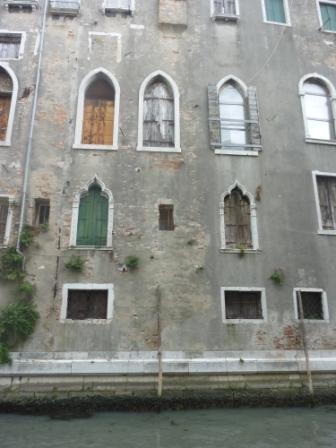
Funny, you don’t get many trees in Venice. Yet everywhere there’s so much wood.

Boats of all sorts…

Huge wooden pylons to mark the routes boats must follow…

Window shutters and doors…

But then I saw a little sign hanging on a little tree not far from our vaporetto stop. (more…)

Storytelling Starters ~ An Easter Gift

Saturday, March 31st, 2012

My Easter gift is an engaging Russian story-rhyme that I’m calling The Easter Egg. I hope you’ll like it and, between now and Easter, maybe share it with someone else. For me, it brings back some favourite memories.

For several years after it re-opened to the public, I was a kind of storyteller-in-residence at Somerset House on the Strand in London. At holiday-times, I’d do storytelling sessions on all kinds of themes. One theme was Somerset House itself: it abounds in historical tales. Another theme was gold and silver: Somerset House became the home of the Gilbert Collection of gold and silver treasures before this was moved to the V & A. Other themes were provided by the special big art exhibitions that were mounted at Somerset House. One I particularly remember was of Treasures from Russia. It gave me the reason and prompt for researching a repertoire of Russian tales that could relate to some of the marvellous objects that were on show.

Rare and beautiful egg-shaped boxes came up in several of these connections. So I was delighted when I succeeded in finding a Russian egg story to put in my rattle-bag of tales for telling at Somerset House.

Here it is. But I’m afraid I can’t tell you exactly where I originally found it. No doubt in some old volume of Russian traditional tales. Which one exactly I don’t remember. (Note to self: ALWAYS keep a note of where you find a story. Years later, you’ll kick yourself if you don’t because by then you’ll have forgotten.)

The Easter Egg

This is a story about a little Russian girl who lived with her father and mother right next to her grandmother’s farm.

This little girl would often help her granny by feeding the animals or collecting the new-laid eggs.

One day just before Easter, her mother was making bread in the kitchen.

Her father, who was the local priest, was in church preparing his Easter service.

Then something terrible happened. (more…)

Storytelling Starters ~ Stories for Younger Children No. 4

Sunday, February 26th, 2012

Next Saturday’s blog will start a new series. So far, I haven’t decided the subject. Anything you’d like to see? Please jot a note in the Comment box at the end of this blog and I’ll try to respond.

Next Thursday, March 1st, it’s going to be World Book Day, St David’s Day and my next WIPs meeting all on the same day. World Book Day speaks for itself – a day to celebrate the book, it’s usually a busy one for authors and storytellers. St David’s Day, in case you don’t know already, is the national day of Wales. It marks the death of our Patron Saint. As for WIPs, that’s a group of us who meet every couple of months to present something creative we’ve each been working on. Among us are singers, pianists, an oboe player, writers, a composer of music and a sculptor. Next Thursday, I’m planning to do a story set in Wales.

Here meantime is another Welsh story, the last in my series for younger children and an ideal story for telling next week.

The Door In The Mountain

Once there was a girl who loved singing and running. One day when she was playing hide and seek with her friends, she ran away from the rest to look for a place to hide and came across a door in the mountain. The door was ajar and she went inBehind the door was a tunnel and at the end of the tunnel was sunlight. So Betsy Bankhouse – for that was her name – crept through the tunnel until she came out on the other side and there she discovered she was in a new world that she’d never seen before.

As she looked round, Betsy saw a big blue lake and in the middle of the lake she saw an island. She desperately wanted to go there and when she got down to the edge of the lake, she saw exactly what she needed. It was a boat.

So Betsy got in and rowed that boat across the water till she came to the island. As she started climbing out, she noticed there were lots of little people looking out at her from the reeds. They said, ‘Welcome to our island, Betsy Bank-house.’ ‘That’s funny,’ thought Betsy, ‘how did they know my name?’ (more…)