


Storytelling Starters – The Magic of Objects 2
Welcome again to Storytelling Starters.

Now we’re going to move on to the second lovely object that can set a good atmosphere and inspire many stories.
The Story Cloth
Fantastically flexible, fabulously focussing, restful and relaxing …if you open your Story Bag and bring out the Story Cloth you’ve put in there, you’ll quickly begin to discover just how useful it can be. It focuses attention. (‘What’s that for, Miss?’) It brings colour. (Colour is a building-block of imagination.) It gives energy and movement. (With just a swirl of the hand, it can suggest different things … a river, a snake, a bird, a garden.)
And that’s not all. Draped over unlovely or distracting objects before you begin your storytelling, your Story Cloth can provide your listeners’ eyes with a welcome point of rest. (Why should they have to look at you the whole time?) Set beside you on the floor or a table, your Story Cloth can also help arouse expectations if you use it to set out special objects or instruments to be employed in your storytelling.
And then again …
How about using your cloth for a Story Game?
It’s deceptively simple but it works very well with children or adults and can be used either if you’re working in a circle or if your listeners are gathered in a small or large group before you, for instance on the carpet area of your classroom.
Whatever the arrangement, begin by quietly lifting your cloth from your Story Bag and showing it round, maybe indicating as you do how many things it might represent. You don’t need even to specify what those things might be.
If you’re in a circle, pass the cloth to the next person to you and quietly suggest that as it goes round, the people in the circle might say as each receives it what they think it could be for or what they think it could change into. (In my storyworks way of doing things, there’s no obligation on anyone to speak. The cloth can simply be passed on.)
Or, if you’ve got a whole group of children before you, ask them to put up their hands when they come up with an idea. Whoever volunteers can come out front and tell or demonstrate their idea. (In my experience, there’s never a lack of eager volunteers.)
Whichever the format of your session, a little chant can help a lot. Tap your knees in rhythm as you get your group to join in the words:
 Here’s a lovely piece of cloth.
But what’s it for?
What’s it for?”
Or (for older pupils or adults):
Here’s a lovely piece of cloth.
But what could it become?
What could it become?”
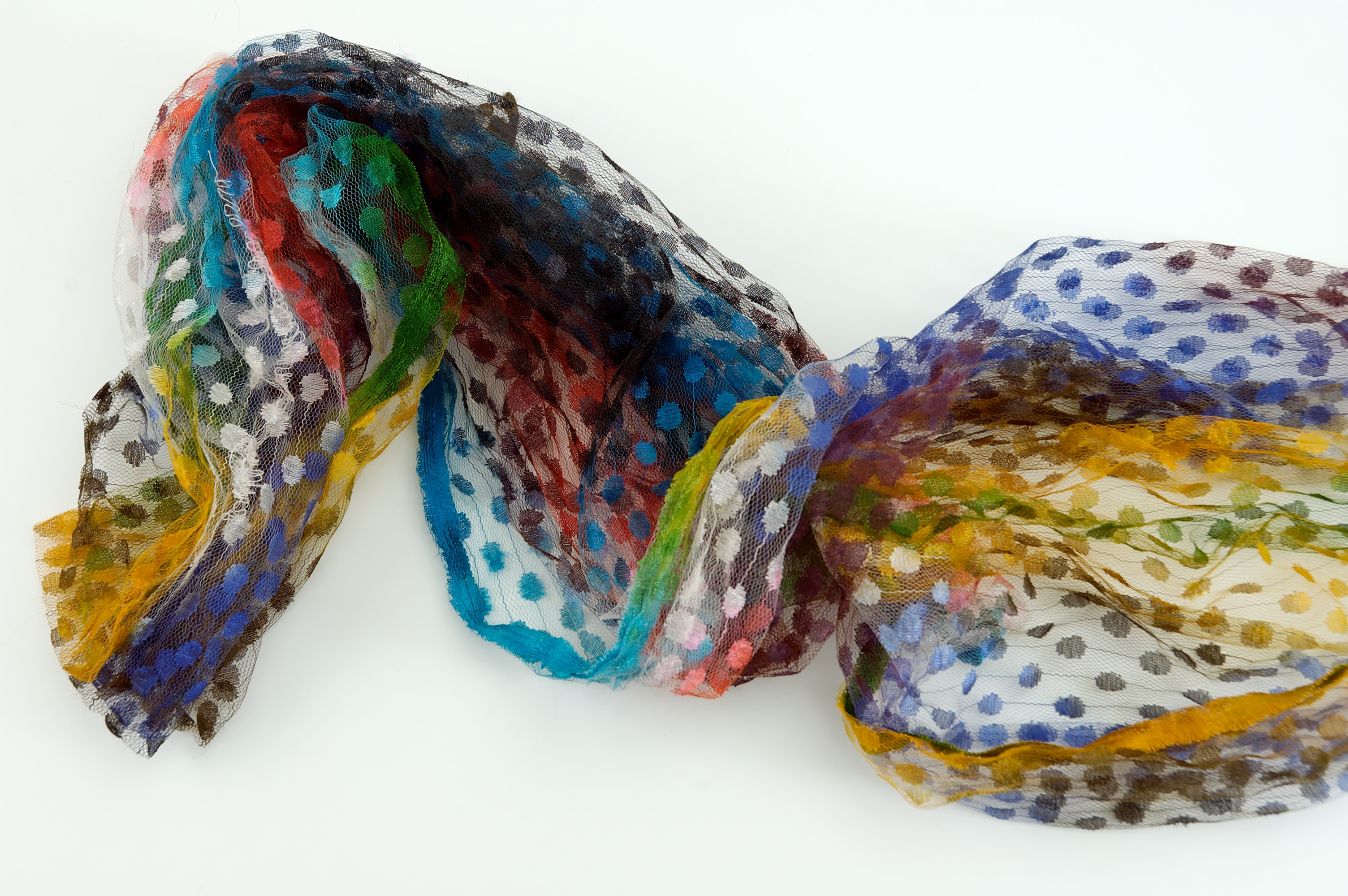
Young children generally come up with concrete, practical ideas – the cloth is for a curtain, picnic cloth or scarf or even a magic carpet. Older children and adults are normally more metaphorical: my rainbow cloth as pictured here has been… a waterfall…a rainbow snake …an artist’s palette …all the peoples of the world … a magical garden … a princess’ veil …and many other things besides.
Or how about using your cloth within a story?
Because of its inherent flexibility, a cloth can be a marvellous prop. Employed with this intention, it might represent one of the characters in your story or stand for a special location such as a pool, a garden or the sea. In my frequently-told story, Sun Frog and Moon Frog (see Stories for Young Children and How to Use Them) my rainbow cloth invariably becomes the tail of the tikki-tikki bird and also, at the end of the story, the magical rainbow she creates in the sky.
Or how about asking yourself if your cloth has got its own story? Is it a story you might tell?
My rainbow cloth was bought when I returned to Kenya, now many years ago, to revisit the place where I’d done VSO. I saw it in a bazaar that was like a paradise to me, so full was it of colour and pattern. It hung down at the side of a pillar. I held the coloured netting away from the pillar and a young lad that worked in the shop came running over to me: ‘No, no,’ he said. ‘It’s only old women wear that.’
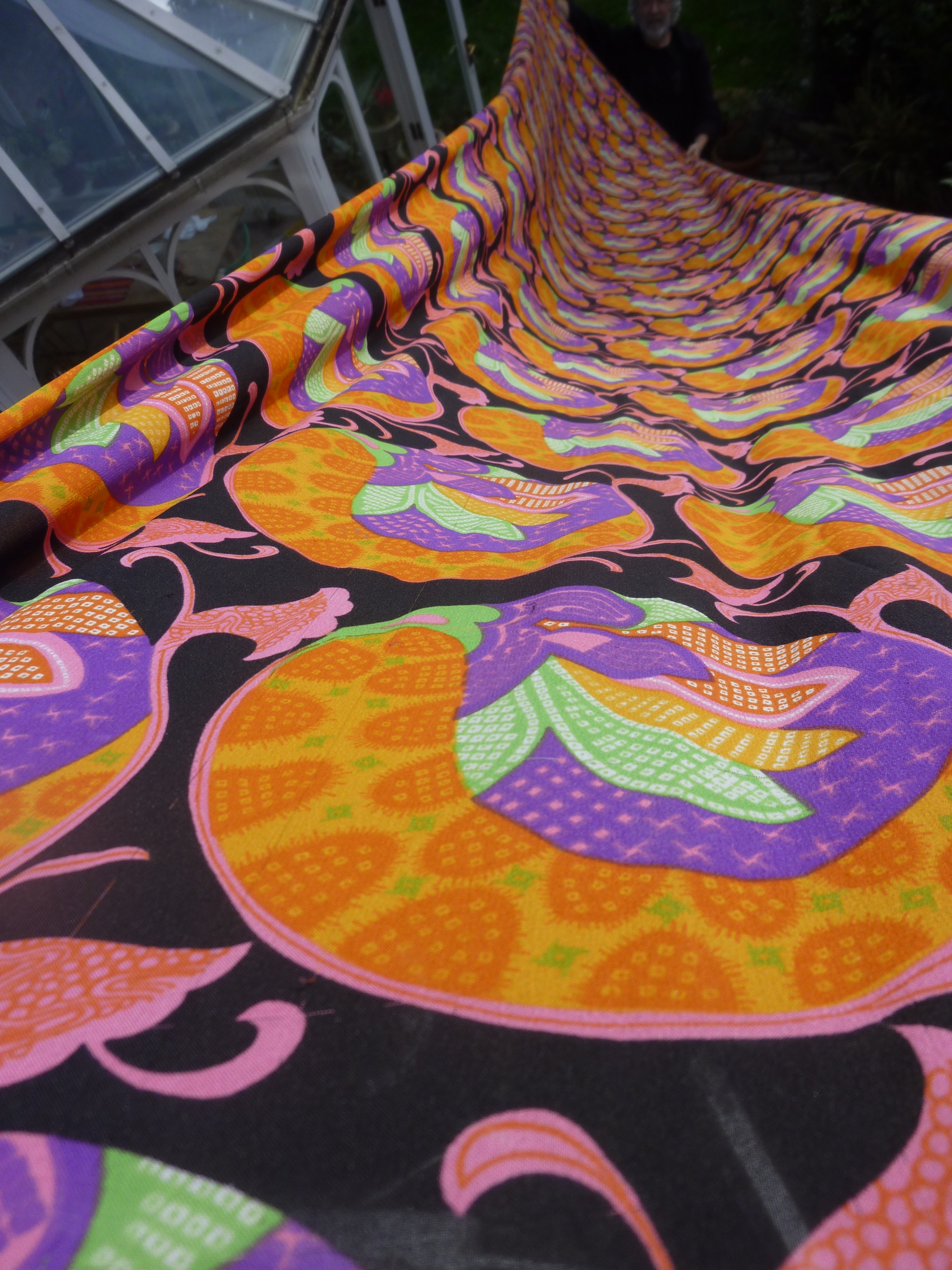
The sari-length cloth pictured (right) was given me by an Indian woman who attended a storytelling course I once ran in South London. She gave me the cloth at the end of the course in appreciation of how it had made her think about her grandmother and the stories that her grandmother used to tell her back home in India in her childhood. In turn I think about that giving each time I get her lovely gift out of my Story Bag.
Resourcing your Story Cloth (or cloths):
You haven’t any of the cloths I’ve pictured. What can be done?
How about looking out a scarf you no longer use? It doesn’t have to be bright – one teacher found an old tie-dyed scarf with very subtle colours and when she used it for the Story Game outlined above, one of her Reception Class children spontaneously said it looked ‘like oil on water’.
If you specially want a rainbow scarf, how about creating your own? Different groups in a class at school might also welcome the challenge to paint their own rainbow cloths – or, indeed, to create a variety of Story Cloths of their own design. Almost inevitably, such a process encourages storymaking. Just get out your listening ears to hear the ideas bubbling forth!
And what about the patterns on cloths? Early Years children can be fascinated and can learn a lot from their fascination. For instance, the different colours and patterns of fishes on the brightly-coloured sarong shown here have provided lots of lovely new words for children in storytelling sessions I’ve run as they’ve come and sat around it, each one in turn pointing out which particular fish they like best. Stripey, spotty, orange, yellow …
And how about thinking about what size of Story Cloth could prove useful to you? For instance, an Indian sari-length can be fantastic for communicating a sense of distance to children. Held up between two adults and gently moved about, it can quickly become a long road, a river or even a colourful sky. The sari-length I’ve pictured here has proved its worth in all those respects but never more so than on one never-to-be-forgotten occasion when, at the specific suggestion of the children, it was draped over an easel to become the den of the bear in a Special School telling of Going On A Bear-Hunt.
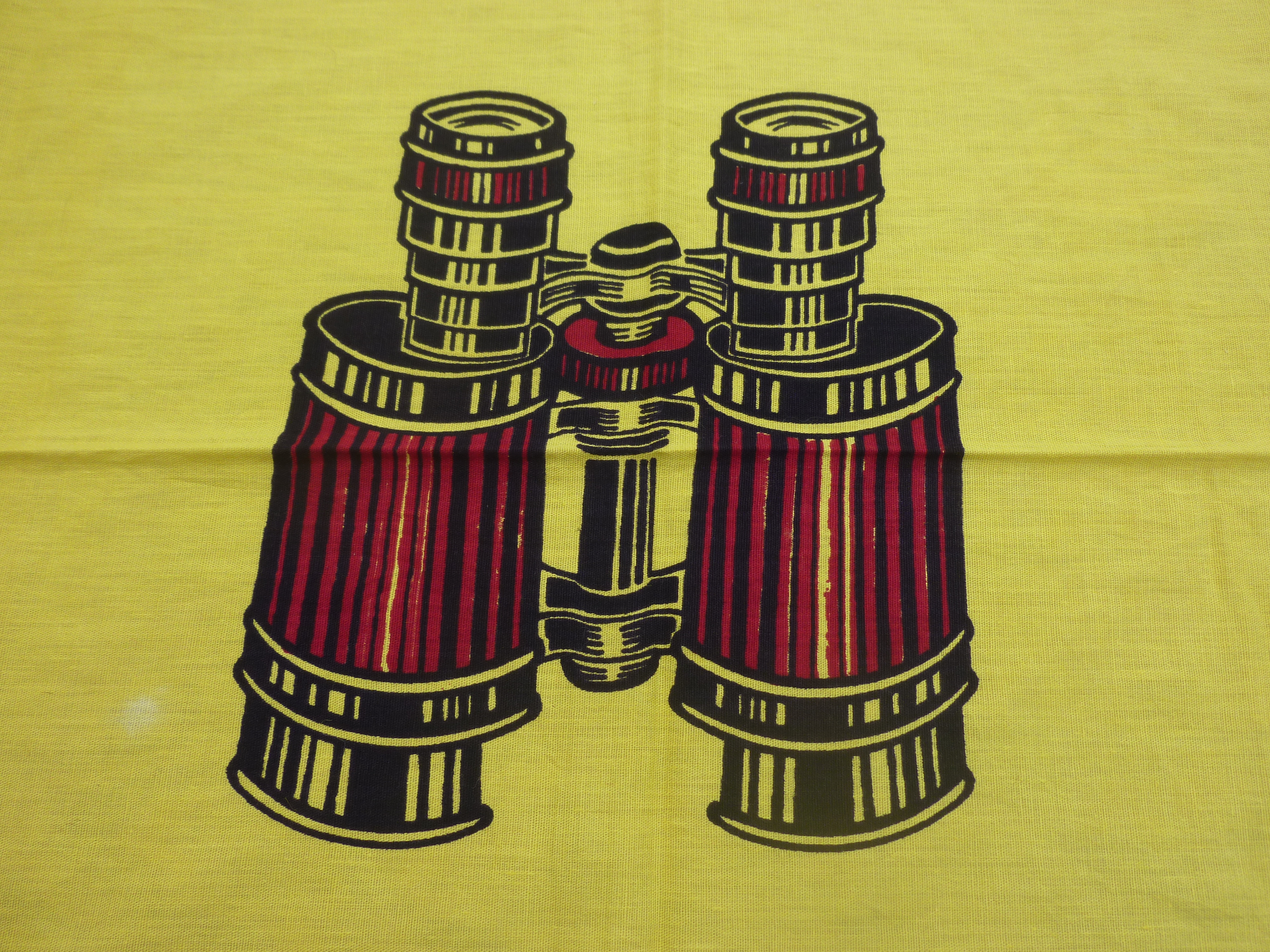 And what about the culture of cloths? Cloths from different parts of the world are also full of educational potential. In East Africa, the type of cloths known as kangas are used for everything from covering tables to carrying babies and chickens. They generally have patterns employing intriguing motifs as well as being inscribed with thought-provoking sayings.
These add considerably to their storytelling potential. ‘You can fix the world in your glasses,’ says the Swahili motto on my binoculars cloth, ‘but you can’t stop it turning around.’ Ukifuata Mengi Dunia Haiendi. So true!
NEXT WEEK?
Here’s a visual clue …
Tags: educational potential, Kenya, resourcing story cloths, sari, Story-Cloth Game
October 10th, 2011 at 1:53 pm
Fabulous–I want the bag, the cloths, the stories, you–everything!
October 11th, 2011 at 12:06 pm
Love it! I look forward to hearing and seeing more great ideas.
October 19th, 2011 at 10:31 pm
I absolutely LOVE this idea! So simple yet effective and i’m sure it would work perfectly with stories associated with different world religions!I just need to find a way to get the teenage darlings to be quiet before I begin!
October 22nd, 2011 at 9:40 am
Kevin, Delighted you like the blog. Makes me remember that wonderful Residency Week you were part of with Shonaleigh and myself before the Festival at the Edge a few years ago. And you’ve done so much yourself since!
October 22nd, 2011 at 9:45 am
Wayne, Fantastic to get the support of a true wordsmith! Has Jean yet had a chance to have a look as well?
October 22nd, 2011 at 10:07 am
Rebecca, it’s my bet that what you need is a sea-tray (coming up as Item 3 in Storytelling Staerters). I’m sure the look and sound would immediately arrest the attention of your teenage darlings. It’s so great to think of you telling them stories – and stories from different world religions.