Mary Medlicott, Storyteller and Author - Storyworks

Archive for the ‘Personal experience’ Category

Storytelling Starters – Bringing Up The Evidence

Saturday, October 20th, 2012

Last Sunday morning, inspired by the previous day’s episode of Clare Balding’s Ramblings on Radio 4, we didn’t hang about. We got going quickly on our way through London and down the A13 to seek out Rainham Marshes and, specifically, the RSPB Centre there.

The day was a terrific adventure. Clare Balding had been talking on her programme with the actor Sam West, a passionate birder and frequent visitor to the Rainham Marshes Centre. Together they did an excellent job of inspiring me for one. But in my particular case they were only part of the inspiration. Even while listening to the programme, I’d been remembering that, years ago (in fact in 1997) I’d done a storytelling project with some Rainham children as part of a much larger project on Local Legends with children in Havering schools.

The inspiration of secret places

One of my aims in my Local Legends project had been to get the children thinking and talking about their locality by remembering their secret places where they liked to spend time. I wanted them to think about these play places both as an end in itself and as a springboard to creating new stories of their own. The aim bore fruit: it was evident how greatly they seemed to enjoy this approach. One particular boy – and I’ve never since forgotten that he was from Rainham – showed a degree of pleasure that gave me some pause for thought. His passion for Rainham Marshes moved me. I loved the sense of secret adventure he communicated as he talked about the wetlands, the intimacy of the love he felt for the dens he’d made there and the pride with which he used his private knowledge to create a new story around his experience.

So when we set off for Rainham on Sunday, that boy was vividly in my mind. Then as we got to the area where I thought the RSPB Centre must be, I began to get another very strong feeling as we drove back and fore along Wennington Road, trying in vain to find the place. We’d been so keen to set off, I hadn’t even looked up directions or a specific address! We were still searching when, suddenly on Wennington Road, I spotted a school called Brady School. ‘I’m sure I’ve worked in that school,’ I told Paul. (more…)

Storytelling Starters ~ Vote Now!

Saturday, September 15th, 2012

The website is open, voting has started and this year’s BASE awards are now being decided. The numerous categories range from Outstanding Male or Female Storyteller to Trailblazer and Life Achievement. The voting deadline is the witching hour of midnight on September 27. The results get announced the next day.

Lifetime Achievement Award

The Lifetime Achievement Award is what I’m up for. If you’d like to give me your vote (and the three of us shortlisted include Sheila Stewart and Taffy Thomas), here are the steps to take. Be patient, they’re quite straightforward but a bit long-winded:
  1. Go to http://www.storyawards.org.uk/
    Click on Register to Vote
  2. On the USER ACCOUNT page that comes up, fill in the boxes marked Full Name / Username / E-mail address and Word verification and then click on Register
  3. Note that a message then comes up at the top of the page saying an acknowledgement email is being sent at once to your email address
  4. When you look up that email, click on the link that is given so that, on the form that comes up, you can set a password
  5. On the form that comes up, fill in your Username and select a password
  6. Click on Save
  7. Now at the top of the page click on Vote
  8. In the first category – Lifetime Achievement Award – click on Vote (hopefully for me!)

If you do give me a vote – and thanks so much if you do – I’ll see it as an affirmation of all the 30 years of extraordinary, ordinary stuff that storytellers like me get up to – the schools, the workshops, the training, the performing, the supporting, the talking, the sharing.

‘Thank you for teaching us thinking’

Stuff, in fact, like at Craig Yr Hesg school this last week. The school is small and very friendly – about 100 children – and in a pretty deprived area of South Wales. My Shemi stories went down well and, with the 5 and 6 year olds, there was also a very lively response to the excellent Pembrokeshire legend of Skomar Oddy, the giant who sleeps under the Preseli Hills.

Bringing such stories to children always feels like a privilege. It’s a joy to see them becoming absorbed and a pleasure to stimulate them into responding in a whole variety of ways. It made me remember how a Junior-age child once wrote to me after a session: ‘Thank you for teaching us thinking.’ (more…)

Storytelling Starters ~ School’s back

Saturday, September 8th, 2012

Life moves on. School is back and this week I’ve been getting ready for a storytelling day this next Monday at Craig Yr Hesg Primary School in Pontypridd. As well as actually doing the preparing, I’ve been thinking about what the process of preparing means to me. All working storytellers have their own approach. But this is what it’s like for me.

Mind-mapping ~

At Craig Yr Hesg, it will be stories from Wales I’ll be telling. I’ve made my usual mind-map in the style of Edward de Bono  and along its branches I’ve noted some of the possible approaches and stories that are coming into my mind as possibilities. A lot of my sense of this arises from having had a chat on the phone the other day with the person responsible for organising Monday, in this case the headmistress. Emails are all very well. But it’s a personal chat about the arrangements – when and how to get there, the programme of sessions, content of sessions, the children, the approach – that gives me that crucial and immediate sense of the school which, personally, I couldn’t manage without.

Mind-mapping ~ possible stories

So the mind-map is where I’ve marked down my thoughts about what I’m going to do on the day. They’re suggestions to myself rather than fixed expectations since, on this kind of occasion, I’m well aware, I have absolutely no need or desire to decide in advance exactly what I’m going to do. I remember learning that lesson – that it’s perfectly possible to decide on the moment – one day early on in my storytelling career.  I was on a train to the school whose headmaster was at that time Chris Brown who for so many years has given his free time to being Reviews Editor of The School Librarian. As I agonised about about which of two stories I was going to tell to Chris’s own class, it suddenly dawned upon me that, if I knew both stories well enough to be able to tell either of them, I didn’t need to decide in advance. It was an exhilarating moment of liberation!

With Classes 3 and 4 at Craig Yr Hesg (that’s the Junior end of the school), my expectation is that I’ll focus on my Shemi stories. These stories were originally created and told by the remarkable Shemi Wâd, a North Pembrokeshire storyteller from the 19th century. I retold them in my book, Shemi’s Tall Tales. Apparently Classes 3 and 4 are boy-dominated and very lively. Experience tell me they will love Shemi. He’s Welsh. He’s eccentric. He’s brilliantly funny. Besides, Class 3’s theme as term begins is Flight, so I expect they’re going to love hearing how Shemi got flown across to Ireland by seagulls and shot back to Wales from a cannon. Besides the theme allows me to talk a bit about storytellers and to explore with the children the idea that we all have stories. Some of us get told them, some of us don’t, but we all have them inside us and in the world around us. (more…)

Storytelling Starters ~ Mouth No. 3

Saturday, September 1st, 2012

Last week I promised details of how to vote for the shortlisted candidates (including me!) for the new BASE awards. But there’s no sign yet of the new BASE website with the details. Hopefully it’ll be up by next week, so I’ll come back to the subject then.

Meantime back to Mouth – and Mouth is, of course, central to oral tradition. The phrase By Word of Mouth even won me a bottle of champagne when I came up with it as the possible title for the TV series on storytelling that I proposed and devised for Channel 4 at the end of the 1980s. The series at that point was almost completed. All we lacked was a title. The production company offered the champagne. I remember racking my brains in the bath. As soon as I thought of  By Word of Mouth,  it sounded obviously right.

Don’t children often say it: ‘Tell me a story out of your mouth’? They love the directness of telling and this week’s two stories quite literally add a twist to the telling. They take you back to the fun that you get as a child when some lovely silly adult makes hilarious expressions at you. Combine the facial expressions with a good story and the story gets asked for again and again. This week I’ve got two stories to choose from.

And by the way, I hope you love my photo illustration as much as I do. If you don’t know who its subjects are, go to the bottom of my Blog for details. (more…)

Storytelling Starters ~ Mouth No. 2

Saturday, August 25th, 2012

A few days ago I got the news that I’ve been shortlisted for that Lifetime Achievement Award. More on that subject – including how to vote – next week.

Last week, to introduce Mouth, I offered some sayings and quotes on the subject. This week’s offering is a story in which a butterfly comes out of an open mouth, then goes on a journey and returns. The butterfly, of course, is frequently seen as a symbol of Soul. Yet in several comparable stories of which I’m aware, it’s not a butterfly that comes out of the mouth but some other strange creature that is almost a little manikin.

The variants:

One of the variants is an African tale. It talks of a very sick man who is lying, fevered and thirsty, on the bed in his room. As he falls asleep desperately craving some water, his mouth falls open and a tiny little creature comes out. The creature hops across to the jug of water that stands beside the sleeper’s bed and there takes its fill of the water before hopping back to the sleeper and re-entering his mouth. At that point, the sleeper wakes up feeling much better and greatly refreshed.

Another variant comes from Wales and here it’s haymakers who are taking a mid-day break from their labours, sitting in the hedge at the side of the field, when one of them falls fast asleep. When one of his companions observes a monkey-like creature coming out of the sleeper’s mouth, he calls his companions’ attention and they watch as the strange little being crosses the field to the river that flows along beside the field and takes its fill of the water before returning to the sleeping hay-maker and disappearing back into his mouth.

Why I especially like the Welsh story:

I find the Welsh story very appealing in the sense that it reminds me of two separate occasions in my childhood when I saw hay being cut by hand with scythes, once in the couple of fields that my grandfather owned, once on the smallholding that belonged to my uncle. On each occasion, I remember the haymakers coming together from neighbouring farms to lend their help and at mid-day being brought their mid-day food. On the second occasion, I vividly recall, I travelled home perched on top of the hay-wain, my nostrils filled with the warm smell of the hay. My great-aunt had given me some odds and ends of beautiful ribbon to play with and I clutched them in my hands, feeling their texture, all the way back to my grandparents’ house. It was one of the happiest days of my life.

Why I tell the butterfly version:

But it’s the butterfly version I tell. And why? Because of it’s strange, mystic atmosphere. Because I love the visualisation. Because it works on a double level and it’s very much a story about dreams. The butterfly version as I give it below originates from Ireland. Here I’ve adapted it slightly from the version given by Kevin Crossley-Holland in his excellent collection, British Folk Tales, where it appears in the section entitled Enchantment, which I think is very apt. (more…)

Storytelling Starters ~ Body stories

Saturday, July 21st, 2012

Only a week to go. The Olympics are about to begin, London is getting ever more crowded and already it’s becoming quite a bodily skill to manoeuvre a way through the crowds. Meantime, newspapers and TV are full of the physical skills of the athletes. There’s also lots about the psychology of competing and the determination and persistence involved in increasing bodily prowess, let alone the mental skills required to stay focused and cool. It’s absorbing.

I won’t be going to the games myself. I’ll be watching on TV at home while devoting my mind to thinking about physical skills and bodily parts. For that’s my theme for the next few weeks.

I’m starting today with one of my favourite stories. I call it Five Chinese Brothers. It’s a marvellous story for adults to tell and children to hear. Like the extendable legs in the story, it somehow seems able to stretch up the age-range from children of about five years old to children of eleven or twelve. And as you’ll see when you read the story, extendable legs are just one of the story’s magical powers. But first, here’s a bit of background about how I first came to hear this tale.

Five Chinese Brothers – some background

I first heard the story from Beulah Candappa, the inspirational storyteller from Burma who was one of the first full-time storytellers I got to know in London during the 1980s when storytelling as an art was reviving.

Beulah was the daughter of a headteacher and chieftain. She’d turned from teaching to full-time storytelling because she so strongly believed in the necessity for people to have stories. Stories had been part of her own life since childhood. She was generous in the way she shared them. Always calm and serene in her manner, she would carry with her baskets of fascinating folk objects and set these out in the course of her tellings, creating a wonderful theatre of the imagination.

Beulah has influenced me a lot. Once in a conversation on the phone, she memorably described storytelling to me as ‘the art of time and silence’. And when she wrote a piece for the booklet that accompanied By Word of Mouth, my Channel 4 TV series on storytelling that was shown in 1990, it was enticingly entitled, A Crackle of Excitement.

That’s Beulah – a wonderful combination of quiet serenity and an electric buzz of excitement. I think of her whenever I think of this tale, which I’ve probably adapted in various ways in the course of dozens of tellings over the years.

Five Chinese Brothers – the story (more…)

Storytelling Starters ~ Nature Stories

Saturday, June 30th, 2012

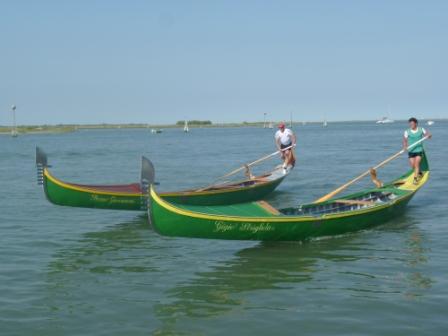
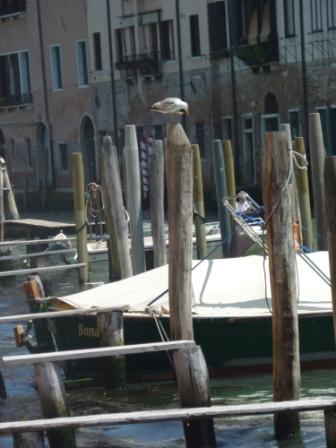
Well, the photos this week are of birds – three of a pigeon in Venice plus a picture out of my photo archives of seagulls over the Thames.

But the theme of the words is not just birds but cuckoos.

Why cuckoos?

A while ago, a good friend of mine who is also a storyteller got me interested in sponsoring a cuckoo. To do what, you might very well ask? The answer is that the British Trust for Ornithology is keen to find out why cuckoo numbers in Britain have been on the decline and why cuckoos from Scotland and Wales have been doing rather better than cuckoos from England. So they’ve been tagging cuckoos and, by tracking them on the fantastic journeys they annually make from the UK, down across Europe into Africa and back again to where they set out, they are hoping to discover what problems the different cuckoos face.

Last season, I sponsored an English cuckoo who’d been awarded the name of Kaspar. Alas, he didn’t return from the 16,000-miles or more that  these cuckoos normally travel. This season I’ve sponsored a cuckoo from Ceredigion  in Wales who is yet to be awarded a name. I’ve written in, along with many others, to suggest what name might be chosen for him.

My suggestion is Taliesin. Taliesin was one of the earliest Welsh poets. He lived in the second half of the 6th century and I’ve often told audiences the magical legend about him that appears in the Mabinogion.

Taliesin still sings, I said in my email, and hopefully the soon-to-be-named cuckoo will sing for a long time too.

I recommend the BTO website. Like the tree-sign in my last week’s blog, the material on cuckoos (and other birds too) is a story in itself.

A cuckoo legend:
By tradition, it’s on April 7th that the first cuckoo’s song of the year is heard each year in Pembrokeshire which is my native part of Wales. The 7th April is St Brynach’s Day and, in the village of Nevern where St Brynach eventually settled after making a pilgrimage to Rome and spending some years in Brittany, people would wait for the cuckoo to come and fly down to the old Celtic Cross that is St Brynach’s Cross. And it’s there, they say, that the cuckoo would sing.

One year, the bird was late arriving. Waiting eagerly for it to come, the priest was reluctant to start the service until he’d heard the cuckoo’s song.

Eventually the gathered congregation saw the cuckoo fly down through the trees in the churchyard and settle on St Brynach’s Cross. But the bird looked terribly battered and tired and, after singing for one brief, glorious moment, it fell from the cross and died. (more…)

Storytelling Starters ~ Nature stories

Saturday, June 23rd, 2012

Back from Venice, I’ve been thinking – as you do! – about what were the best bits in a very good ten days.

One of my favourite things was something I saw just a few steps away from our hotel in Cannaregio.

Funny, you don’t get many trees in Venice. Yet everywhere there’s so much wood.

Boats of all sorts…

Huge wooden pylons to mark the routes boats must follow…

Window shutters and doors…

But then I saw a little sign hanging on a little tree not far from our vaporetto stop. (more…)

Storytelling Starters: Desert Island

Saturday, April 28th, 2012

Desert Island is a marvellous and deceptively simple game that was developed by myself and storytelling colleague, Karen Tovell. Karen and I made it up for one of our famous Drill Hall workshops. These were monthly day-long workshops which began in 1986 and went on for 10 whole years, moving in latter years to the Holborn Centre for the Performing Arts.

We covered a great deal of ground in those workshops. An enormous number of stories got told both by ourselves and participants too. We also developed a huge number of exercises and activities that enabled people to explore these stories, discovering their hidden depths and using them as take-off points for creating new tales. (By the way, one person who used regularly to come to the workshops sent me a great email this week saying he still uses some of the ideas and routines we did there. Any more of you out there?) (more…)

Storytelling Starters ~ An Easter Find

Saturday, April 7th, 2012

I was scratching my head about this week’s blog. A piece of synchronicity gave me the answer.

An Easter Find

Layers of story

On one side of the synchronicity – synchronicities always have at least two sides! – is my native Pembrokeshire where I’m spending Easter. Once again, I’m reminded how the place is layered with stories like the geological strata of the land itself. One layer is the magical legends of the saints. There are memories of them everywhere especially in the names of places and the many little old churches. The stories of the saints themselves are an extraordinary combination of fact, medieval myth and spiritual inspiration.

The London Welsh Chorale

On the other side of the synchronicity is the London Welsh Chorale which is the choir I sing with in London. We’re currently learning an oratorio by the great Welsh composer, William Mathias. It’s an infrequently sung piece called St Teilo which we’ll be singing in our summer concert in St Giles, Cripplegate, in the Barbican, on Saturday 10 July.

Its subject, Teilo, was reputedly one of the two holy monks who accompanied David (subsequently Patron Saint of Wales) on the journey he is described as having made to the Holy Land to Jerusalem.

Well, a couple of days ago, I was looking through a beautiful booklet about Pembrokeshire churches, published in 1989, in which the paintings were made by my friend, John Knapp-Fisher.

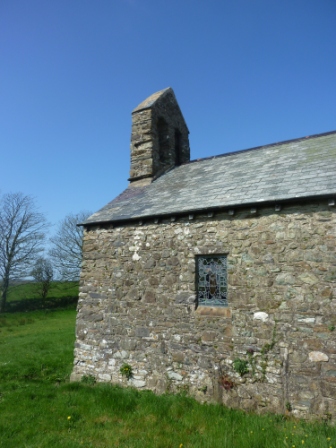
As I perused this booklet, I suddenly made the connection. Of course! There’s a little church in this northern part of the county that is actually dedicated to St Teilo.

It’s in a notoriously hard-to-find village by the name of Llandeloy.


The church

So I went to look for the church again. (more…)