


Storytelling Starters ~ Cry from the heart
In the library this week, I picked a slim little volume called Search Party off the New Books shelves. ‘Wow,’ I thought when I opened it up and saw poems about poverty and homelessness, disadvantaged kids, aspiration and anger and love.
George the Poet
 George the Poet is a young black British man. His parents came from Uganda. He succeeded in getting into Cambridge where he studied politics for six years. But he wasn’t happy with where that was leading. Now he is a rap poet. He has a strong and powerful voice and he’s using it to express what he feels needs expressing.
George the Poet’s poetry challenges all complacencies, for example about the way disadvantaged children fall behind in school. I hope he gets widely heard. He not only has the intelligence and the language to speak out in protest. He also has some spot-on ideas about how to change things.
School Blues
School Blues begins by clearly stating – with accompanying statistics – how children from disadvantaged backgrounds enter secondary school with lower literacy skills than their peers. The second verse begins like this:
It’s time to stage an intervention –
One that’s designed for engaging their attention.
 Music is an example, says George the Poet, of something that has the power to speak from the heart. Surely it can be used to engage and inspire?
See education and art go hand in hand;
There is no reason to keep them apart.
Verse 3 of School Blues is explicit and practical:
What if schools made use of musicians
As a means of getting their students to listen?
Analysis and discussion of actual lyrics
Helps learning to occur in more natural spirits.
I’ve done the same thing myself with poetry.
It doesn’t just sow a seed, it helps grow a tree.
What George the Poet is saying here is something I also know and believe. Children respond to someone from outside who brings them something creative and different, something they can admire. School Blues made me go back to the box full of letters I’ve received from children in schools.
 ‘You teach us thinking.’
‘I am going to use visualisation in all my stories.’
‘When I write my stories now, I shut my eyes. I think of something then make a film about it, then write it in my book.’
The letters containing those sentences were sent to me after a school storytelling session where a small part of the time had been spent telling my listeners about visualisation and giving them the chance to try it out for themselves.
How important such things are! Yet it’s commonly acknowledged among storytellers today that storytelling bookings from schools have dramatically declined over the last few years. Lack of funds? Lack of time? Pressure of targets and lesson-planning? Loss of the understanding about what even a one-off visit can achieve?
‘Education and art go hand in hand.’
 Oddly, just a few days after coming across George the Poet’s book, I heard of one really good example of how innovation can help with literacy.
A young nurse-assistant and I had got onto the subject of listening. In Australia where she comes from, she told me, there’s real concern about how to get boys to read. The problem is compounded by the fact that there are so few male teachers in Primary Schools to act as role-models. So as part of a new campaign, her dad who is a secondary-school English teacher, has been seconded to go round Primary Schools and read aloud to children for an hour at a time. A visitor? A man? A man who loves books and reads? I can see what a difference that would make.
Come on world! Read George the Poet and get on with it.
Search Party by George the Poet is published by Virgin Books www.eburypublishing.co.uk
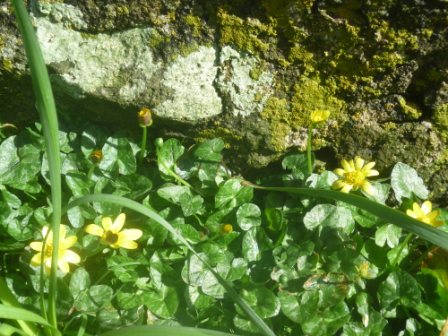
P.S. I wanted something bright to illustrate my blog today. I chose some common flowers because being common doesn’t make them less beautiful.
Tags: disadvantaged kids, George the Poet, role-models, Search Party