


Storytelling Starters ~ Fortunately/Unfortunately
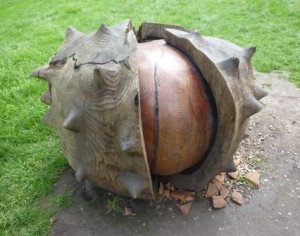
 Strange faces appear in all kinds of odd places when you start looking for them. On the right is one I spotted when walking in my local part this week. It’s been there a while. It must have been last week’s Transformation game which made me finally see it.
Now for this week’s game.
Fortunately/Unfortunately is a popular game. It too must have been subconsciously affecting my thinking this week. For on Wednesday morning, shortly after one of my top rear teeth dropped out of my mouth without warning, I found myself reporting the incident in an email to friends in exactly the mode of the game:
Unfortunately, one of my back teeth fell out this morning.
Fortunately, I was quickly able to fix a dental appointment for later this afternoon.
Unfortunately, I also felt apprehensive that it would cost a lot of money to sort out the problem.
Fortunately, my dentist said no, it was just the crown that had fallen out and he could cement it back.
Unfortunately, he also said it might not last and if it fell out again, I’d have to get a whole new crown.
The general idea:
As in my true-life example above, any story that is to be created according to the pattern of this game is one that will swing back and fore between fortunate and unfortunate events or perceptions. Good and bad. Lucky and unlucky. It’s a game where the optimist and the pessimist can battle it out.
Who is it for:
The game is played in groups and is best with Junior School and Secondary pupils. Adults can prove a bit hesitant and shy but can also get into it with a bit of encouragement.
How to play:
As the facilitating storyteller, start by explaining that you will come up with the first sentence and that, after that, you will be looking out for the next contribution. Hands up or shout out, anyone can have a go at taking the story on.
 Here are two starting sentences I’ve often used:
I was sitting under a tree one day when something fell out of the branches.
I was lying by the side of the river when I spotted something moving in the water.
After either of these beginnings, I ask for the next sentence to be one that starts with Fortunately:
eg. Fortunately, it was only a conker.
Who knows what would come next? Unfortunately, the conker was massive?
Helpful hints:
Encourage contributions from all sides of your group by moving your gaze around, quickly redirecting attention as contributions are offered.
Adopt a short, sharp, upbeat manner and frequently recapitulate the story.
If someone kills the story too quickly with premature murder or death, you can applaud their offering even as you suggest that maybe that’s not what happened. There could be an alternative.
Sometimes, to get the best from the story, it’s a good idea to hear not just one contribution at any one juncture but to listen to two or three different ideas. Pursue the one that looks most potentially productive.
If the story looks like it’s going on too long or getting rambly and losing shape, intervene by stating quite clearly that all good stories have to come to an end and now could be a good time to bring this one to a close. Then ask for some different suggestions to lead the story to a good ending.
 This week’s illustrations:
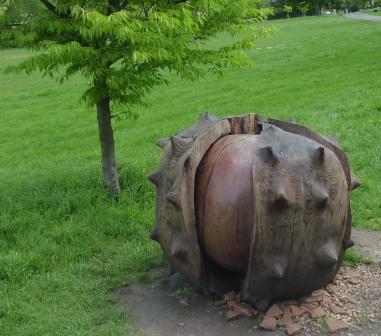
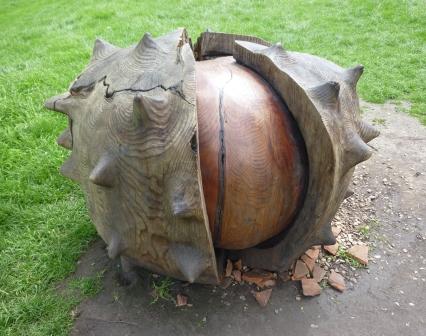
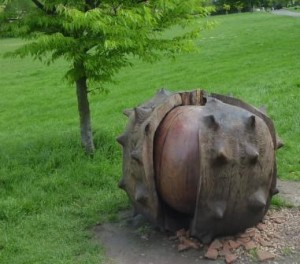
Not easy to illustrate this particular game! But I suddenly remembered the peculiar carving that had appeared in my local park one day a few months ago. A giant conker! It looks so realistic and small children passing by with their parents are very attracted to it. Often they rush up to it with the wonderful question: Is it real? Yes it is (as a piece of art!). One of the prolonged periods of rain earlier this year unfortunately made it start to crack. Fortunately, the park-keepers rescued the problem by lifting it onto a shallow bed of stones. Now it seems to be OK. Anyway, if you were so unfortunate as to have it fall out of a tree while you were sitting underneath, I hope you would be so fortunate that it didn’t fall on your head.
Links:
You can also read occasional blogs by me on the Early Learning HQ website. Early Learning HQ offers hundreds of free downloadable foundation stage and key stage one teaching resources. It also has an extensive blog section with contributions from a wide range of early years professionals, consultants and storytellers. For details of the Society for Storytelling, click here.