


Storytelling Starters ~ Ibanang Story 3
Good stories make good travellers. They can also contribute to the spread of storytelling. In both these respects, the story of Ibanang has proved of great personal worth for me. For instance, I’m sure it played a big part in bringing about the five-week storytelling trip to South Africa I was invited to make in 1992. This is how it came about.
Alan Kenyon was a wonder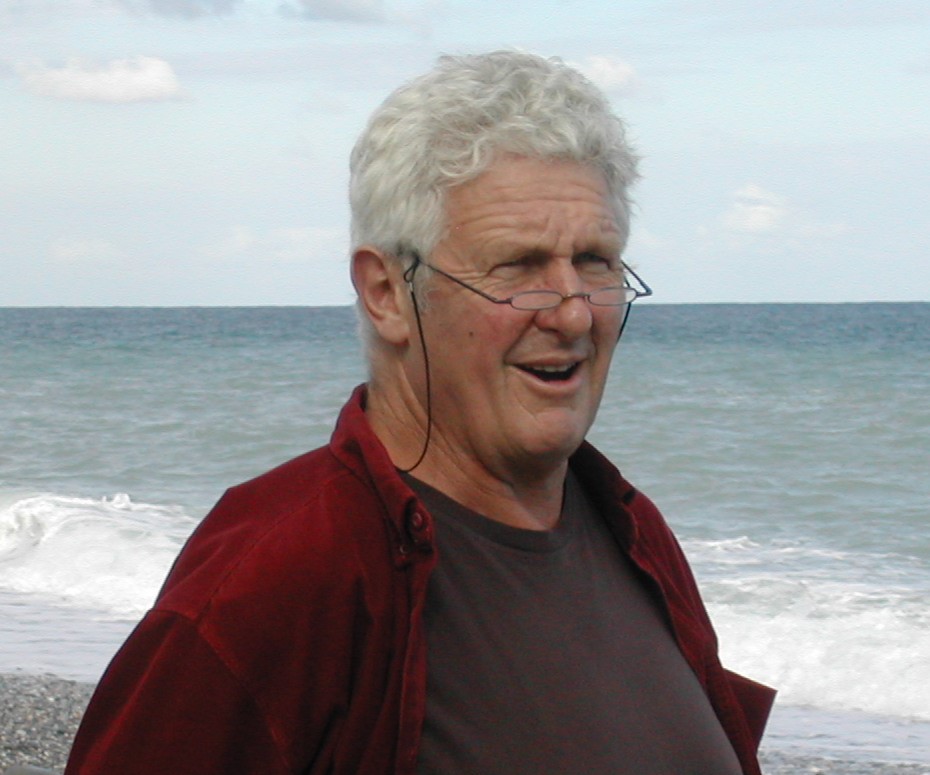 ful man. When he began attending the Drill Hall workshops I used to run with my friend and colleague Karen Tovell, I learned that he was over here from South Africa on a sabbatical from his work as a teacher-trainer. Science was his subject and his project in the UK was to explore the potential of storytelling for the teaching of science. Alan and I got on well. But it’s perfectly possible that no more would have come of our Drill Hall meetings had an extraordinary coincidence not come to light.
Shortly after I’d first met Alan, I was due to start a new storytelling course in Lambeth. The course was to be held in an out-of-the-way centre where I hadn’t previously worked. It was very badly advertised by Lambeth Adult Education and I had a sense that, quite possibly, no-one at all would turn up. And no-one did – except for Alan. His coming along gave us a welcome chance to talk and, as I drove him back into town, it turned out we had a friend in common: Lynne, had become one of my very dearest friends. By now, she was back in South Africa where she’d grown up and I’d become godmother to her daughter.
So when Paul and I went to Cape Town to visit Lynne and her family in February 1990 – justa day after Nelson Mandela was released from prison – we naturally got in touch with Alan. By then, he had formed a storytelling group that used to meet every month at his house. I was invited along to a meeting and found myself among a wonderful group – ethnically very diverse (which was unusual for South Africa at that time) and full of interesting characters.
At that meeting, Alan asked me to retell the story of Ibanang. He’d remembered it from a Drill Hall workshop and had already told it back in Cape Town at one of the storytelling group’s meetings. Another member of the group, Laurence Manzezulu, a Primary school teacher in Khayelitsha, a black township on the edge of Cape Town, was especially keen to hear the story again and, at the end of the evening, Laurence invited me to come to his school to tell it to his class. I’ll never forget the occasion – the attention of the children, their dignity and interest and how, after I’d finished my story, one of his class spontaneously put up her hand to say she’d like to come out and tell me and her class a story she knew.
 Storytelling spreads:

Alan’s storytelling group was its own evidence of how a story can travel and how it can spread. Laurence Manzezulu, for instance, was not only now telling stories in his Khayelitsha school. He’d also begun trying to revive storytelling in the township. Many people living there, he’d realised, had moved to the township from rural villages. In their new circumstances, they’d become dominated by TV and were forgetting their stories and their traditions. So Laurence had started trying to inspire a kind of revival. One of his techniques was to invite the children in his class to go home and say to their parents that he would come to their homes and tell a story. But first, they must invite their neighbours to be there too. The idea was a great success. For what would Laurence do after he’d finished his story and was being begged to tell another? He’d say, ‘Teacher will tell you another story. But first you must tell one to me.’ In this way, Laurence Manzezulu was becoming a story-collector as well as a story-teller and a reviver of storytelling.
The fizz of communication:
Perhaps it was the fizz of communication which the story of Ibanang helped create, the sense it gives that fearful obstacles can be overcome, that in its turn provided one of the sparks for one of the most influential and extraordinary episodes of my entire storytelling career. This was the five-week storytelling trip to the new South Africa I was invited to make eighteen months after my meeting with Alan Kenyon’s group. The trip was organised by Alan in conjunction with all kinds of organisations and it couldn’t have happened at a more stirring time. For in August 1992, when I set out upon it, South Africa was experiencing the incredible excitement and hope that the end of apartheid brought about. For me as a storyteller, the double sense of welcome and challenge could not have been greater. But that is another story all of its own.
PS: My top photo is of wonderful Alan Kenyon who sadly died before his time. I wrote an obituary of him for the August 2010 issue of Storylines, the Society for Storytelling’s magazine. My second photo is of the equally wonderful actress and storyteller Gcina Mhlope who has contributed hugely to the revival of storytelling in South Africa. I heard much about her on my 1990 trip and then met her in Johannesburg in 1992 when she was preparing to put her storytelling to the service of a vast programme of voter-education prior to South Africa’s first non-apartheid elections.
Tags: Alan Kenyon; South Africa; Laurence Manzezulu; Ibanang; Nelson Mandela; Gcina Mhlope
July 30th, 2016 at 11:02 pm
What an inspiring story, Mary, in a great web of connections and life-changing experiences. Told stories seem to have a heart-beat of their own, they just keep on going, no matter how many people turn up. I forget that sometimes. M
August 2nd, 2016 at 5:42 pm
Meg. as always it’s brilliant hearing from you and knowing that, though on opposite sides of the world, we share so much in the way of stories and storytelling. All best wishes to you – and, hopefully, to that drum you’ve been looking for. Mary xxx
July 30th, 2016 at 11:06 pm
PS I found myself yesterday looking around in a second-hand store for an old drum!