


Storytelling Starters ~ Making Connections 2
 Making Connections moves on this week to another story involving a key and the role of pattern in it. It’s a story in the style of the traditional tale.
Keys – and a tale for telling to children
Traditional tales
Traditional tales are one of the three great categories of stories where storytellers look for stories to tell. For some, their favourite category is personal tales like my last week’s story of a forgotten key. Others believe that storytelling is essentially about creating new stories, maybe even making them up on the spot. That’s something we’ll move to in a couple of weeks.
For most of the working storytellers I know, however, traditional tales form the bedrock of the stories we tell. We may reformulate a story, update it, relocate it or otherwise change it in all kinds of ways. But we like to maintain that, whatever we do, traditional stories are fundamental. They’ve stood the test of time. They occur in all cultures. They contain keys to the problems of life. Myth or legend, fairy story or fable, ballad or morality tale, they are at the heart of storytelling.
For many people – new storytellers especially – this raises one immediate problem.
The problem
How do you remember a traditional tale? You’ve come across one that you like, maybe even the one below. Now you’d like to get to know it so you can tell it without getting muddled or, worse, completely forgetting crucial sections. Do you try learning it off by heart like a script? ‘No’ is the short answer to that particular question. It’s much more a matter of assimilating the story by getting a sense of its structure, then putting flesh on the bones of the story according to the way you sense it and see it.
A way of dealing with the problem

Pattern is everywhere in the world around us. I love the pattern made by the flip-flops on this fence in New Zealand. Repetition is a form of pattern and, as such, an important and useful key to the structure of traditional tales. It’s especially obvious in traditional stories for children. Three Billy Goats Gruff, Three Little Pigs, The Gingerbread Man – in each case, repetition of phrase and event creates the pattern that underlies the whole idea of the story. ‘Who’s that tripping over MY bridge?” exclaims the troll repeatedly in Three Billy Goats Gruff. ‘Run, run, as fast as you can. You can’t catch me, I’m the Gingerbread Man,’ calls the little gingerbread creature again and again as he runs on to his inevitable doom.
For children, repetition is crucial. It endears them to the story and helps them recognise it, get to know it and love it – and as we all know, children absolutely love knowing a story. They relish correcting you if you get it wrong. They delight in displaying their knowledge. It gives them security. It enables them to join in. It also gradually gives them the confidence to become creative and, when they are ready, to depart from the story and make up new bits, sometimes even retelling the whole thing in their own new version.
What makes repetition important for children is something we can all latch on to in preparing a story for telling. See the pattern in the story – it makes it easier to assimilate. Notice the repeated catch-phrases – it’s important to learn these exactly because they’re the first things the children will echo. Try out the rhythm of repeated refrains: nice catchy tones of voice are what children love to copy. Use hands and facial expressions to enact some aspects of action in the story.
-
Notice pattern
-
Learn catch-phrases
-
Try out rhythm
-
Add in actions and expressions
The Story: A House Of My Own
Background:
I can’t remember where I found this story. It’s an oddly surreal little tale: there’s no hint of whether the boy in it has parents or whether he’s previously had a home. That never seems to matter much (and if the question is raised, we discuss it). I find the story very pertinent in our current economic situation when most young people will be finding it almost impossible to get enough money together to obtain a home of their own. Although it may not itself be a traditional tale, it certainly sits in that category of story. One of the simplest of several ‘key’ stories that I tell to children, it’s also one that can work with groups of adults in a workshop situation.
Once there was a boy who grew up and when he grew up he decided he wanted a house of his own. So he set off to look for one that he liked.
He walked and he walked and he walked. And after a while he came to a big pile of earth. As he went past, he heard a voice: ‘Where are you going, my friend?’ The boy looked round. There was no-one there. All he could see was a worm wiggling its way out of a big pile of earth.
‘I’m looking for a house,’ said the boy. ‘I want to have a house of my own.’ ‘Well,’ said the worm, ‘you should stay here with me. This is the best place to live. Come and have a look. I think you’ll like it.’ ‘Alright,’ said the boy and followed the worm. But it was dark inside the pile of earth and pieces of earth trickled down his neck. He didn’t like it at all. ‘I can’t live here,’ the boy said to the worm. ‘It’s a nice place for you but not for me.’ So he wiggled out and went on his way.
He walked and he walked and he walked. And after a while he came to a river. As he went past, he heard a voice calling: ‘Where are you going, my friend?’ The boy looked round. There was no-one there. All he could see was a fish peering out of the water.
‘I’m looking for a house,’ said the boy to the fish. ‘I want to have a house of my own.’ ‘Well,’ said the fish, ‘you should stay here with me. There’s plenty of room in my river. And it’s the best place to live. Come and have a look.’ ‘Alright,’ said the boy. ‘I’ll come and see.’ So he jumped in the river. But it was cold in the water, he couldn’t breathe and he didn’t like it at all. ‘I can’t live here,’ said the boy to the fish. ‘It’s a nice place for you but not for me.’ So he swam to the surface, climbed out and walked on.
He walked and he walked and he walked. And after a while he came to a tree. As he went past, he heard a voice: ‘Where are you going, my friend?’The boy looked round. There was no-one there. All he could see was a bird peering down from the tree.
‘I’m looking for a house,’ said the boy to the bird. ‘I want to have a house of my own.’ ‘Well,’ said the bird, ‘you should stay here with me. There’s plenty of room and a very good view. I think you’ll like it.’ ‘Alright,’ said the boy. ‘I’ll come and see.’ So he climbed up the tree. But when he got to the top, he felt dizzy. He didn’t like it at all. ‘I can’t live here,’ said the boy to the bird. ‘It’s nice for you but not for me.’ So he climbed down the tree and went on his way.
He walked and he walked and he walked. And after a while he came to a wall. As he went past, he heard a voice calling out: ‘Where are you going in all that hurry, my friend?’ The boy looked over the wall and saw a builder.
‘I’m looking for a house,’ said the boy to the builder. ‘I want to have a house of my own.’ ‘Well,’ said the builder, ‘ you should stay here with me. I know just how to make a house and if you help me finish this one, I’ll help you to make one of your own.’ So the boy helped the builder to finish his house, and then the builder showed him how to make one of his own. When they’d finished, the boy moved in. And the builder gave him a front-door key. The boy felt as happy as could be. He said, ‘This is the best place in the world for me.’
Key features for telling the story:
 Four different characters (worm, fish, bird, builder) give you the opportunity to try out four different tones of voice. High-pitched and squeaky …soft and swishy …low and loud …Scottish, Welsh or Jamaican? You can experiment with whatever you want. And please be assured when you’re choosing: you don’t have to be an accomplished RADA-trained actor in order to succeed. Select whatever you feel happy with. If you don’t want to, you don’t have to try it at all. It just helps a lot if you do.
 Four different venues (pile of earth, river or stream, tree, building site) give you a great opportunity to think about four different types of movement. Wriggling. Swimming. Climbing. Hammering. Again, there’s no obligation. But if you do try out these actions, please don’t fear that the children will judge you. They’ll copy you and enjoy it. What’s more, echoing your movements will be keeping them actively focussed and engaged.
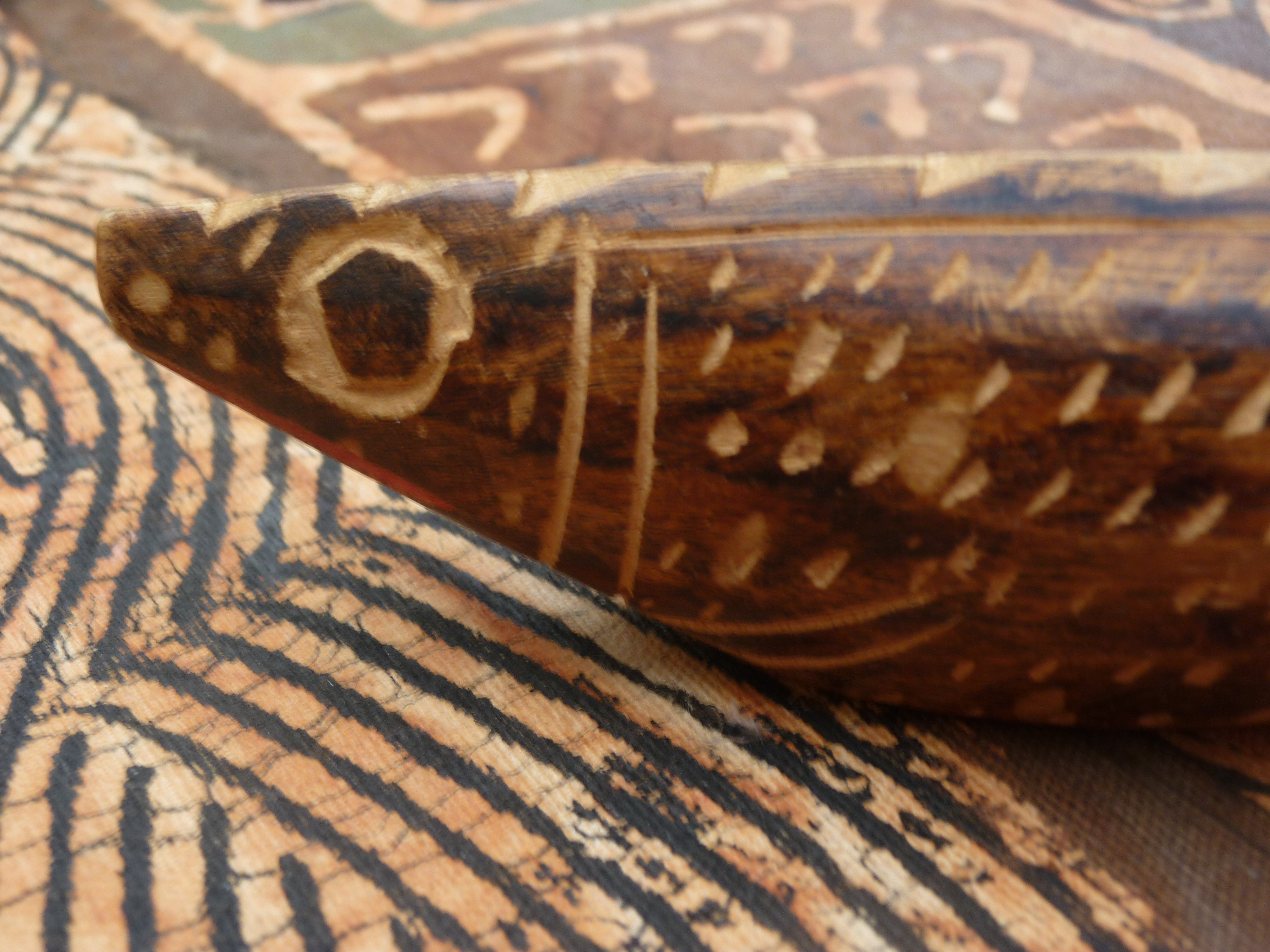
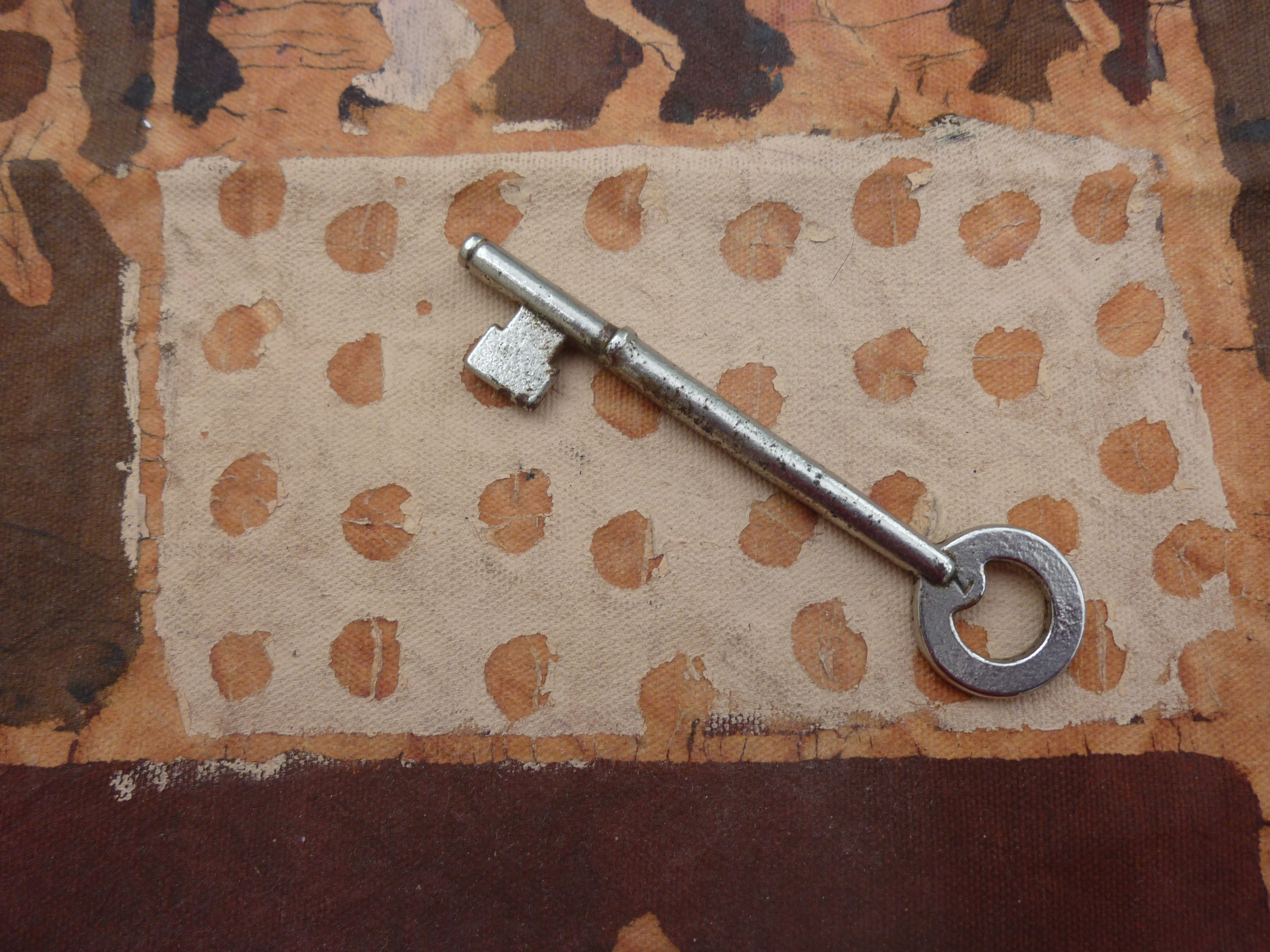
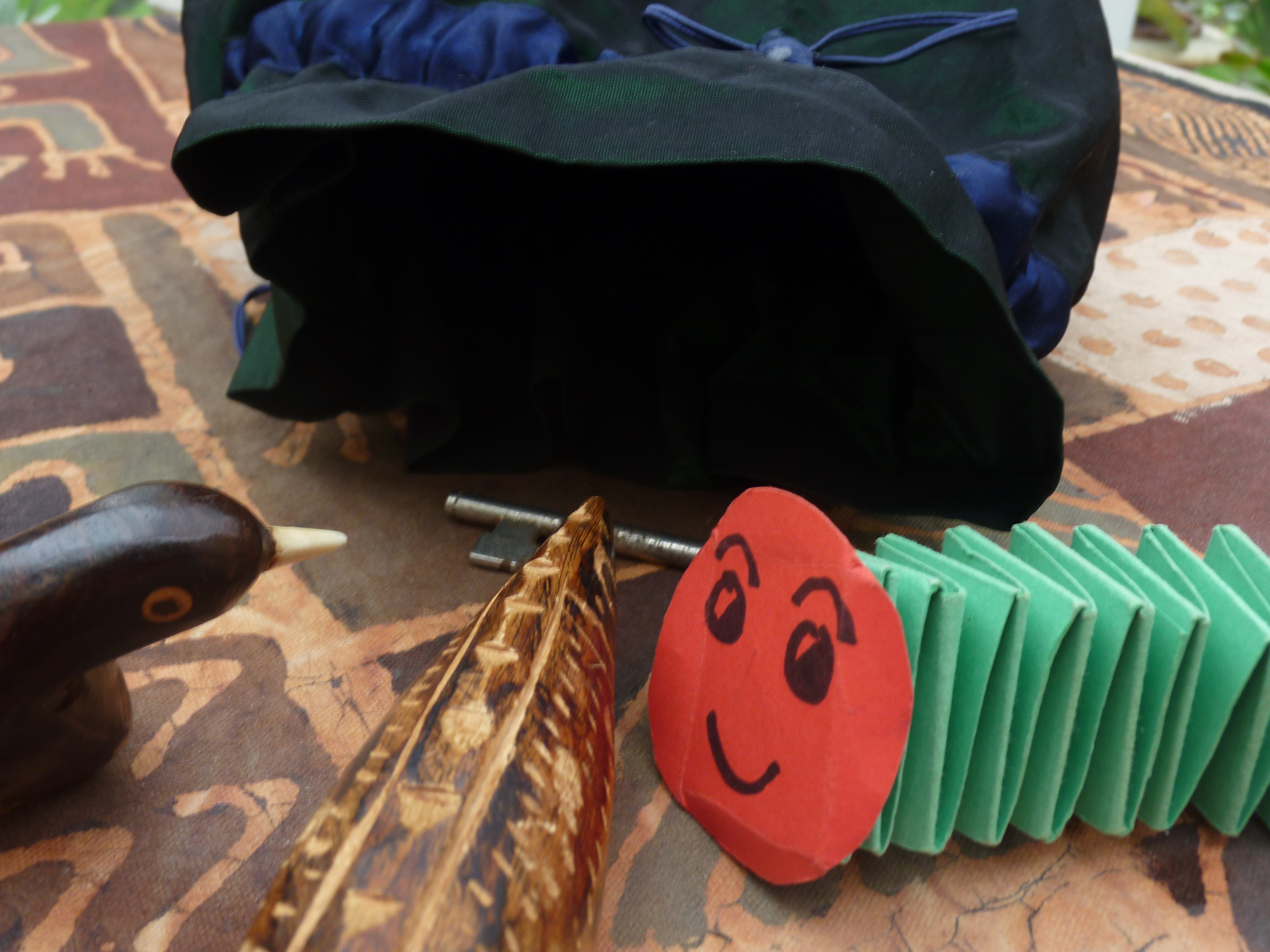
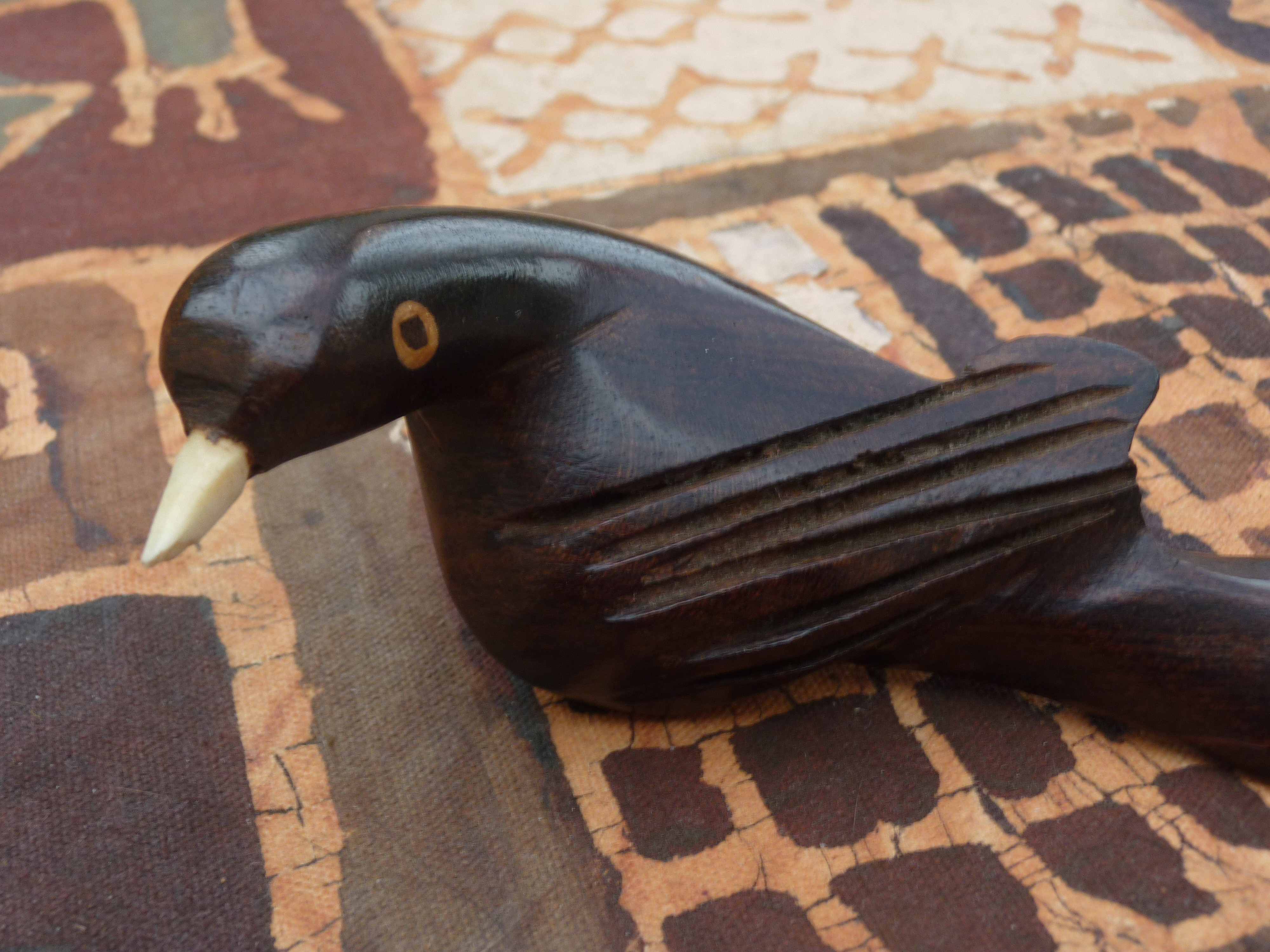 And don’t forget the magic of objects. Four different characters offer you the chance to find four different props for your story. As in the pictures above, I use a worm that I made from stiff paper, a beautifully carved wooden bird I was given by a dear South African friend, a wooden fish from a Traidcraft shop and an old metal key. Whatever you choose, it’s best if they are natural looking (not plastic!). Gather them together, put them in a bag or box, then bring out the container when you’re ready.
 In my particular style of telling, I don’t employ the props during the course of my telling. Instead, I’ll announce before I begin: ‘Here I have everything I need for this story.’ Then I bring the objects out one by and lay them out on a table beside me or maybe keep them on my lap. Nor do I feel obliged to name the props as I introduce them. Your audience will almost certainly do that for you. And letting children’s voices be heard is great for those that maybe don’t speak much English. So the children call out: CATERPILLAR …(‘actually,’ you can correct them, ‘it’s a worm today’)…FISH …BIRD … KEY. Sharing the names of the objects means the children are now prepared for the story before it even begins. Putting the props back in their bag at the end of the story allows you to go back over the story with them without it feeling like an educational exercise.
Follow-up activities
 A wonderful feature of this story is the variety of activities children can engage in afterwards that can help make the story feel like their own.
For instance, they can make wiggly worms (see below for instructions). And when they’ve made their wiggly worms, why not encourage the children to name their worms and develop stories of their wiggly worms’ lives?
Or the children can be asked to create story-boards of the story. A simple way is to get them to fold a piece of paper in four and to draw one character or scene from the story in each space (wiggly worm, fish, bird, builder). Often, they’ll start thinking up their own new scenarios. One child I worked with spontaneously decided that the boy met a bee who invited him to come and live in a flower. Another imagined a monkey who invited him to come and live in a cage in the zoo.
P.S.
After she’d told her class this story, one teacher I know did a marvellous thing in her classroom. She turned each corner of the room into one of the story’s four venues. In Corner No. 1, she placed a builder’s tray containing earth onto which went the wriggly worms the children had made. In Corner No. 2, she put a couple of large branches and a nest. In Corner No. 3, she placed a bucket full of water with a fish on a stick that could be dipped into the water. Corner No. 4 got the classroom’s supply of wooden building blocks and lego.
Making a wriggly worm
Take two long strips of coloured paper. Place the end of one of the strips on top of the end of the other and at right angles to it. Then to create the worm, start overlapping the strips, one after the other in concertina fashion. When you’ve finished, glue the ends to hold them firm. Cut out a circle of paper to make the face of the worm, draw a happy or sad face on it and glue it or staple it to one end of your worm.
Next week: another traditional tale with a key – this time a story for adults
Links
You can also read occasional blogs by me on the Early Learning HQ website: www.earlylearninghq.org.uk. Early Learning HQ offers hundreds of free downloadable foundation stage and key stage one teaching resources. It also has an extensive blog section with contributions from a wide range of early years professionals, consultants and storytellers.
Tags: A House Of My Own, bodily movements, noticing pattern, repetition, story-boards, tones of voice, wiggly worms
November 14th, 2011 at 12:51 pm
Dear Mary,
I thoroughly enjoyed reading this post and shall be a follower for quite a while. I really appreciate the clarity with which you tackle complex issues and bring within ‘happy’ telling-reach.
Thank you so mcg for doing this!
Alida.