


Storytelling Starters ~ Memory Work 3
 Stories have shapes and structure – just like people or tables or trees. I love thinking about stories in these terms. It’s another kind of visualisation and it can lead to many happy half-hours with pencils and paper, doodling and drawing and finding ways to discover the different patterns underlying your stories.
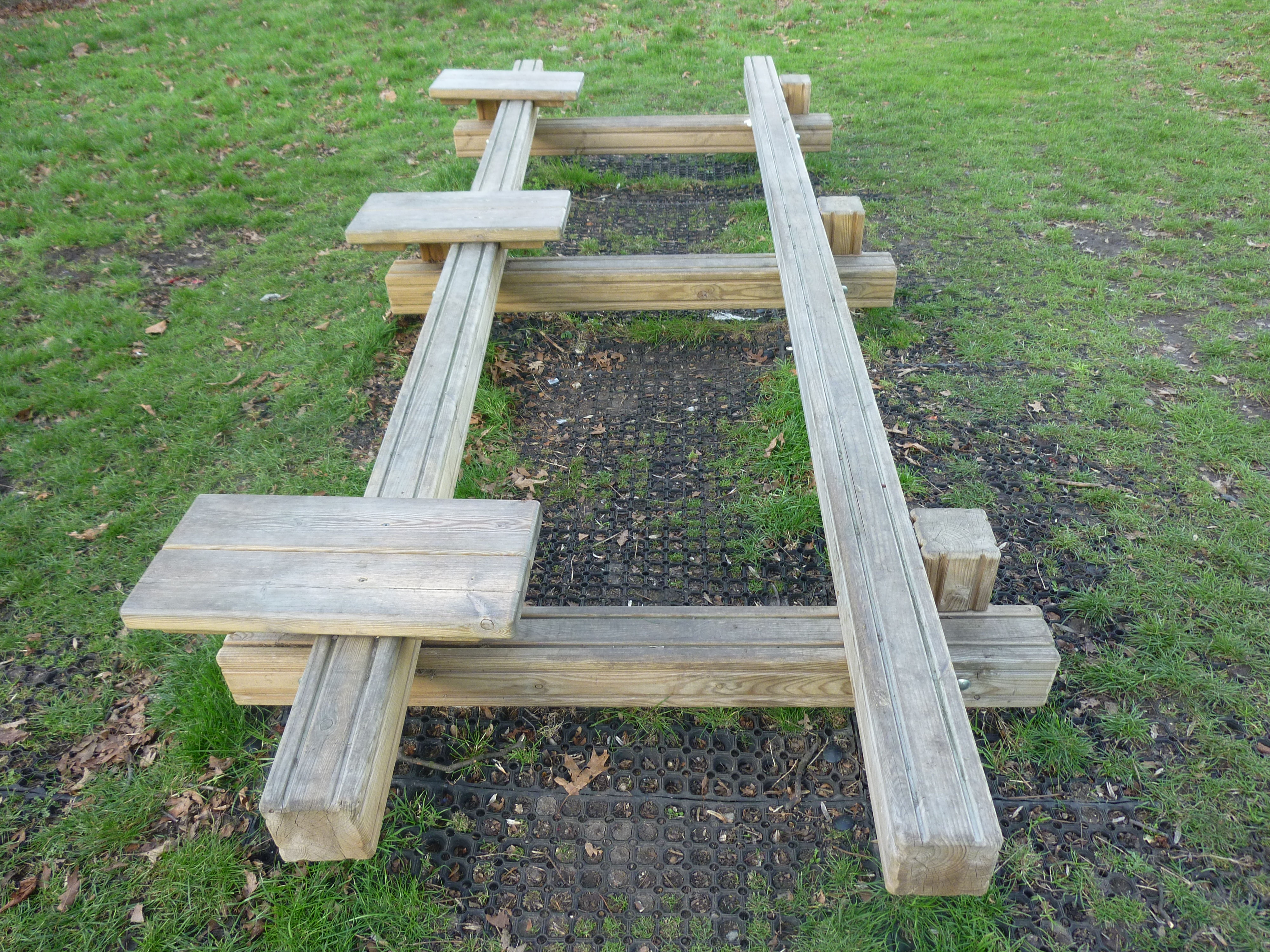
But how do you see it? There’s a question! Maybe you’re the kind of person who likes to look at things in a geometrical way, making patterns that look a little bit like the exercise structures in my local park.
Or perhaps you prefer to look for natural patterns such as those made by the branches of trees?

Discovering patterns:
Fetch a large sheet of paper and pencil (definitely not a biro!) and start to think about your story. Don’t draw the story, make patterns of it as you remember the scenes that, hopefully, you’ve already been visualising.
For example, with Sun and Moon in my story last week, I’d personally be starting with two circles quite close together at the top of my paper, one for Sun and one for Moon. For House, I’d be drawing a rectangle round them and a bendy path would travel down the page from House to some wriggly lines that I’d start drawing to represent Water. Right next to those wriggly lines and above them, I might do a repeat doodle for Sun. (That would be Sun on a visit.) Next, underneath, I’d repeat my pattern so far. For didn’t Sun go visiting Water more than the once?
And beneath that repeat, I’d start my pattern again but this time drawing House much bigger to show it in its extended version. And this time, too, drawing my path below House, I’d be aware as I reached the place for Water that now is the time for Water to start making his visit. And suddenly I might discover – as I’ve just done as I write this, creating my pattern in my head as I write – that at this particular point, the whole shape and of the story reverses..
So now, in my head, I’m madly drawing more and more wriggly lines for Water as Water travels down my next bendy path on his visit to Sun and Moon. And even as I repeat my drawing of the extended House with Sun and Moon inside it, Water is flooding the path towards it and, reaching House, he floods that too.
Getting near the end, I quickly draw two circles on the bottom edge of my House (that’s Sun and Moon as they get to the roof) and realise that now is the moment to show Moon leaping down to the right to the very bottom edge of my page. Finally with another last swoop of my pencil, Sun leaps off to the left.
So Moon ends up as a circle in the bottom right-hand corner of my page. Sun ends up as a circle down on the bottom left.
What I’ve done in words, you could try in drawings. Your pattern is bound to be different. Nor does it matter a bit what it looks like. This is nothing to do with art unless you’re that way inclined. The energy and the discoveries arise in the doing. And what I think can be guaranteed is that the exercise helps you see structure. It provides a strong and reliable basis on which to hang your visualisations.
Story-mapping:
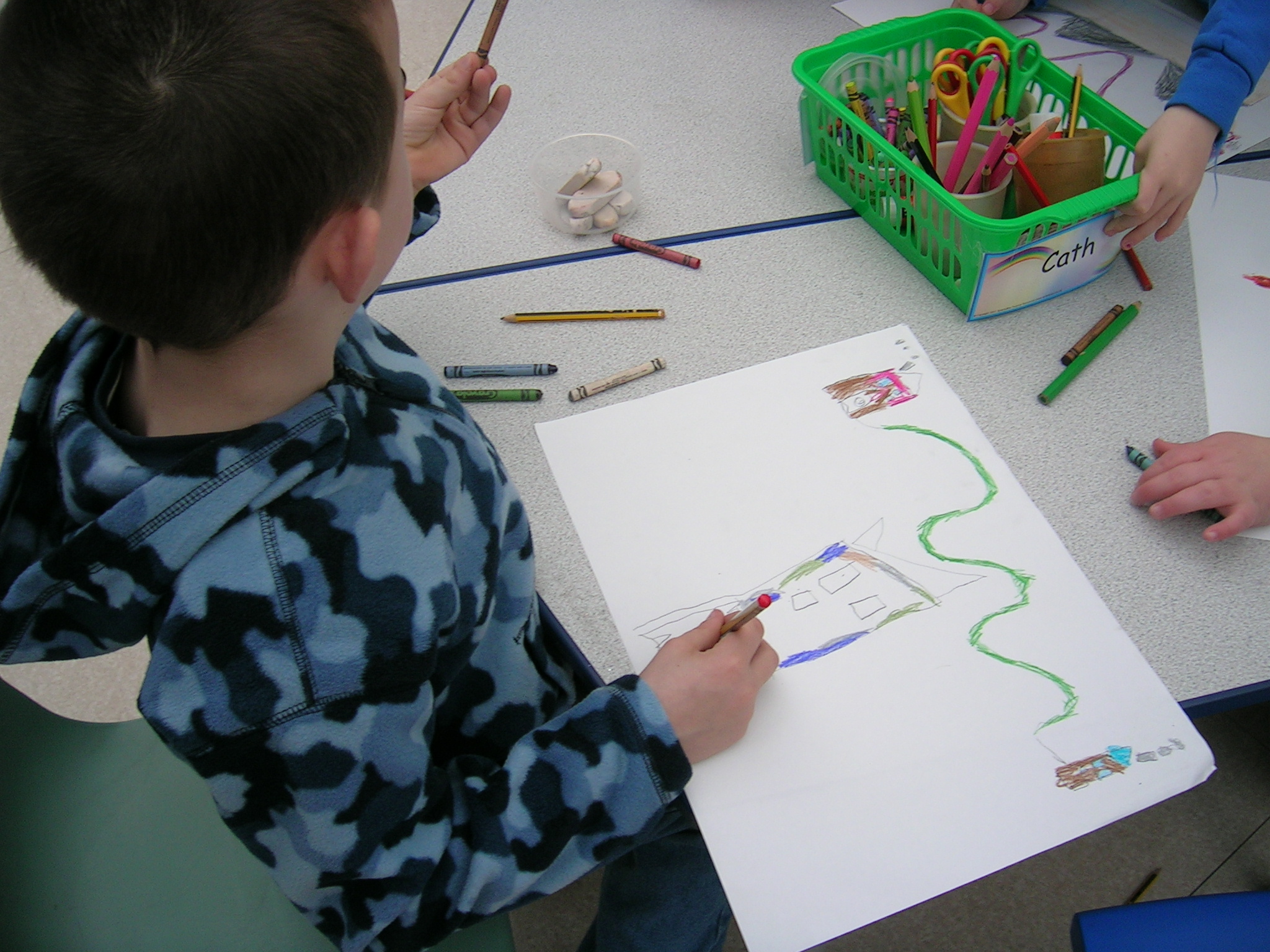 Teachers often advise their classes that the thing to do to make a story-map is to start drawing a narrative line for the story and, along the line, to draw in the scenes of the story in sequence. I differ. When I suggest a story-map, I first like to consider the purpose and use of a map. A map is to show you terrain, to help you not to get lost.
So when I’m making a story-map, I’m mapping the entire world of that story onto my large sheet of paper. Each place in the story has its place on my page and each takes it place in an imagined relation to all the other places that occur in the tale. In my experience, this method is best because it gives me the feeling of being able to journey around the world of the story. It helps me feel that the places are real and that I can become well-acquainted with them.
Of course, story-mapping on occasion presents an intriguing puzzle for the one who is drawing. As map-maker, are you allowed to include the characters of the story, for example, Sun and Moon? And what happens as the characters change their location, for instance clambering up onto the roof of their house and jumping off into the sky? How do you represent that? Well, art history has plenty of examples of artists who never worried about such problems but, instead, included their characters in as many different locations as they wanted. Children, I find, do the same without any worries about it.
Story-mapping gives a strong sense of structure. As with discovering patterns, it transforms a story into something more realistic and lively than something which has a beginning, middle and end. Instead, the story becomes a world in itself, and with your story-map you know you can’t get lost.
Orienteering:
Some stories go in a straight line. Some travel to a certain point, then turn round and go back. Some go round in a circle.
Whatever the pattern, seeing the shape can help you prepare your particular story for telling, for instance giving you a sense of how you might usefully vary your voice between the sections of the story or how you might punctuate those different sections with a rhythm or refrain. But more of all that next week …
Next week: More on Memory Work
Links:
You can also read occasional blogs by me on the Early Learning HQ website. Early Learning HQ offers hundreds of free downloadable foundation stage and key stage one teaching resources. It also has an extensive blog section with contributions from a wide range of early years professionals, consultants and storytellers. For details of the Society for Storytelling, click here.
Tags: drawing stories, recognising patterns, story-mapping, structure, Sun and Moon