


Storytelling Starters ~ Local call
 One lunchtime in the New Year before we came back to London, we went down to the Sloop Inn, the pub in the village of Porthgain. It’s a popular pub. Over the years, we’ve spent many enjoyable hours there, sometimes sitting inside, sometime out. It’s a place where you can let time be easy.
As we usually do these days, we went to sit at the table in the corner by the bar that’s set aside for locals. Sadly, the number of these has declined of late but, I’m glad to say, I’m still regarded as a local even though I spend more time in London than Pembrokeshire. After all, I grew up in the area and I’m back there often.
We were just finishing some fantastic crab rillette (it made me think of those poor crabs last week) when my old friend Morgan came and joined us at the table. Morgan has long been the manager of the Sloop and a fantastic job he does of it too. Like Eddie of last week’s crab story, Morgan also has a fund of hilarious tales. Many are descriptions of events in which he himself was involved. Many are stories you could call jokes. Whatever the sort, he makes them all seem so real. The particular story Morgan told on this occasion is a gem in my opinion and his telling of it accords delightfully with my current thoughts on storytelling.
The story began after something came up in the conversation, I can’t remember quite what, about the beauties of Pembrokeshire. Whatever it was made me report a little conversation I once had with my father. Something then too had been said about the loveliness of Pembrokeshire, probably something about St David’s where we lived and where my father had been headmaster of the local secondary school.
‘Yes,’ said my father, drawing attention to the fact that he was about to say something important by the length of his pause. ‘Living here – it is like Paradise.’ Then he corrected himself. ‘No,’ he said, waving his pipe in the air as he paused again, ‘It isn’t like Paradise. It is Paradise.’
‘Ay,’ said Morgan as he heard this. Of course, he’d known my father: he was a pupil at his school. Then with a sideways smile at me, Morgan picked up on the theme. ‘It reminds me of a story,’ he said. And this is the story he told.
Local call: the story
There was a man on a walking holiday on the borders between England and Wales. On his walk, he came to a church. It looked like an interesting building so he went inside to have a look. Inside, he was surprised to notice that, on the altar, there was a telephone. Going closer, he saw that alongside the telephone was a collecting box with a notice beside it. The notice said, ‘ This phone can be used to speak to heaven. Calls cost 50p. Please put your money in the box.’
The strange thing was that, in the next village he came to, there was also a church and, on its altar, there was also a phone and, beside it, a collecting box and a similar notice. ‘You can use this phone to speak to heaven. Calls cost 50p. Please put your money in the adjacent box.’
Well, by the time he came to the next village, the man had – though he didn’t realise it – crossed over the border into Wales. In that next village, there was also a church and on the altar, there was also a phone. But this time, when the man went closer, he saw that the notice beside it was a bit different. It said the cost of a call to heaven was just 5p. Why was that, the man wondered.
Fortunately just then the vicar came into the church. So the man was able to ask. He said he’d just visited two other churches not far away where calls to heaven cost 50p. Why were they only 5p here? ‘Ah,’ said the vicar, ‘you see, here it’s only a local call.’
Thoughts on the story and the telling:
 Now that’s what I call a playful story, a lovely one for all of us who love Wales and think it’s the most beautiful place on earth. But it’s also adaptable and therefore potentially lovely for anyone who loves the place where they come from.
Besides, I think the way the story came up and Morgan’s telling of it symbolise the oral tradition at work. For to keep an oral tradition alive and healthy, you have to recognise a theme; you have to realise how you can contribute to it and you have to be prepared to take the risk of doing so by telling the story that has come into your mind.
It’s like playing cards. Someone puts down a card, you take note of the card that has been put down and then you go on from there. Only, in this game of stories, there are no losers. The enjoyment is something for all.
I hope Morgan’s story encourages everyone who reads it to realise the value of keeping oral traditions alive. I hope it helps the appreciation that the oral tradition contains all kinds of stories, jokes and true stories as well as ancient myths and legends. And I hope it helps us all feel like taking the risk of sharing the stories we know with other people.
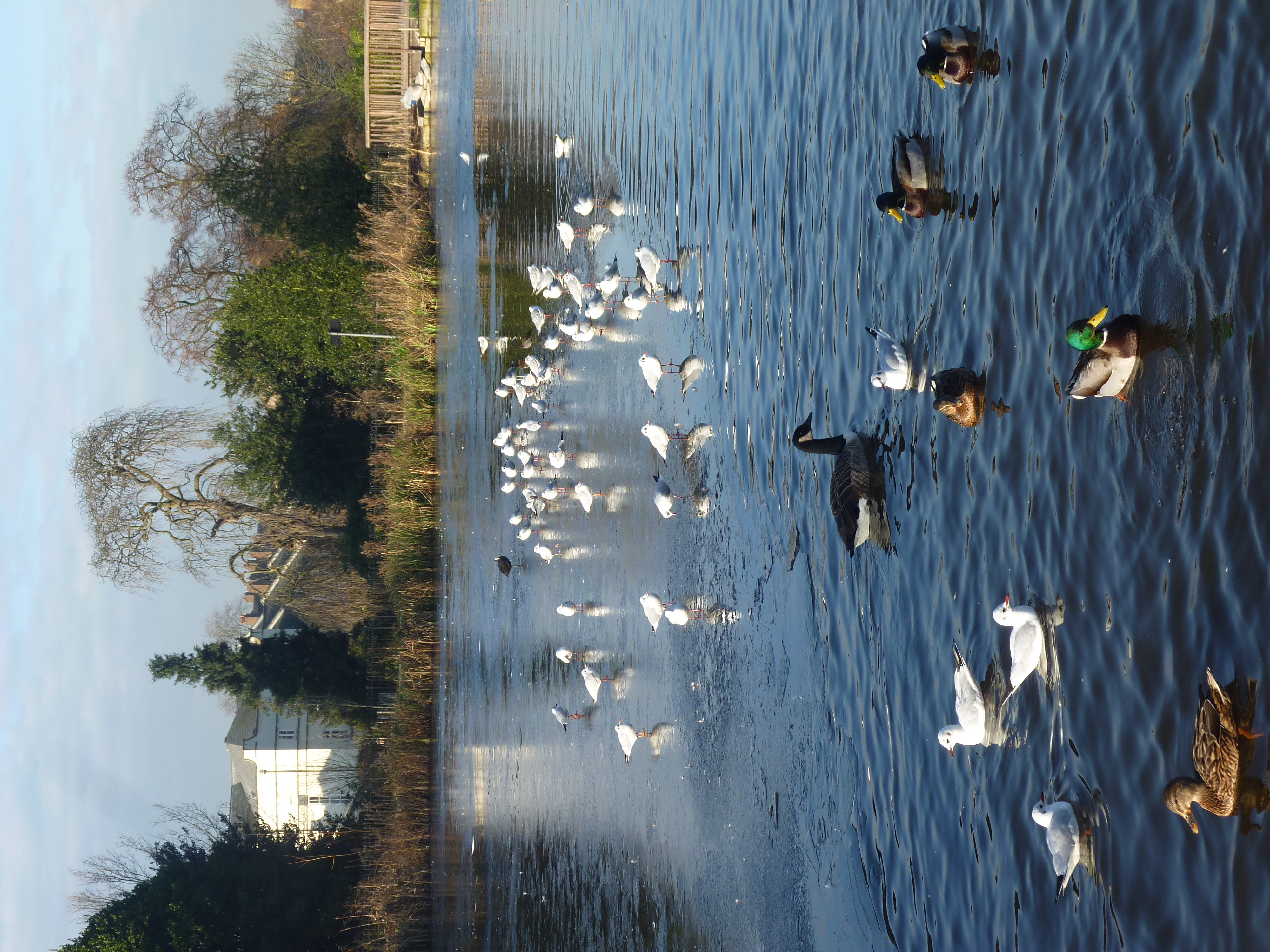
P.S. Taking a walk in nature on a lovely day is my idea of paradise. My photos this week come from two such occasions, one in Pembrokeshire, one in London.
Tags: Morgan, oral tradition, Pembrokeshire, telephone
January 17th, 2015 at 1:30 pm
Thank you for that story Mary – made me laugh out loud on a bleak cold snowed in day up here in the hills.
And you know i absolutely agree with you about sharing stories and keeping the oral tradition alive.
Great photos too.
Jeanxx
January 18th, 2015 at 3:35 pm
Jean, It’s great to hear that that story amused you up there on a Scottish hill. I can just imagine your laughter – and then, of course, how you might adapt the story to suit your Scottish listeners. Would your elderly groups like it? I’d be interested to hear. Lots of love, Mary
January 20th, 2015 at 10:57 pm
Mary how is the little book of storytelling different from stories to tell young children?
Thanks!
January 21st, 2015 at 5:53 pm
Hi Nikole. The Little Book of Storytelling contains completely different stories and rhymes from How To Tell Stories to Young Children. It’s a smaller book and the illustrations are black and white. Also it does not have a CD included. Hope that’s helpful. Best wishes, Mary.
January 22nd, 2015 at 12:46 am
It does help…. Are the books similar in format? The same type of information? Or does the how to book have more information and fewer stories? I have the little book of storytelling. If they are similar in format I will hold off ordering the how to book for now.