Archive for the ‘Getting participation’ Category
Saturday, November 21st, 2015
 How did it go? Most storytellers, I guess, look back at any event they’ve been involved with, formal or informal, and consider if it lived up to how they’d have liked it to be. For me, that process happened twice yesterday. The morning held a long interview on Skype with a storyteller in Bangalore in India. I’ve never been a great aficionado of Skype but this conversation was really magic. My interviewer’s list of questions was very much to the point and during it, she asked what advice I’d have for a new storyteller. My answer included what long ago became a motto I gave to myself: forgive yourself if you feel your storytelling didn’t go as well as you’d have hoped. There is always a next time and you have to learn from your mistakes.
The afternoon involved the birthday party I spoke briefly about in last week’s blog. In the event, 14 girls turned up, one or two of them rather quiet, the rest of them very excited. An initial activity involved them thinking up a magic power, a magic food and a magic creature. Then it was over to the storytelling. After a name game to help all feel included and an introductory story about a frog that happily made them all laugh, we went immediately into that story from Grimms’ Other Tales, the story of Catharinella. The children settled into it quickly, though I realised from the looks on one or two faces that even at 7 years old, the idea of an ogre that might eat you up can feel a tad alarming. Where necessary, you have to go easy. Then as we went on, I felt really glad that, in my advance preparations, I’d become aware of some unresolved features in the story as written. My thoughts about how to resolve them proved very productive and that felt nice.
The story in brief: (more…)
Tags: Bangalore, birthday party, Catharinella, forgive, Grimms' Other Tales, Skype
Posted in Adults, Folktales, Follow-up activities, Getting participation, Managing problems, Personal experience, Preparing, Primary, Props and Resources | No Comments »
Saturday, October 24th, 2015
Sniffle …snuffle … sneeze. Snuffle … sniffle … sneeze. I’ve had a horrible cold. I’ve still got a horrible cold and it has made me remember a Kenyan story I once came across which I’ve always enjoyed telling to children.
 A Kenyan story: In search of Sun
There was once a boy called Kabebe (though in Jan Knappert’s African Mythology, he’s a man and not named).
Kabebe’s family always had colds. His brothers got colds, his sisters got colds, his mother and father kept getting colds. So one morning early, Kabebe got up (too many sniffles and snuffles around him to sleep?) and, standing by the door of his house, he saw the sun climbing up into the sky. It seemed to rise from a far-distant mountain (imagine the colours, imagine the sight).
‘I’d like to find that mountain,’ Kabebe said to himself. ‘I’d like to see where the sun rises from and I’d like watch as it goes into the sky.’
Without any ado, Kabebe set off. (Imagine the journey – a river with crocodiles in it? Another river with very strong currents? Night falling and the sound of hyenas?) By the time Kabebe reached the bottom of the mountain he’d been aiming to find, the day was over and night was falling. He settled down to try and sleep. (Noises he heard? The fears that he felt?)
As day was returning next morning, Kabebe woke and started climbing the mountain. But by the time he got to the top, the sun was already way up in the sky. (Disappointment?) Yet there on the top of the mountain, what do you think Kabebe saw? A golden palace! (Big? Glowing? I’ll leave the words to you.) (more…)
Tags: Jan Knappert, Mr and Mrs Sun, snuffles, sunrise
Posted in All ages, Folktales, Getting participation, Personal experience, Preparing, Visualisation | 6 Comments »
Saturday, December 6th, 2014
If you’re looking for stories, chants and rhymes you might tell in the run-up to Christmas, please check back through my previous blogs. Just type the word Christmas into the Storytelling Blog References box on the left of this page. This will provide you with lots of links to previous blogs with Christmas stories. I hope you might find something to suit you. But if you’re interested in spending a moment thinking about some of the qualities that lie at the heart of storytelling, please read on. (more…)
Tags: Christmas stories, dementia, ipad, listening, UCLH
Posted in Adults, Getting participation, Personal experience | No Comments »
Saturday, September 27th, 2014
 Wild is wonderful. Wild is the unknown, the unexpected, the uninhibited. Wild places, wild laughing, wild dancing: it’s when you can let yourself go, feel different and free and absolutely part of something else. That’s why Maurice Sendak’s Where the Wild Things Are retains its appeal as a classic of children’s literature. Child or adult, it draws you in to a world where you can feel the freedom.
And that’s why Where the Wild Things Are has been in my planning for the workshop I will be running today for childcare workers in New Romney in Kent. The idea is to explore the basic importance of engaging children in stories and what it takes to bring about that involvement. Stories told and stories read will both be part of the work: in essence they call on similar techniques including, primarily, a will on the part of the teller or reader to impart the joy of the story.
So that’s why one things I’ll probably do is what I’ve sometimes done before in similar situations – namely read Where the Wild Things Are in Welsh. It’s unlikely anyone else present will understand Welsh. For most participants, the experience is bound to feel strange. Some may feel alienated or excluded – and that, of course, is how some children feel when they’re being read to, especially if no attempt is made to engage them or they don’t know much language yet. Others I hope will feel a bit more engaged when sounds or actions become part of the reading or a finger gently draws attention to aspects of the pictures. (more…)
Tags: Lanzarote, Maurice Sendak, New Romney, Teguise, Where the Wild Things Are
Posted in Adults, Early years, Getting participation | 2 Comments »
Saturday, May 24th, 2014
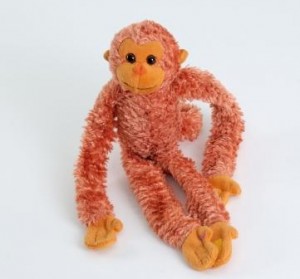 Two separate events have brought monkeys into my mind this week. One was receiving a message from a student on the Warwick University course I visited a few weeks ago. She was getting in touch to ask me where she could find a copy of the Little Red Monkey story that I’d told in my session. She’d liked it and now hoped to tell it. But she hadn’t been able to find a copy either on this blog or my website.
This surprised me: it’s one of my favourite stories for children and I thought I’d posted it on this blog a while ago. So I sent her a copy and told her she could also find it in my book, Stories for Young Children and How to Tell Them (A & C Black).
Now, of course, I feel I must remedy my previous omission. So please look below for the story with, at the end, a few hints on how you might tell it. Also if you’d like to hear me telling it there are links to my website.
First, though, here’s a thought-provoking little poem. It’s called The Prayer of the Monkey and it comes from the set of poems, Prayers from the Ark, that I acquired a few weeks ago. Prayers from the Ark was written in French by the little-known poet, Carmen Bernos de Gasztold. It was translated into English by Rumer Godden and, in the version I have, was published by Macmillan in 1966. Last Sunday, I read the whole set to a special group to which I belong. We call the group Works in Progress or WIPs for short. When we meet, each of us presents something creative that we’ve been working on.
This time, I presented Prayers from the Ark. I feel the poems are ideal for speaking aloud (reciting poetry was one of my loves as a child) and I hope soon to be offering public readings of them, for example for charity concerts. I see them as fables that are in tune with one of the world’s great needs of today – that we should as a species become far more aware that we share this beautiful earth with all kinds of other creatures, both wild and domestic. So here is The Prayer of the Monkey. But the monkey is not the loveably cheeky monkey of most people’s imaginations. It’s a melancholy monkey. It might make us think! (more…)
Tags: Carmen Bernos de Gasztold, hints, John Astrop, Little Red Monkey, monkey, Prayers from the Ark
Posted in Adults, Animal stories, Getting participation, Primary, Props and Resources | No Comments »
Saturday, March 8th, 2014
 A girl pushes her fingers down the back of the rear seat of an abandoned Renault car in the scrapyard near her home. As she exlores the hole her fingers have found, she feels the hard-edged corner of what is surely a box. Determined to get it out, whatever it is, she returns to the scrapyard a day or two later. This time, she succeeds. She sees that the top of the box is covered with fabric which could be Indian or Chinese and inside, when she opens it, she finds a shining glass figurine of what looks like an elephant man. The elephant man will turn out to be a statuette of Ganesh, the Hindu god. But even before the girl finds that out, her questions have begun.
Questions on World Book Day:
At Ysgol Dafydd Llwyd in Newtown, Powys, on World Book Day this week, the children were brilliant at thinking what those questions might be. How had the box got down the back of the seat? Who put it there? Why? Who did it belong to? What might the figure be worth? How old could it be? Where was it made? Did it have any special significance? How much might you get if you put it on eBay? How long had it been in the Renault? Could you trace its rightful owner?
Ysgol Dafydd Llwyd: (more…)
Tags: celandines, Elephant Luck, Ganesh, Kenya, Nairobi, Ysgol Dafydd Llwyd
Posted in Getting participation, Personal experience, Preparing, Primary, Telling and Writing, Uncategorized, Visualisation | No Comments »
Saturday, March 1st, 2014
 Today is St David’s Day (more on that later) and also the last of my current series. Getting Participation has focussed on Early Years children but is applicable, I believe, to all ages. Enjoyment and relish of words; the value of vocal tone and pauses; the enormous power of silence – all such things can make an enormous difference in storytelling. On other previous occasions, I’ve written about rhythms, refrains and rhymes as vital in helping children to feel included and also, of course, about props.
But today I want to write about the over-riding point of all this, namely why participation is worth bothering about and the value of working to achieve it. I have a storytelling anecdote which might help me convey what I’d like to say.
Why it’s worth it:
One time I was telling stories to a class of 14 and 15 year-olds in a Welsh School in mid Wales. We were in an otherwise empty room for the storytelling. The pupils were sitting on cushions on the floor and looking very relaxed. Some began moving onto their stomachs, their heads propped up on their upraised hands. Suddenly, surprisingly, right in the middle of the story, one of the boys moved onto one arm, lifted his head up and spoke to the room. ‘What’s going on here?’ he said. ‘What’s happening to us?’ (more…)
Tags: absorption, bothering, Dydd Gwyl Dewi, St David's Day, St Non
Posted in Adults, Getting participation, Personal experience, Riddles, rhymes, sayings, St David's Day, Themes, Uncategorized | No Comments »
Saturday, February 22nd, 2014
 It’s one thing to make sounds while you’re telling a story. Relishing them is quite another and it’s something children really respond to – so much so that it’s my tip this week for getting participation.
What happens when a really good sound comes from the storyteller’s mouth – the hoot of an owl for instance – is that it attracts children’s attention. You can almost see their ears prick up. A good sound is different both from the normal level of talk and the rebukes and instructions so often administered to children.
Cow mooing, monkey chattering, tap dripping, wind whooshing – such sounds make all the difference. They make children sit up and pay attention. But that’s not all. Interesting sounds inspire them to copy. (more…)
Tags: making sounds, owl hooting, practise, repertoire of sounds
Posted in Early years, Getting participation, Managing problems, Preparing, Storytelling games | No Comments »
Saturday, February 15th, 2014
 The storyteller, Beulah Candappa, said it brilliantly: ‘Storytelling is the art of time and silence.’ How right she was. Time is especially important with young children. Making time, taking time, valuing the time that’s taken – all helps with encouraging participation. And in that connection my tip this week is about getting participation through the way you use words.
Parents, teachers, Nursery Nurses and others have often commented to me that when I’m telling a story, it may take twenty minutes, but when they retell it, it takes just three. So what’s the difference? I’m certainly not claiming that all stories should take twenty minutes. What I do say is that, with young children, the story should feel long enough. Long enough for the children to relax and get into it. Long enough for them to feel they’ve inhabited it and been on a journey with it. In this respect, it’s my belief that an enormous difference is made by the words you use and how you use them.
The Naughty Little Mouse:
 Yesterday, for instance, I was telling the story of The Naughty Little Mouse. You can find a full version in my book, Stories for Young Children and how to tell them! where it’s also on the accompanying CD). I was originally told this little folktale by a woman from India. In my subsequent retellings, I found I was adapting it more and more for children in the UK.
In The Naughty Little Mouse, the little mouse first manages to inveigle a shop-keeper into giving her a piece of cloth. In a second shop, she gets the cloth made into a hat. In a third, she gets the hat decorated with braid and sparkly sequins. Finally, finding herself in Buckingham Palace, she succeeds in getting to sit on the Queen’s throne for one whole day before, at the end of the story, she goes back home. By the time she arrives, she’s exhausted.
Cloth? Throne? Exhausted? (more…)
Tags: Beulah Candappa, Indian folktale, Stories for Young Children, taking time, The Naughty Little Mouse, words
Posted in Early years, Folktales, Getting participation | 3 Comments »
Saturday, February 8th, 2014
 It’s obvious: most children like toys. They also like objects that aren’t obviously toys – things that make funny sounds, things that sparkle, things that look new or peculiar, things you can do something with.
So my thoughts for this week are about using objects. Over the last two weeks, I’ve focused on words – how to get children to speak them and how to use your own voice in a way that prompts them to speak. This week is about a technique that enables you to say almost nothing at all – at least not until you’re ready to start your story.
How to use objects:
Here’s how you might proceed: First make sure your audience is gathered together. Then lean forward to open the bag in which you’ve hidden your magic object. (A bag or box is always a good idea.) Now bring out the object (and I’m pre-supposing you’ve chosen it to suit the story you’re going to tell.) (more…)
Tags: bag or box, Martin A. Hansen, Showing objects, The Liar
Posted in Early years, Getting participation | 1 Comment »


 How did it go? Most storytellers, I guess, look back at any event they’ve been involved with, formal or informal, and consider if it lived up to how they’d have liked it to be. For me, that process happened twice yesterday. The morning held a long interview on Skype with a storyteller in Bangalore in India. I’ve never been a great aficionado of Skype but this conversation was really magic. My interviewer’s list of questions was very much to the point and during it, she asked what advice I’d have for a new storyteller. My answer included what long ago became a motto I gave to myself: forgive yourself if you feel your storytelling didn’t go as well as you’d have hoped. There is always a next time and you have to learn from your mistakes.