Mary Medlicott, Storyteller and Author - Storyworks

Archive for the ‘Myth and Legend’ Category

Storytelling Starters ~ Cam Ceiliog

Saturday, January 5th, 2013

The stride of the cockerel may not be massive but it’s certainly very determined – a purposeful strut! And that’s why I love the Welsh phrase, cam ceiliog.

Ceiliog means cockerel, cam is a step or a stride, and cam ceiliog describes the way in which the light draws out after the Winter solstice. It happens by small but sure degrees, not in one giant leap. At this time of the year – and Happy New Year by the way – you really begin to notice the change. After the darkness of late December, and perhaps with the resoluteness of the New Year spirit, you start to notice the earlier light in the mornings, the evenings going on longer. ‘Cam ceiliog’ does it as the mother of one of my schoolfriends always used to remind us. She was a very positive woman.

That link between the cockerel and the coming of light is an appealing association. I remember the cockerel’s distinctive doodle-doo-ing from childhood mornings on my grandparents’ smallholding. I remember it too from more recent times, for instance on holiday in the Sierra Tejeda in Spain. The wake-up call would sound out round the village (and sometimes, because it recurred all day, it would finally become exasperating).

Stories that link us to the earth and its creatures

I love associations between human beings and nature. To me, they’re one reason why we could do worse at the start of a year than remind ourselves of the numerous stories that link us to the earth and its creatures. For where would we be as humans if we lost a sense of those links? For one thing, we’d be at risk of losing a proper sense of the richness of this planet and our place as one – but only one – of the species that inhabit it. (more…)

Storytelling Starters ~ Macaronic

Saturday, October 27th, 2012

Last Saturday evening, I told the myth of Taliesin at an event at the London Welsh Centre, part of this year’s Bloomsbury Festival. I chose the Taliesin story in honour of Menna Elfyn, the renowned Welsh poet who’d had the slot before me.

Taliesin

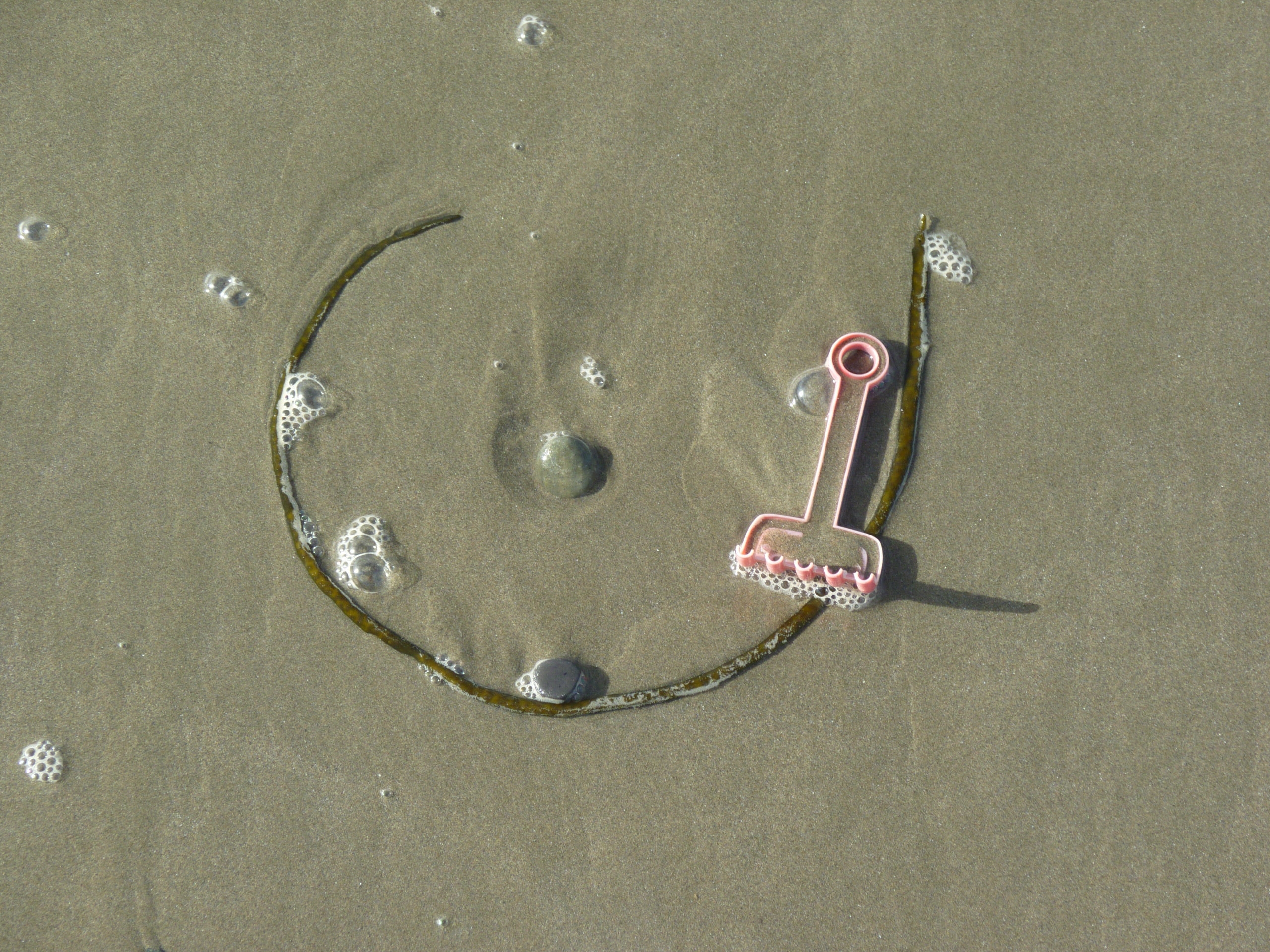
Taliesin was one of the founders of the huge poetic tradition which remains one of the central features of Welsh culture. By the 13th century (he lived in the 6th) a fascinating legend had arisen about his birth and the way he gained the mystical powers he displayed as a poet. In the legend, they are specifically magic powers and I chose the story as the central part of my programme because, to me, they are the special attributes of all good poetry. My sea-tray (pictured right) helped summon up a sense of the ocean on which the baby Taliesin is said to have floated for one hundred years.

Macaronic (more…)

Storytelling Starters ~ Nature Stories

Saturday, June 30th, 2012

Well, the photos this week are of birds – three of a pigeon in Venice plus a picture out of my photo archives of seagulls over the Thames.

But the theme of the words is not just birds but cuckoos.

Why cuckoos?

A while ago, a good friend of mine who is also a storyteller got me interested in sponsoring a cuckoo. To do what, you might very well ask? The answer is that the British Trust for Ornithology is keen to find out why cuckoo numbers in Britain have been on the decline and why cuckoos from Scotland and Wales have been doing rather better than cuckoos from England. So they’ve been tagging cuckoos and, by tracking them on the fantastic journeys they annually make from the UK, down across Europe into Africa and back again to where they set out, they are hoping to discover what problems the different cuckoos face.

Last season, I sponsored an English cuckoo who’d been awarded the name of Kaspar. Alas, he didn’t return from the 16,000-miles or more that  these cuckoos normally travel. This season I’ve sponsored a cuckoo from Ceredigion  in Wales who is yet to be awarded a name. I’ve written in, along with many others, to suggest what name might be chosen for him.

My suggestion is Taliesin. Taliesin was one of the earliest Welsh poets. He lived in the second half of the 6th century and I’ve often told audiences the magical legend about him that appears in the Mabinogion.

Taliesin still sings, I said in my email, and hopefully the soon-to-be-named cuckoo will sing for a long time too.

I recommend the BTO website. Like the tree-sign in my last week’s blog, the material on cuckoos (and other birds too) is a story in itself.

A cuckoo legend:
By tradition, it’s on April 7th that the first cuckoo’s song of the year is heard each year in Pembrokeshire which is my native part of Wales. The 7th April is St Brynach’s Day and, in the village of Nevern where St Brynach eventually settled after making a pilgrimage to Rome and spending some years in Brittany, people would wait for the cuckoo to come and fly down to the old Celtic Cross that is St Brynach’s Cross. And it’s there, they say, that the cuckoo would sing.

One year, the bird was late arriving. Waiting eagerly for it to come, the priest was reluctant to start the service until he’d heard the cuckoo’s song.

Eventually the gathered congregation saw the cuckoo fly down through the trees in the churchyard and settle on St Brynach’s Cross. But the bird looked terribly battered and tired and, after singing for one brief, glorious moment, it fell from the cross and died. (more…)

Storytelling Starters ~ Memory Work 2

Saturday, January 14th, 2012

Back in London, I’ve been walking round my local park thinking about one of my favourite stories. It’s a West African story about the Sun and the Moon and how they got into the sky. Whether with adults or children, I find it a great story for telling. It’s also a highly  productive story on which to base a workshop. It gives plenty of opportunities for image-rounds,visualisation, storymapping, hot-seating and other types of workshop activity which can all be seen as contributing to memory work. The story essentially deals with change, a theme which affects us all deeply. It stood me in excellent stead at a conference, now years ago, to celebrate and lament the end of the ILEA, the Inner London Education Authority, when Mrs Thatcher closed it down.

Here’s the story retold very briefly:

How Sun and Moon Got Into the Sky

When Sun and Moon still lived down on this earth, Sun used to go often to visit his friend. His friend was Water and one day Sun asked him why he was always the one to be making the visits. Why didn’t Water ever come and see him? Water said the reason was that he’d never been invited. Sun was apologetic. But when he asked Water to come and visit, maybe even that very day, Water expressed a worry that Sun’s house might not be big enough for him. When Sun assured him that all would be fine, Water suggested that Sun should go and make his house bigger. It wasn’t just him, Water explained to Sun; there was an awful lot in him besides. (more…)

Storytelling Starters ~ Making Connections 3

Saturday, November 19th, 2011

Time is key in modern life. In so many ways, we are governed by it. We keep track of it on watches and phones, schedule appointments on calendars and computers, set electronic beeps to remind us of upcoming events, timetable weekends and holidays along with our work. This week, Making Connections tells a traditional Native American story about the power that time exerts. It also suggests a key storytelling method that can help to get that power back.

Keys – and a tale for adults and older children

Background to the Story

How Mink Stole Time is a myth of the Salish people, a North American Indian people of the North West Pacific region. I myself have a personal link with Salish traditions. Some years ago, when the North American Welsh Choir asked me to suggest a story that could form the basis of a new commission for piano, choir and storyteller, I put forward a Salish story about the lifting of the sky and the bringing of light to the people. The resulting piece – Lifting the Sky – was composed by Canadian composer Victor Davies and American poet Carolyn Maddux and in its first performances in the Olympic Peninsula, I narrated the story. (more…)