Mary Medlicott, Storyteller and Author - Storyworks

Archive for the ‘Nature stories’ Category

Storytelling Starters ~ Riddle-me-Ree No. 1

Saturday, May 31st, 2014

Roses 1The Handel Rose (yellow), Paul’s Scarlet (red) and Mary Rose (pink) are all positively flourishing in our garden right now, only slightly battered by this week’s heavy showers. They made me think about  roses as my theme for this week’s blog. Or how about eyes?  I’ve seen several lively pairs of eyes in recent comings and goings that started me trying to identify what was so appealing about them.

Yesterday, I got my answer: when walking down the back of Whitehall, two stories popped into my mind. One was about roses, the other about eyes. And several links between them became immediately clear. Both I first heard from other storytellers. Both are great for telling to older children or adults. Both have a riddling aspect. Suddenly it was obvious what I should do. This week, I’ll give you roses. Next week, eyes. (more…)

Storytelling Starters ~ Tomorrow’s flowers

Saturday, April 26th, 2014

“All tommorrow’s flowers are in the seeds of today.” Spelling mistake included, this was the thought on a hand-written sign in a florist’s shop I passed on Friday.

The thought kept jangling in my mind. Where had I come across a similar idea? Surely it was only a few days ago? Surely I could remember? Then, this morning just before sitting down to write this blog posting, I did.

“Life is funny sometimes – how small acorns of an idea grow into something so much more and take on a life of their own.”

The comment was in an email earlier this week from a teacher I’d worked with a few years ago. At that time, she took up storytelling with her class in a big way. It’s great to hear that evidently she has stuck with it. Obviously, it’s grown into something important for her.

Both comments made me remember a story.

The story: Tomorrow’s flowers

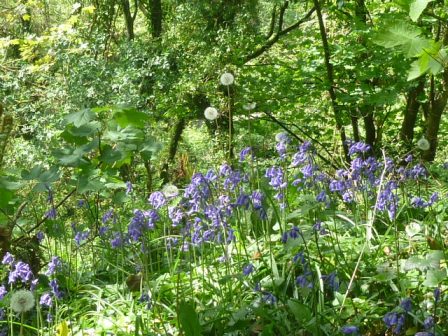
bluebellsOnce there were two water pots. One was whole. One was slightly cracked. Each day, their owner, a farmer, would sling them over his donkey, one each side, to go and fetch water from the well.

On the way to the well every morning, the uncracked pot would mercilessly boast to the other. ‘I’ve got no cracks but you’re rubbish. I don’t know why our farmer doesn’t chuck you away.’

And so on…and on … Every day it was the same (and I think there are some people who are just as destructive in the way they put others down.)

In the end, the pot with the crack burst out to the farmer: ‘I can’t stand it any longer. I’m no use at all. You should throw me away. Who would want a pot that is cracked?’ (more…)

Storytelling Starters ~ Stone

Saturday, August 17th, 2013

A surprise contribution to this blog arrived this week from Jean Edmiston, my friend and long-term colleague as a storyteller. Jean lives and works in her native Scotland these days so I don’t get to see much of her.

But we often speak on the phone about stories, storytelling and our common approach, which is to believe in how stories can empower imagination for everyone if they are approached in a sharing way. Below is what Jean wrote.

The bag of pebbles (more…)

Storytelling Starters ~ The Road Home

Saturday, April 6th, 2013

This week I’ve been struck once again by the continuing tale of the cuckoo. The tale is told in serial form in regular blogs from the BTO (British Trust for Ornithology). What enables it to be told at all is the electronic tag. By tracking a small group of selected cuckoos on their annual migrations, these tags are helping scientists to establish what particular difficulties are contributing to the marked decline in cuckoo numbers in Britain. The cuckoo whose tracking I’ve helped support by contributing a small sum of sponsorship money is one that has been called Lloyd. He’s one of the cuckoos from my native Wales.

But it wasn’t Lloyd who became the centre of attention in this week’s BTO blog. It was one of the English tagged cuckoos called Chris.

The Cuckoo’s Tale (more…)

Storytelling Starters ~ Duck

Saturday, January 19th, 2013

On Thursday this week, there was ice. I went with my camera to Brockwell Park . The mid-day sun had turned the surface of the bigger pond into kaleidoscopes of sparkle and glitter. Ducks and Canada Geese and seagulls and moorhen were taking deliberate steps across the ice like little old men with sticks. Where ice had melted, they lowered themselves gingerly into the water and paddled about. When pieces of bread were thrown towards them – for several people arrived with bags of it – there’d be a sudden great flapping of wings and huge cacophonies of cawing as the birds rose up, chasing each other to the food.

Ducks

‘Ducks,’ I was thinking. ‘Ducks …’ The image must have been stirring my thoughts. For when I was on my way home, my brain suddenly dived back to a snapshot image that I remembered from an old story. It was an image of one or two ducks turning head down, tail up, diving for something deep below the surface and bringing up beakfuls of mud.

Snapshots from stories can display a powerful tenacity, lingering in the sub-conscious for years until something happens to reanimate them. (This is, of course, one of the reasons why stories are so important to humans, feedings our brains, creating connections.) But what was this story with its image of ducks? (more…)

Storytelling Starters ~ Spider

Saturday, January 12th, 2013

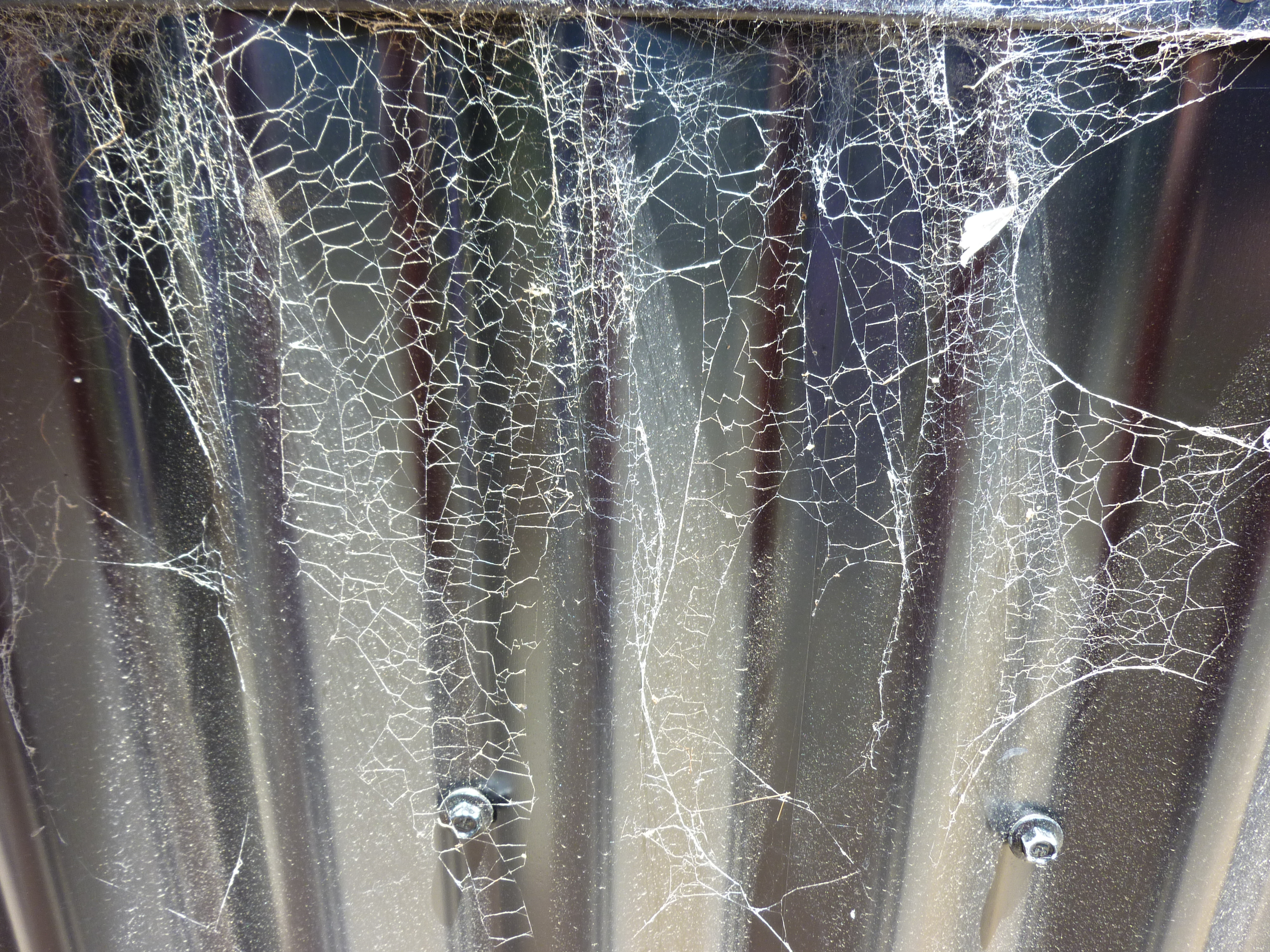
I don’t mind spiders. Some people can’t abide them. One summer in my childhood, I remember my father crushing a Daddy-Long-Legs against the window of the caravan where we were staying. My father used the bread knife. I was upset for the spider and rather appalled by my father. Spiders don’t do any harm – at least not the sort that I know.

But some people are really frightened even when the spiders are small and harmless. You know that North American Indian story – The Man Who Was Afraid Of Nothing?

The Man Who Was Afraid Of Nothing

The man who was afraid of nothing was a terrific hero among his people. One night four ghosts who were sitting together happened to mention this man: ‘He’s not afraid of us, so they say,’ said one.

‘I bet I could scare him,’ said another. A third said, ‘Let’s make a wager. Whichever of us scares him most is the one who wins the wager.’

So the four ghosts set about the challenge. The next moonlit night, the first ghost suddenly materialized in front of the young man and challenged him to a game. ‘If you lose,’ said the ghost, ‘I’ll make you into a skeleton like me.’ (more…)

Storytelling Starters ~ Cam Ceiliog

Saturday, January 5th, 2013

The stride of the cockerel may not be massive but it’s certainly very determined – a purposeful strut! And that’s why I love the Welsh phrase, cam ceiliog.

Ceiliog means cockerel, cam is a step or a stride, and cam ceiliog describes the way in which the light draws out after the Winter solstice. It happens by small but sure degrees, not in one giant leap. At this time of the year – and Happy New Year by the way – you really begin to notice the change. After the darkness of late December, and perhaps with the resoluteness of the New Year spirit, you start to notice the earlier light in the mornings, the evenings going on longer. ‘Cam ceiliog’ does it as the mother of one of my schoolfriends always used to remind us. She was a very positive woman.

That link between the cockerel and the coming of light is an appealing association. I remember the cockerel’s distinctive doodle-doo-ing from childhood mornings on my grandparents’ smallholding. I remember it too from more recent times, for instance on holiday in the Sierra Tejeda in Spain. The wake-up call would sound out round the village (and sometimes, because it recurred all day, it would finally become exasperating).

Stories that link us to the earth and its creatures

I love associations between human beings and nature. To me, they’re one reason why we could do worse at the start of a year than remind ourselves of the numerous stories that link us to the earth and its creatures. For where would we be as humans if we lost a sense of those links? For one thing, we’d be at risk of losing a proper sense of the richness of this planet and our place as one – but only one – of the species that inhabit it. (more…)

Storytelling Starters ~ Nature Stories

Saturday, June 30th, 2012

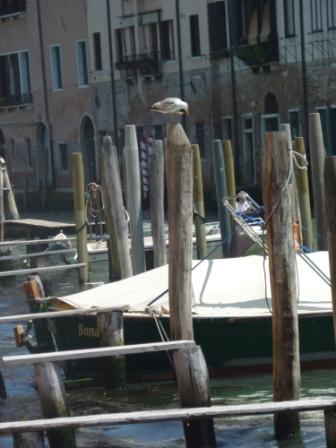
Well, the photos this week are of birds – three of a pigeon in Venice plus a picture out of my photo archives of seagulls over the Thames.

But the theme of the words is not just birds but cuckoos.

Why cuckoos?

A while ago, a good friend of mine who is also a storyteller got me interested in sponsoring a cuckoo. To do what, you might very well ask? The answer is that the British Trust for Ornithology is keen to find out why cuckoo numbers in Britain have been on the decline and why cuckoos from Scotland and Wales have been doing rather better than cuckoos from England. So they’ve been tagging cuckoos and, by tracking them on the fantastic journeys they annually make from the UK, down across Europe into Africa and back again to where they set out, they are hoping to discover what problems the different cuckoos face.

Last season, I sponsored an English cuckoo who’d been awarded the name of Kaspar. Alas, he didn’t return from the 16,000-miles or more that  these cuckoos normally travel. This season I’ve sponsored a cuckoo from Ceredigion  in Wales who is yet to be awarded a name. I’ve written in, along with many others, to suggest what name might be chosen for him.

My suggestion is Taliesin. Taliesin was one of the earliest Welsh poets. He lived in the second half of the 6th century and I’ve often told audiences the magical legend about him that appears in the Mabinogion.

Taliesin still sings, I said in my email, and hopefully the soon-to-be-named cuckoo will sing for a long time too.

I recommend the BTO website. Like the tree-sign in my last week’s blog, the material on cuckoos (and other birds too) is a story in itself.

A cuckoo legend:
By tradition, it’s on April 7th that the first cuckoo’s song of the year is heard each year in Pembrokeshire which is my native part of Wales. The 7th April is St Brynach’s Day and, in the village of Nevern where St Brynach eventually settled after making a pilgrimage to Rome and spending some years in Brittany, people would wait for the cuckoo to come and fly down to the old Celtic Cross that is St Brynach’s Cross. And it’s there, they say, that the cuckoo would sing.

One year, the bird was late arriving. Waiting eagerly for it to come, the priest was reluctant to start the service until he’d heard the cuckoo’s song.

Eventually the gathered congregation saw the cuckoo fly down through the trees in the churchyard and settle on St Brynach’s Cross. But the bird looked terribly battered and tired and, after singing for one brief, glorious moment, it fell from the cross and died. (more…)

Storytelling Starters ~ Nature stories

Saturday, June 23rd, 2012

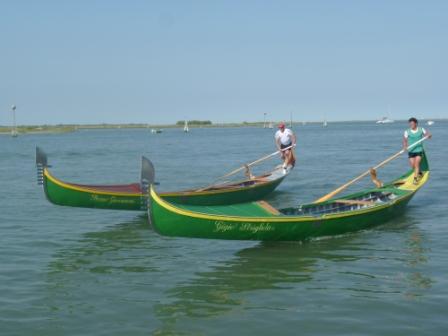
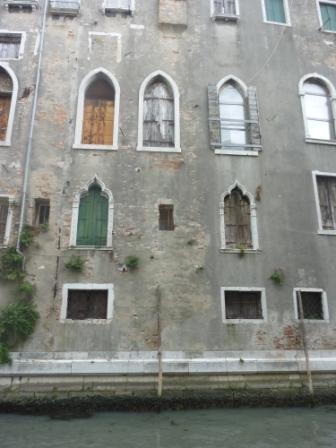
Back from Venice, I’ve been thinking – as you do! – about what were the best bits in a very good ten days.

One of my favourite things was something I saw just a few steps away from our hotel in Cannaregio.

Funny, you don’t get many trees in Venice. Yet everywhere there’s so much wood.

Boats of all sorts…

Huge wooden pylons to mark the routes boats must follow…

Window shutters and doors…

But then I saw a little sign hanging on a little tree not far from our vaporetto stop. (more…)