Mary Medlicott, Storyteller and Author - Storyworks

Archive for the ‘Nature stories’ Category

Storytelling Starters ~ And all the while…

Saturday, January 16th, 2016

Trees near TrefelynThose little stories that make a particular point can sometimes prove tricky. The last few days, the weather has been lovely in London – cold but sunny enough to bring a smile to our faces and quite a change from incessant grey skies and rain. On one of my walks, remembering the great winds that blew over Christmas, I thought about that famed competition between Sun and Wind.

Sun and Wind fight it out:

Just as children sometimes do, and sometimes even grown-ups too, Sun and Wind were having an argument about which of them is stronger. Sun proclaimed:  ‘It’s definitely me.’ Wind thought differently, ‘No, it’s me.’

Sun and Wind decided to test out their claims.

‘See that young man walking down that street,’ said Sun. ‘I guarantee I can get his jacket off him quicker than you.’

‘It’s a deal,’ said Wind. ‘But I’m going to win.’

Without wasting a moment, Wind began blowing. Before he could even start roaring, the young man walking down the street pulled up the zip on his jacket. Then as Wind began roaring, he put his arms round himself, drawing his jacket even closer. (more…)

Storytelling Starters ~ Flying, falling

Saturday, August 22nd, 2015

No good signals have been received from Chris the Cuckoo since 5 August. At that point, Chris the Cuckoo was crossing the Meditarranean Sea after stopping in the Po Valley area of Italy on his annual migration south to Africa to the Congo.  Four complete migratory cycles of his have been recorded by the BTO (British Trust for Ornithology) using the tracking device with which he was fitted. Now it is feared he has died and the probable reason is the severe drought the Po Valley area has been experiencing this summer.  

Falling – poor cuckoo!

P1070575Severe drought is also what’s causing enormous problems for salmon in the Vancouver area of Canada. As we were hearing from a friend there this week, the rivers are going dry and salmon trying to get upriver to reach their breeding places are not going to be able to do so.

For salmon and cuckoos, it’s a sorry tale. Already the Po Valley area drought is thought to have been responsible for the probable deaths of several others of the cuckoos that the BTO has been tracking this year. To discover the difficulties migrating cuckoos are facing is precisely why their tracking programme was devised. Drought, of course, is one of the worst of the problems: it means the feeding places where the cuckoos stop on their journeys cannot provide them with the sustenance they need for their onward flight.

The cuckoos were much on my mind when we went for a walk around the lovely North Pembrokeshire village of Nevern this week. The 6th century saint, Saint Brynach, founded the church in the village and, among the ancient yew trees leading to the church entrance is the famous Bleeding Yew that attracts many visitors. Nearer the entrance is the beautiful Celtic cross which figures in a sad little local legend in which the cuckoo is central.

 On St Brynach’s day each springtime, according to the legend, a service used to be held around that Celtic Cross. Every year, the vicar and the congregation would  gather for the service in front of that Celtic Cross and wait until, as invariably happened, a cuckoo would fly down and settle on top of the cross. At that point, the service could begin. One year, however, the people waited and waited until they were on the point of despair. Just as they were about to give up, a very wind-blown and battered cuckoo arrived and settled briefly on the cross only to fall dead on the ground below it as the service started. 

Flying – lovely swifts! (more…)

Storytelling Starters ~ The Crucible of Story

Saturday, July 11th, 2015

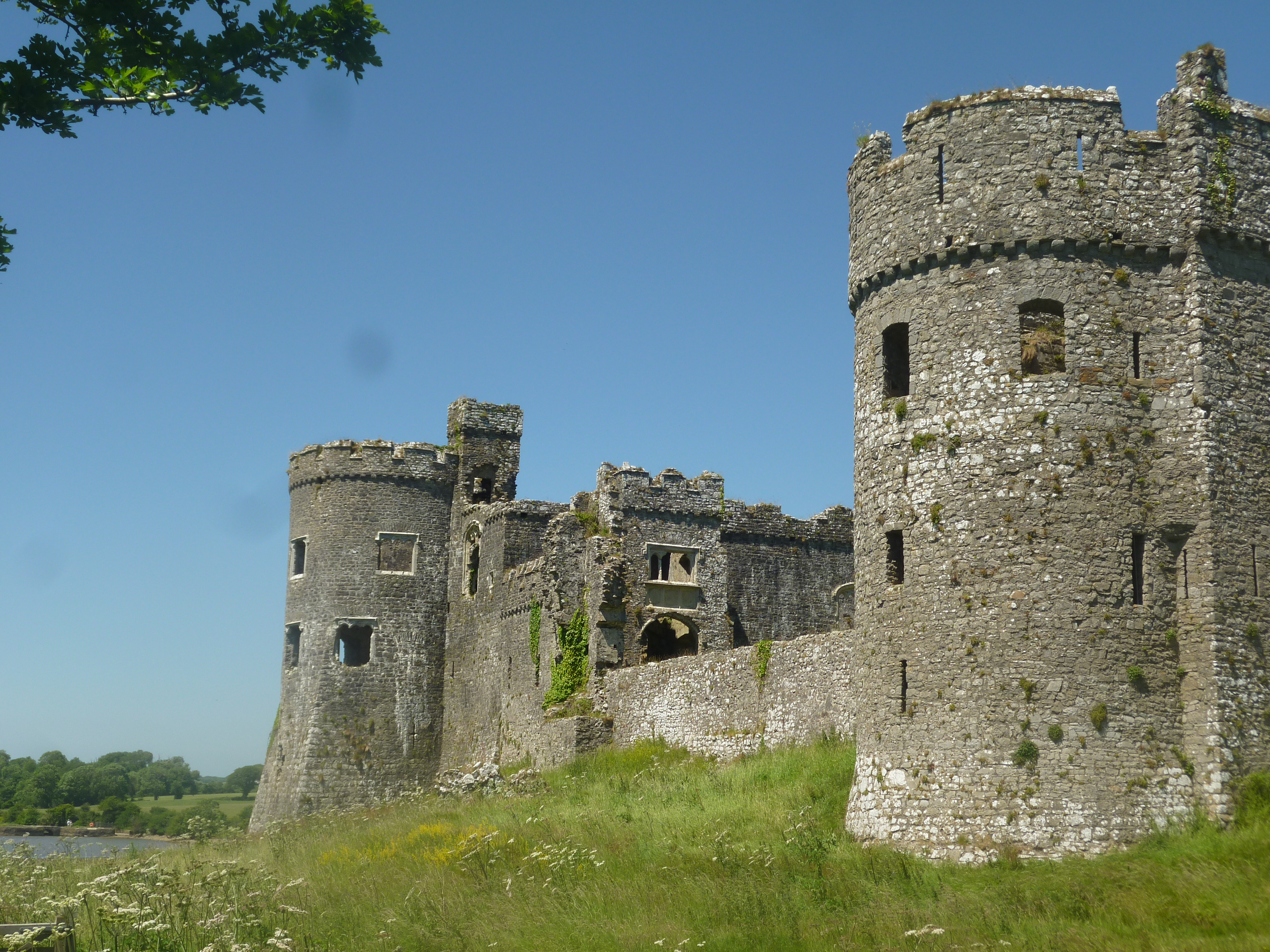
P1070464A castle, wherever it is, is a story in itself. When was it created? Why? By whom? Inevitably the story continues to the people who have lived there, the conflicts they may have provoked or suffered, the enmities and love affairs its silent walls may have witnessed. And so it goes on, suffering ravages of time and weather as decisions are made to extend, rebuild, refurbish or abandon until eventually, it reaches today and the people who decide to go and see it in its old age and those who have become its carers now.

Carew Castle

Carew Castle is a staggeringly beautiful creation. It has existed in one form or another since 1100 or shortly thereafter…., first as some kind of stone tower with wooden palisades, in Tudor times taking on aspects of a mansion, today almost completely floorless except for a couple of large rooms. Several of the participants who attended the storytelling training day I ran there on Thursday for Pembrokeshire Coast National Park are people who do guided tours around it. What a huge story it provides for them to tell! Architectural, archaeological, historical, social, Welsh, English, the story has so many aspects, including what visitors add. I loved what one young woman said to me about it as our training day concluded and we were walking away. ‘It’s a crucible we have here,’ she said. ‘Every day it’s different, always transforming. Whatever you put in, there’s always more. It’s always changing.’

On reflection, I think these could be very good words for describing stories and storytelling. Whatever you put into the crucible, it’s always changing, it’s never full, and for that reason it’s life-enhancing. It  leaves you with new perspectives and new questions. (more…)

Storytelling Starters ~ The blackbird’s song

Saturday, June 20th, 2015

Know any stories about the blackbird? After racking my brain, I’ve concluded I don’t. But I’d like to. For this year, the blackbirds round us seem more beautiful than ever. With one pair out the front, one at the back, it feels like we’re surrounded by golden song – and it goes on from dawn to dusk. With some friends the other day, we all agreed. Yes, they said – and they weren’t all from round here – the blackbirds are especially brilliant this year. As good as the nightingale, two of us ventured. Maybe even better.

And that put me in mind of a story. You probably need no reminding. It’s the one about how the nightingale got its song. But at first it masquerades as the story of how the birds got their colours.

How the birds got their colours

P1060296One day long ago when the world was new, God sent a message to the birds to let them know that he’d soon be coming to give them colours. He even appointed a day and told them not to be late. The birds became very excited. On the day, they were ready and waiting, fascinated to know what these colours would be.

When God arrived with his suitcase, he got them all to line up. Then he opened his case, arranged his paints, picked up his brushes and began. You should have seen what he did – how beautiful he made them look and how different from each other in different combinations of reds and greens and yellows and blues.

After he’d finished, God was putting his things away when one little brown bird came hurrying up, all dishevelled and sad because he was late. God said he was terribly sorry: all his paints were used up by now, he had nothing left. When the little bird heard this, he was so distressed that God said he’d take another look just in case he could find a little something for him. ‘Ah yes,’ God said as he rummaged around. ‘Here is something, it’ll be just right.’

What God had found was a tiny spot of gold at the bottom of one of his pots. ‘Now open your beak,’ God told the little brown bird as he picked up the gold with one of his finest brushes. When the little bird’s mouth was open wide, God placed that tiny spot of gold right at the back of its throat. And ever since, that otherwise undistinguished little bird – it was the nightingale – has had gold in its song. (more…)

Storytelling Starters ~ Ground of our being

Saturday, June 13th, 2015

P1040896This Thursday night, I attended an event in a fine old house in Hackney. The house was Sutton House, a Tudor manor house that now belongs to the National Trust. The event consisted of two authors, Rob Cowen and Dominick Tyler, talking about their relationship with nature and landscape. Some of what Dominick said was personally recognisable to me: I’ve known him since his childhood in Cornwall. What both authors said about the impact of nature made me recall an important theme in story work I’ve done.

Rob Cowen’s book, Common Ground, is about the Yorkshire edgeland near where he grew up. One of those strangely absorbing places on the fringes of towns and cities where you can still find yourself immersed in the world of nature, he rediscovered his childhood edgeland as an adult. In Dominick’s book, Uncommon Ground, you see remarkable photos of landscape features and read about the terms for those features that have fallen almost completely out of knowledge. Finding the terms and the places which illustrate them was Dominick’s way of reconnecting with nature for behind his book, as with Rob Cowen’s, was his strong realisation of how much he’d lost in becoming urbanised as an adult.

And so to stories:

In story work I’ve done in schools, it’s always proved productive with pupils in the 10 – 13 age-range to ask them about places they value. I start with an invitation: ‘Think about somewhere you’ve enjoyed going to play, somewhere you like to lurk about.’ (more…)

Storytelling Starters ~ Duck Confit

Saturday, March 21st, 2015

P1070169Ducks in Brockwell Park this week made me laugh. I love it when they go tail up, head down, orange legs flapping like mad. Then when the eclipse was occurring this Friday morning, I thought about Earth’s dependence on the Sun. Although only a small darkening happened, the birds in the garden went quiet and it felt strangely cold.

After the eclipse, I found myself plunged – this upcoming Blog in mind, no doubt –  into the characteristic mode of the storyteller. Down inside, you start digesting and sorting all kinds of stuff that may have gone into your mind in the past. Then suddenly up come findings – stories, poems, odd bits of memory. And the magic is that, somehow, the findings are all linked in some way.

So here are three items from my cosmic soup of yesterday morning accompanied by two photos of those Brockwell Park ducks. I hope you enjoy the mixture and see the links between the items. For me as a storyteller, they bring the additional pleasure of realising that, between them, they have something to offer for all ages.  

1. Five Little Ducks (more…)

Storytelling Starters ~ King of the Castle

Saturday, January 3rd, 2015

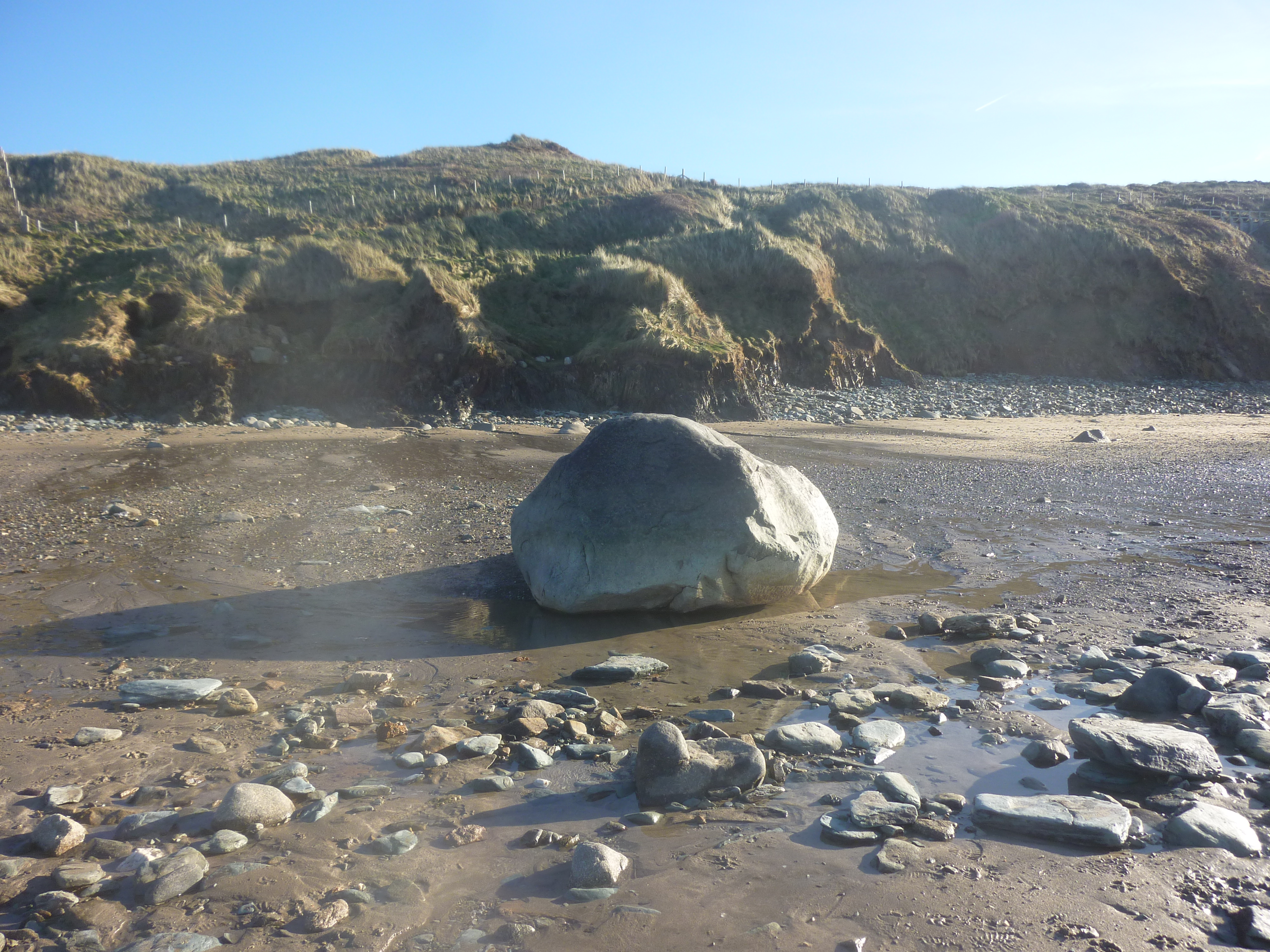
P1060225How many times must I have chanted these words as a child while jumping onto the rock in my picture, trying to arm-wrestle other children off while I did so?

I’m the King of the Castle!

Get down you dirty rascal!

The rock was a familiar part  of my world. I accepted it as it was. I never thought about the whole shape and size of it for, until this very time last year, I’d never seen or imagined the lower half of it – not until the incredible storms that hit these shores had scoured out Whitesands beach, taking at least four foot of sand out to sea and leaving the whole of the rock exposed.

Then, last summer, going down to Whitesands beach  and looking leftwards, I was amazed all over again. This time, I couldn’t see the rock at all until I actually walked across the beach to look for it. I remember thinking someone must have stolen it for now, since the tides had brought the sand back, even the very  top of it could hardly be seen. (more…)

Storytelling Starters ~ A Traveller’s Tale

Saturday, November 15th, 2014

This week I’m taking up the challenge I gave myself last week. What follows is my first try-out of the story I said I’d like to prepare and tell. Please let me know if you think it works. And if it does, please tell me how you would end it.

The story:

WowThe story I want to tell you is about a traveller. The amazing thing about this traveller is that he goes on his travels every single year without fail. Every year, he goes an extremely long way and he always ends up in pretty much the same place. You’d think he might try somewhere else or vary the journey sometimes, visit other countries, see other places. But no, every single year he does the same thing.

So this is what he does. He leaves Britain at about the same time – in early summer in June or July. First, he travels down to the Mediterranean – and that’s not surprising because it’s warmer there than here. Then he crosses the Mediterranean sea and arrives in North Africa, which of course is a very popular place for people going on holiday.

After a short while in North Africa, maybe a week or two, having a bit of relaxation and making sure he’s ready for the next part of his journey, he sets out to cross the Sahara desert. Why he feels obliged to do this is a bit of a mystery. It’s not somewhere you’d want to stop. It’s extremely hot, it’s extremely dry and it’s extremely dusty. But it’s his most direct route and it usually takes him only about three or four days.  (more…)

Storytelling Starters ~ Cuckoos and Crosswords

Saturday, November 8th, 2014

Fox 2 11.14Wildlife is always interesting. Most mornings these days when I draw the curtains, I see a big, handsome fox on the roof of the shed the other side of our back garden wall. Usually he’s still asleep. When he wakes, he stretches and yawns. Sometimes he then moves onto the tree-platform or storage-shed next door. I suppose he feels safe on these vantage points.

As for cuckoos, I learned a lot more about them last Saturday when I went to a fascinating talk on bird migration by a scientist from BTO (British Trust for Ornithology). Since then, thinking about what I learned has made me conceive a new storytelling idea namely, to devise something I could call The Cuckoo’s StoryAs with the Mabinogion story I told in North Wales a couple of weeks ago, there’s a bit of a back story.

The back story:

Cuckoos were part of my childhood. In our living room, we had an elaborately carved cuckoo clock: the cuckoo would pop out each hour on the hour, much to my delight. Besides, all round my grandparents’ smallholding deep in the countryside near Cilgerran, I’d hear that crazy repetition of the cuckoos’ call throughout the  cuckoo season.

Then a couple of years ago, I was re-introduced to cuckoos by a friend (Hilary, a million thanks!), who told me about a cuckoo-tracking project being run by BTO. I signed up to sponsor a cuckoo. Welsh cuckoos were being included among the birds being fitted with tracking devices. There was even an invitation to suggest names by which the tracked birds could be known. I remember suggesting Taliesin, the name of one of the earliest Welsh poets.

So that’s how I started getting some cuckoo knowledge. In this Blog previously, I’ve mentioned the astonishingly long and (to me) heroic journey that our cuckoos make each year. Not that they’re really OUR cuckoos at all. Each year, they spend only about 6 weeks in the UK. Then they’re off –  across Europe, the Mediterranean and the Sahara and, after a sojourn in West Africa, down through Africa to the Congo. Then after their time in the tropical forests, they’re on their way back to the UK to breed.

New knowledge: (more…)

Storytelling Starters ~ Sweet Pea

Saturday, August 2nd, 2014

An idea or a question can lead you on a journey. This week I began to wonder if I could find a Sweet Pea story. My sweet pea seeds, sown in a pot outside the kitchen door, are just producing their first flower and I felt excited about that.SONY DSC

So I asked myself: are there any Sweet Pea legends? Trying to find an answer, I came across tales about many other flowers. So far as the Sweet Pea is concerned, however, the answer was No.

Yet the process of trying to track down a Sweet Pea story (storytellers do enjoy quests!) did bring one odd little connection with traditional tales. It led me to learn something new about Wem, the small town in Shropshire which is the home of Mythstories.  Mythstories is a museum of stories. I have told stories in it myself – and, incidentally, it’s also where, unless they’ve been moved in the last little while, the Society for Storytelling archives are housed.

So here’s my Sweet Pea journey: (more…)