Mary Medlicott, Storyteller and Author - Storyworks

Archive for the ‘Themes’ Category

Storytelling Starters ~ And all the while…

Saturday, January 16th, 2016

Trees near TrefelynThose little stories that make a particular point can sometimes prove tricky. The last few days, the weather has been lovely in London – cold but sunny enough to bring a smile to our faces and quite a change from incessant grey skies and rain. On one of my walks, remembering the great winds that blew over Christmas, I thought about that famed competition between Sun and Wind.

Sun and Wind fight it out:

Just as children sometimes do, and sometimes even grown-ups too, Sun and Wind were having an argument about which of them is stronger. Sun proclaimed:  ‘It’s definitely me.’ Wind thought differently, ‘No, it’s me.’

Sun and Wind decided to test out their claims.

‘See that young man walking down that street,’ said Sun. ‘I guarantee I can get his jacket off him quicker than you.’

‘It’s a deal,’ said Wind. ‘But I’m going to win.’

Without wasting a moment, Wind began blowing. Before he could even start roaring, the young man walking down the street pulled up the zip on his jacket. Then as Wind began roaring, he put his arms round himself, drawing his jacket even closer. (more…)

Storytelling Starters ~ Good experience

Saturday, January 2nd, 2016

P1080034Sometime between Christmas Day and New Year’s Day this week, I watched a film called Ten Canoes. The film was made in 2006 among an Aboriginal people of the Northern Territories of Australia. It tells two stories, one of which – the story within the story – is presented as a very old, true story from the time of the ancestors. In its content and the way it was told, it made me feel conscious once again of the power and effects of storytelling.:

In Ten Canoes, a young Aboriginal man fancies a beautiful young woman. Unfortunately, she is already one of the three wives of the young man’s brother. To alert the young man to the dangers and folly of what his fancy could unleash, he is told the story – and this becomes the story within the story – that comes from the ancient time of the ancestors. Of course, the story that he is told is one that exactly matches the situation he is in. It shows how the similar desires of the young man in the earlier story resulted in suspicion, warfare and death. I found all of this quite fascinating – and for several different reasons, not least that storytellers so often try to find a story to tell that has relevance to now.

The storytelling:

The first fascinating thing about Ten Canoes for me was the slowness and stillness of the storytelling. The ancestral story within the more recent story was compared by its narrator with a small tree which slowly reveals itself as it grows and as more and more branches are seen. As this happens, it is pointed out, everything becomes more complex. You want to understand exactly what happens, you want to follow every branch. This feeling struck a chord witme. I too believe that storytelling has a slowness and inner stillness to it from which comes its power. And that’s not all …  (more…)

Storytelling Starters ~ Yesteryear’s tales

Saturday, December 19th, 2015

ParrotOur Christmas card this year features our neighbourhood parrot. We’d never met him until the recent day when he was having an airing out on the street. Maybe it’s because of the brilliant redness of his feathers – for red is the colour of holly berries and also of Father Christmas’s robe – that we thought about him for our e-card. To go with the card and its greetings, here’s a parrot story I loved first hearing when I was a child and have always loved remembering since.

A very steep hill:

From the town of Fishguard where I was born, a very steep hill leads down to the beach which stretches across to the harbour in the small twin town of Goodwick. At one time, according to my Aunty Mali, the road to Goodwick went straight down over that very steep hill. So whether you walked or were driving a pony and trap, that is the way you had to go. And at the bottom of the hill, you’d pass by the little cottage which was owned by an old woman who kept a parrot that was a very good mimic. Often on days of good weather, she’d hang the parrot-cage outside her front door so the parrot could have an airing.

Well, up in Fishguard there was a man with a horse and cart who used to organise to take groups of people down to Goodwick on little jaunts to the beach. When it came time to go down the hill on any of these occasions, he’d pause his horse at the top of the hill so he could insert small wooden wedges to act as brakes on the wheels of the cart.

A very mischievous parrot:

On one particular occasion, the man had safely steered his horse down the hill from Fishguard with the cart full of laughing women who were on their way for an afternoon on the beach. At the bottom of the hill, he paused as usual to remove the wooden wedges from where he’d jammed them against the wheels. This time, the wedges had become extremely hot from the friction of the journey and while the man was working away to remove them from the wheels, the parrot started piping up. It had obviously recognised the horse and the noise it came out with was its excellent imitation of the clicking sound the horse’s owner always produced – an equivalent of Giddy-up – when he wanted to get the horse moving.

‘Giddy-up, giddy-up,’ clicked the parrot. And the horse obeyed at once, setting off at a rate of knots. Within seconds, the cart was swaying giddily from side to side, the women inside were screaming and sparks were flying out from the wheels of the cart. The horse’s owner had to run like mad to catch up with his horse and bring it to a halt before the cart went up in flames.

Naughty parrot! I loved hearing this story about him and also about what the parrot would say whenever a courting couple passed by, namely ‘Kiss ‘er, Kiss’er!’

A very warm wish:

Oh, the simple pleasures of yesteryear. I suppose these are the kinds of daft, lovely stories that often get remembered over Christmas dinners up and down the land when the older and younger generations get together. Maybe you’ll remember some yourself.

But whether you remember old stories or not, I do hope your Christmas will be happy and peaceful. Next week, after the Christmas days are over, I’ll probably be too well-fed and maybe too somnolent to write very much in this blog. Maybe there’ll just be a lovely Welsh view, who knows?

Happy Christmas! Nadolig Llawen!


Storytelling Starters ~ Quiddity

Saturday, November 28th, 2015

P1070781On 19 November, the Guardian newspaper ran a very interesting piece about the author Will Self leading a walking tour of Bristol. On the tour, evidently, he was encouraging participants to take in the uniqueness of our ordinary urban places. ‘Feel the wall,’ he urged, ‘its coldness, its integrity, its quiddity, its this-ness.’

I like Will Self’s words. (Quiddity feels especially good.) For it’s true. You can make what you think of as a commonplace walk and, if you really look, you can see so much. It can be like walking through stories. Often, the full stories are hidden. You end up wanting to know more.

Last Sunday, I took a bus from Brixton to the Kennington/Vauxhall area with a plan for a variation on something else I do from time to time, namely set out from my house on what I call a spoke. This means choosing a direction, then walking briskly for an hour in that direction and seeing how far I get before taking a bus back home. On Sunday, my aim was just to walk around an area that is not familiar to me, seeing whatever there was to be seen.  And I did see so many interesting things – the huge round building that houses the Oval Cricket Ground, the site of the Vauxhall Pleasure Gardens that were such a draw for Londoners back in the 18th century, several little art galleries I felt I’d like to visit (all closed, alas, because it was Sunday) and some delightful-looking community cafes.

But the treasure was Bonnington Square. Coming towards it unawares, my camera was already clicking, senses increasingly struck by the greenery and flowers outside front doors and along the pavements.  Admiring the inventive ways in which things had been planted, I then came upon the garden. What a miracle of creation! Information boards on the outside fence had caught my interest even before I went into the garden as they told me how, some years ago,  this small area of land had been rescued, derelict, from Local Authority plans to build upon it. The surrounding community had rallied to what they called the Paradise Project and, as I saw when I went inside, the garden they made became a little haven of beauty with a play space for children and several different areas where people can sit in sanctuary below lovely trees surrounded by plants. (more…)

Storytelling Starters ~ Round and round

Saturday, November 14th, 2015

Grim news from Paris. What is to be done? What can we do? Whatever it is – stop the warring in Syria? –  we agreed this morning that one thing we have to do is make the best we can of our time. So here is the blog I’d prepared for today.

Round and Round:

P1070114Odd how themes that come up in a life can come back, round and round, circling in on themselves. Black people who’ve changed the world by challenging people’s perceptions have been a recent theme in this blog. This week the theme returned several times – and, in one case, in a most unexpected way.

Last week I’d mentioned that, after  retelling here that wonderful story I’d first heard told some years ago by an Aboriginal Australian storyteller – hands, legs and head finally working together –  Meg from Brisbane had written in to let us know that she’d heard this story told by the very woman who created it, Maureen Watson. Evidently, a specific point in Maureen Watson’s mind had been for it to help teach children about the importance of working together. Then during this week came another follow-up message from Meg. She wrote again to say that Maureen Watson had died in 2009 and that information about her life can be seen on the following link:  https://www.wikiwand.com/en/Maureen_Watson. Having now read the link, I can thoroughly agree with Meg: ‘She was an amazing activist and advocate.’

Then on Thursday at the theatre, a world away from Maureen Watson but in spirit very close, I met another emanation of Francis Barber, the Jamaican freed slave I wrote about last week who’d become manservant and companion to Samuel Johnson in 18th century London. We’d gone to the theatre to see Mr Foote’s Other Leg, a play about the real-life actor and impresario, Samuel Foote, who’d lived and worked in London in the same era as Johnson. For me, a main reason for wanting to go to this play was that Simon Russell Beale, one of my most admired actors because of how he makes his parts so real, was playing the part of Foote. Another attraction was that the play was set in Georgian London (why has Georgian London become a theme that’s popping up all over the place in London at present?). (more…)

Storytelling Starters ~ Hands, legs and sock

Saturday, October 31st, 2015

Tapies footI’ve said it before: storytellers enjoy making links and I personally seem to be doing it more than ever. Sometimes the link emerges through thinking what photos to use for this blog. This week, as you can see from the photos chosen, it’s bits of the body that created an association.  

Antoni Tàpies was a Catalan painter. I’d scarcely even registered his name before last weekend when we went to Barcelona for a few days off to celebrate my birthday. On our last day when we went to the Fundacio Antoni Tàpies, a museum devoted to Tàpies work, I found a lot of his paintings hard to be drawn to. But where he focused on simple stuff – wood, windows, doors, eyes, feet, an old sock, a shoe-print in sand, the sand itself – I felt considerably more at home. Tàpies took inspiration in ordinary things and found them of spiritual value. He felt they are evidence of our common humanity connecting  us to the earth and to our selves.

After we got back to London, we looked back at our photos as you do (we’d been allowed to take photos in the Tàpies gallery as long as we didn’t use flash)  and I found myself linking some of the work we’d seen with a story I’d heard some years ago at a storytelling evening at the South Bank Centre. The event was associated with a huge exhibition of Australian Aboriginal art at the Hayward Gallery and the storytellers were two Australian Aboriginal women

Legs, feet, fingers, thumbs: here’s the story that came back to my mind. It’s one I’ve always enjoyed passing on. (more…)

Storytelling Starters ~ Flying, falling

Saturday, August 22nd, 2015

No good signals have been received from Chris the Cuckoo since 5 August. At that point, Chris the Cuckoo was crossing the Meditarranean Sea after stopping in the Po Valley area of Italy on his annual migration south to Africa to the Congo.  Four complete migratory cycles of his have been recorded by the BTO (British Trust for Ornithology) using the tracking device with which he was fitted. Now it is feared he has died and the probable reason is the severe drought the Po Valley area has been experiencing this summer.  

Falling – poor cuckoo!

P1070575Severe drought is also what’s causing enormous problems for salmon in the Vancouver area of Canada. As we were hearing from a friend there this week, the rivers are going dry and salmon trying to get upriver to reach their breeding places are not going to be able to do so.

For salmon and cuckoos, it’s a sorry tale. Already the Po Valley area drought is thought to have been responsible for the probable deaths of several others of the cuckoos that the BTO has been tracking this year. To discover the difficulties migrating cuckoos are facing is precisely why their tracking programme was devised. Drought, of course, is one of the worst of the problems: it means the feeding places where the cuckoos stop on their journeys cannot provide them with the sustenance they need for their onward flight.

The cuckoos were much on my mind when we went for a walk around the lovely North Pembrokeshire village of Nevern this week. The 6th century saint, Saint Brynach, founded the church in the village and, among the ancient yew trees leading to the church entrance is the famous Bleeding Yew that attracts many visitors. Nearer the entrance is the beautiful Celtic cross which figures in a sad little local legend in which the cuckoo is central.

 On St Brynach’s day each springtime, according to the legend, a service used to be held around that Celtic Cross. Every year, the vicar and the congregation would  gather for the service in front of that Celtic Cross and wait until, as invariably happened, a cuckoo would fly down and settle on top of the cross. At that point, the service could begin. One year, however, the people waited and waited until they were on the point of despair. Just as they were about to give up, a very wind-blown and battered cuckoo arrived and settled briefly on the cross only to fall dead on the ground below it as the service started. 

Flying – lovely swifts! (more…)

Storytelling Starters ~ The Light of an Eye

Saturday, August 15th, 2015

P1070330My photos this week are of a carved head. But it’s painting that’s on my mind as I write. For when I’ve  posted this, I’ll be going to look at a painting.  A message about it arrived this week from the owner of an art gallery in Fishguard, the town where I spent the first fourteen years of my life. He is in the process of selling a number of works by Elizabeth Cramp, a very fine Fishguard artist who achieved a good deal of success while she lived. As he told me in his email this week,  the works of hers that he is now selling include a painting of my Aunty Mali.

Aunty Mali was a considerable influence in my life. A friend of my parents rather than an actual relation, she was a personality, a music teacher, a choral conductor,  a traveller and, wherever she travelled, an informal ambassadress of Wales and Welsh culture. She was also a redoubtable storyteller with innumerable stories to tell. After her death, Aunty Mali became the subject of my storytelling piece, Travels With My Welsh Aunt. It was my tribute to her. When I performed it in Fishguard, the same art-gallery owner, Myles Pepper, who’s now selling Elizabeth Cramp’s  paintings was the organiser of the occasion.

So when I get to Myles’s gallery,  I’ll see ‘a very fine watercolour painting’  which I didn’t even know existed. What will its impact be? Aunty Mali has been dead nearly twenty years. I have many, many photographs of her as well as boxes full of her papers. But a painting? Will it feel too powerful, as if she’s come back to life? Or might it be a disappointment by not being the Aunty Mali I knew?

The prospect is daunting. What will I see? (more…)

Storytelling Starters ~ Don’t look back!

Saturday, August 8th, 2015

Music has such evocative power. On Tuesday, both sadness and joy were present in spades during the Proms performance in the Albert Hall of Monteverdi’s Orfeo.  Now regarded as one of the earliest operas, Orfeo tells the story of the marriage of Orpheus and his subsequent quest. Throughout it, you’re aware of Orpheus as the hero whose singing had such beauty, it was said, that it had the power to attract the wildest of beasts and even to move inanimate things.

Orpheus’ marriage:

GondolaFor all his other adventures, the high point of Orpheus’  life was his marriage to Eurydice. So ecstatically happy did she make him that he was cast into the uttermost depths of grief when, running away from a would-be lover, she was bitten by a snake and died from the poison. After her death, Orpheus became completely unable to imagine living without her. In his bereavement, he determined to do what had never previously been done by any living mortal: try and find a way into the darkness of the Underworld, there to plead either to be given  back his wife or, if his pleas failed,  to be allowed to stay there with her.

Orpheus’ quest:

Orpheus set off on his mission and found his way to the river Lethe, the border between the lands of the living and dead. There with his lyre and his singing, he managed to lull to sleep the boatman, Charon, who rows the souls of the dead across the river. After penetrating Hades, the world of the dead, Orpheus came into the presence of Pluto, its king, and his wife Persephone.  With all his power, he began to plead to be allowed to take Eurydice back to the land of the living. Eventually, he succeeded. Pluto granted she might go with him on the condition that, on the way, he must not once look back at her until she had come into the full light of the sun.

Well, we all know what happened – or at least, we should for it was the most heart-rendingly human thing. Just as he was about to emerge from the gloom of the Underworld, something made Orpheus turn. Was it a sudden noise? A moment of self-doubt? Was his wife really behind him? Whatever made him do it, he turned and as he did so saw the form of his beloved fade and dissolve into the shades of the Underworld. (more…)

Storytelling Starters ~ The Crucible of Story

Saturday, July 11th, 2015

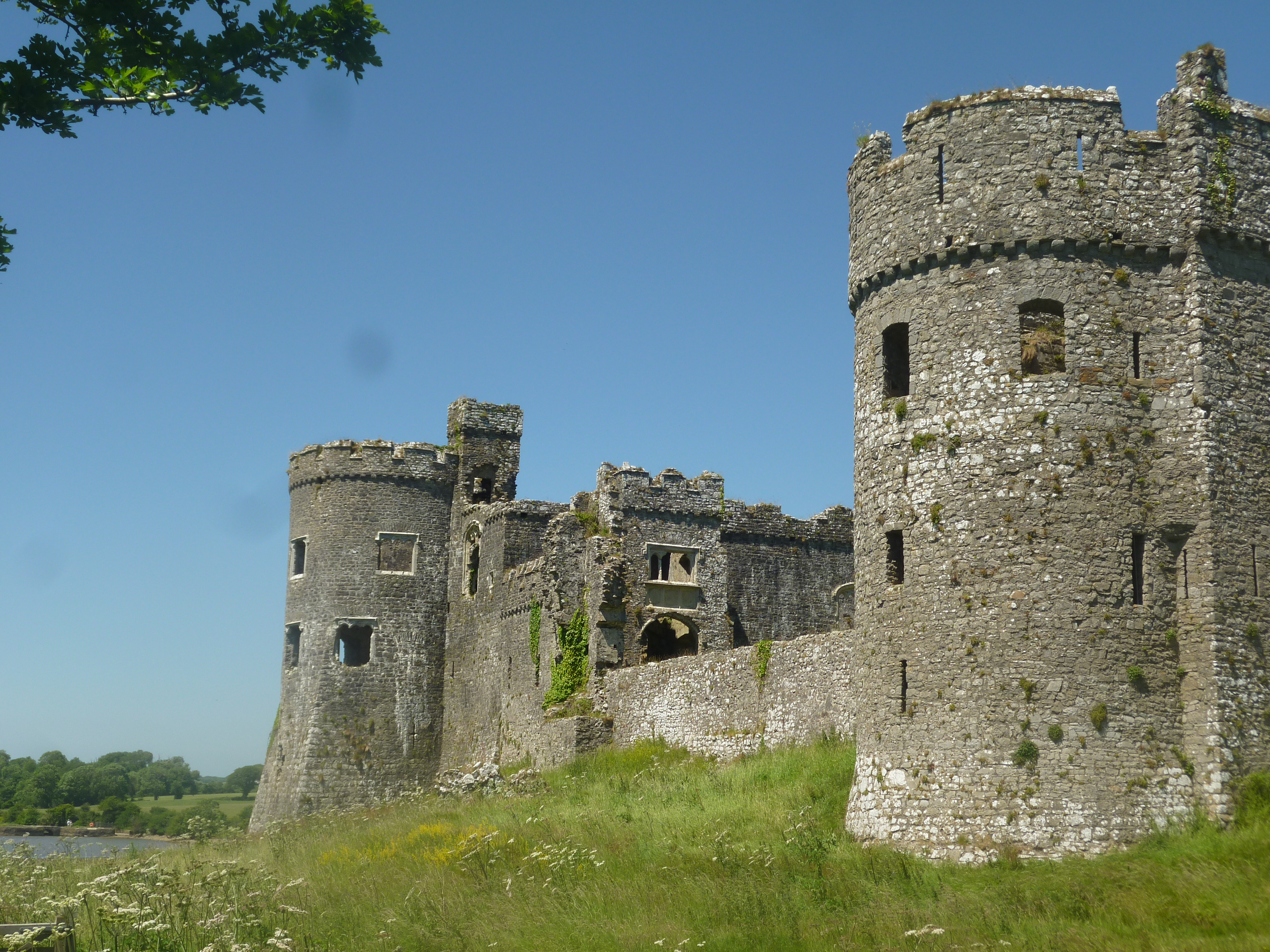
P1070464A castle, wherever it is, is a story in itself. When was it created? Why? By whom? Inevitably the story continues to the people who have lived there, the conflicts they may have provoked or suffered, the enmities and love affairs its silent walls may have witnessed. And so it goes on, suffering ravages of time and weather as decisions are made to extend, rebuild, refurbish or abandon until eventually, it reaches today and the people who decide to go and see it in its old age and those who have become its carers now.

Carew Castle

Carew Castle is a staggeringly beautiful creation. It has existed in one form or another since 1100 or shortly thereafter…., first as some kind of stone tower with wooden palisades, in Tudor times taking on aspects of a mansion, today almost completely floorless except for a couple of large rooms. Several of the participants who attended the storytelling training day I ran there on Thursday for Pembrokeshire Coast National Park are people who do guided tours around it. What a huge story it provides for them to tell! Architectural, archaeological, historical, social, Welsh, English, the story has so many aspects, including what visitors add. I loved what one young woman said to me about it as our training day concluded and we were walking away. ‘It’s a crucible we have here,’ she said. ‘Every day it’s different, always transforming. Whatever you put in, there’s always more. It’s always changing.’

On reflection, I think these could be very good words for describing stories and storytelling. Whatever you put into the crucible, it’s always changing, it’s never full, and for that reason it’s life-enhancing. It  leaves you with new perspectives and new questions. (more…)