Archive for the ‘Themes’ Category
Saturday, June 11th, 2016
It’s odd. You rack your brain for a story on a particular theme, conclude that you don’t have one, then suddenly realise that of course you do. It’s just that you’ve never seen it before from the perspective of that particular theme.
A dog story?
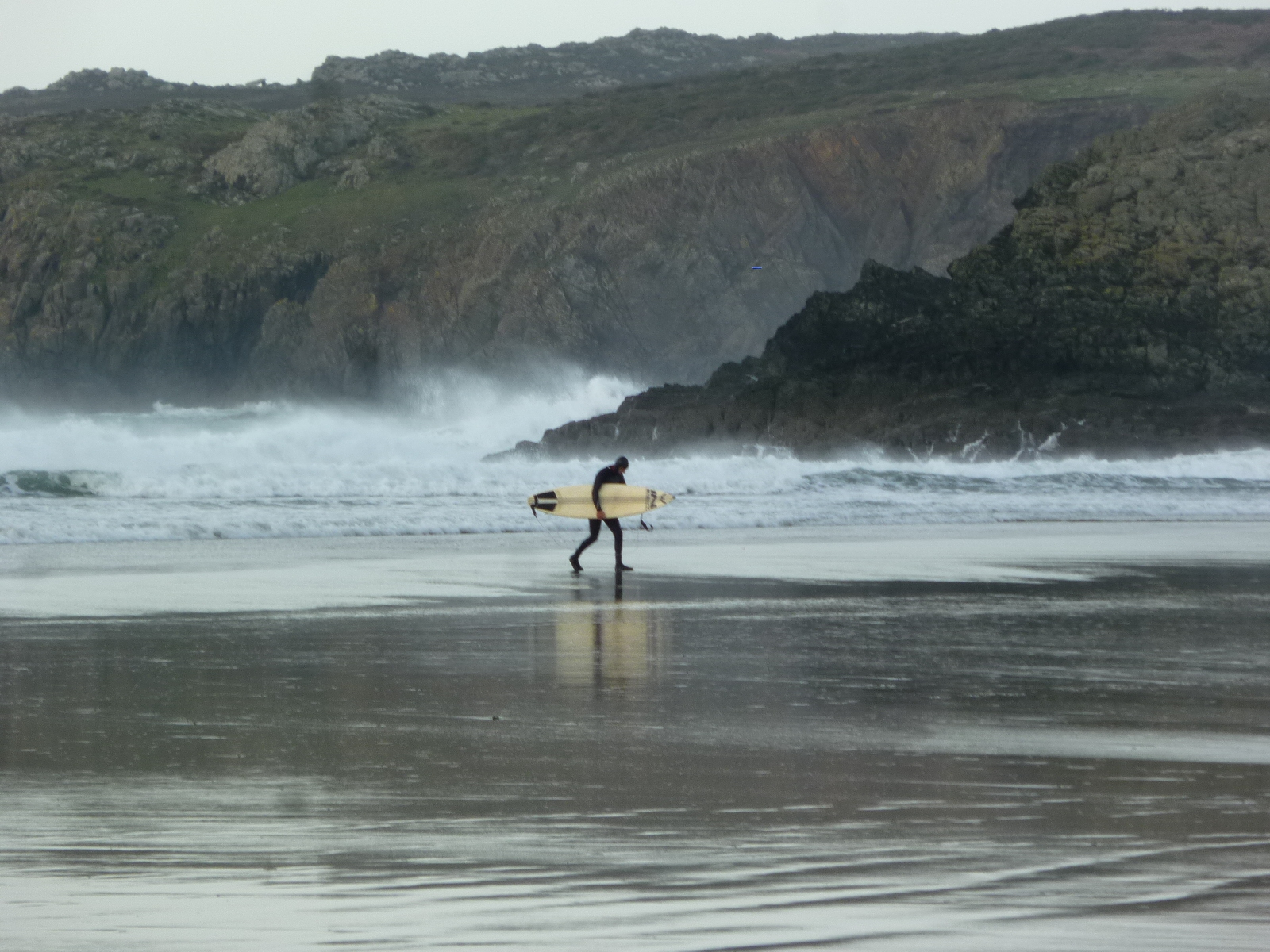
 This week the problem occurred to me in relation to dogs. There I was on Abermawr beach when up came Storm. Storm is a black and white collie. His owner lives about half-an-hour’s walk from the beach. But Storm is always on the beach. For ten years or more, I’ve seen him whenever I go there. One day, I even spotted him from high on the coast path quite a distance away. A black and white dog? Yes, it was Storm.
Storm wears two tags on his collar. One says his name. The other says, ‘Please leave me on Abermawr beach.’ He loves that beach. He walks up and down it and in and out of the sea as if he just has to let you know what a fine place it is. This week, though, he looked less energetic. We could see he’s getting old. If and when he’s not on that beach, it won’t ever feel quite the same.
Storm started me thinking I’d like to write about him. And that led to me wondering if I know any folktale-type stories about a dog. No, I thought, I do not have n a single one. Then it dawned on me. I do. There’s a dog in a story I’ll be telling next week as part of Enchanted Evening, the evening of songs and stories my husband and I will be doing at Pepper’s in Fishguard with David Pepper as Paul’s accompanist.
Lifting the Sky is the story. It’s one that means a lot to me. (more…)
Tags: Big Dipper, dog, Lifting The Sky, Salish
Posted in All ages, Folktales, Personal experience, Personal Tales, Themes | 3 Comments »
Saturday, January 2nd, 2016
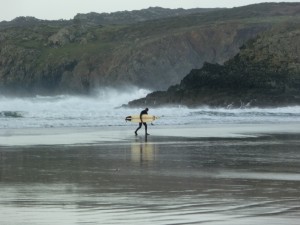 Sometime between Christmas Day and New Year’s Day this week, I watched a film called Ten Canoes. The film was made in 2006 among an Aboriginal people of the Northern Territories of Australia. It tells two stories, one of which – the story within the story – is presented as a very old, true story from the time of the ancestors. In its content and the way it was told, it made me feel conscious once again of the power and effects of storytelling.:
In Ten Canoes, a young Aboriginal man fancies a beautiful young woman. Unfortunately, she is already one of the three wives of the young man’s brother. To alert the young man to the dangers and folly of what his fancy could unleash, he is told the story – and this becomes the story within the story – that comes from the ancient time of the ancestors. Of course, the story that he is told is one that exactly matches the situation he is in. It shows how the similar desires of the young man in the earlier story resulted in suspicion, warfare and death. I found all of this quite fascinating – and for several different reasons, not least that storytellers so often try to find a story to tell that has relevance to now.
The storytelling:
The first fascinating thing about Ten Canoes for me was the slowness and stillness of the storytelling. The ancestral story within the more recent story was compared by its narrator with a small tree which slowly reveals itself as it grows and as more and more branches are seen. As this happens, it is pointed out, everything becomes more complex. You want to understand exactly what happens, you want to follow every branch. This feeling struck a chord witme. I too believe that storytelling has a slowness and inner stillness to it from which comes its power. And that’s not all … (more…)
Tags: Australian Aboriginal story, film, Ten Canoes
Posted in Adults, Themes | 1 Comment »
Saturday, November 28th, 2015
 On 19 November, the Guardian newspaper ran a very interesting piece about the author Will Self leading a walking tour of Bristol. On the tour, evidently, he was encouraging participants to take in the uniqueness of our ordinary urban places. ‘Feel the wall,’ he urged, ‘its coldness, its integrity, its quiddity, its this-ness.’
I like Will Self’s words. (Quiddity feels especially good.) For it’s true. You can make what you think of as a commonplace walk and, if you really look, you can see so much. It can be like walking through stories. Often, the full stories are hidden. You end up wanting to know more.
Last Sunday, I took a bus from Brixton to the Kennington/Vauxhall area with a plan for a variation on something else I do from time to time, namely set out from my house on what I call a spoke. This means choosing a direction, then walking briskly for an hour in that direction and seeing how far I get before taking a bus back home. On Sunday, my aim was just to walk around an area that is not familiar to me, seeing whatever there was to be seen. And I did see so many interesting things – the huge round building that houses the Oval Cricket Ground, the site of the Vauxhall Pleasure Gardens that were such a draw for Londoners back in the 18th century, several little art galleries I felt I’d like to visit (all closed, alas, because it was Sunday) and some delightful-looking community cafes.
But the treasure was Bonnington Square. Coming towards it unawares, my camera was already clicking, senses increasingly struck by the greenery and flowers outside front doors and along the pavements. Admiring the inventive ways in which things had been planted, I then came upon the garden. What a miracle of creation! Information boards on the outside fence had caught my interest even before I went into the garden as they told me how, some years ago, this small area of land had been rescued, derelict, from Local Authority plans to build upon it. The surrounding community had rallied to what they called the Paradise Project and, as I saw when I went inside, the garden they made became a little haven of beauty with a play space for children and several different areas where people can sit in sanctuary below lovely trees surrounded by plants. (more…)
Tags: Bonnington Square, garden, iron wheel, paradise, quiddity, Vauxhall/Kennington, Will Self
Posted in Adults, Myth and Legend, Personal experience, Themes | 2 Comments »
Saturday, November 14th, 2015
Grim news from Paris. What is to be done? What can we do? Whatever it is – stop the warring in Syria? – we agreed this morning that one thing we have to do is make the best we can of our time. So here is the blog I’d prepared for today.
Round and Round:
 Odd how themes that come up in a life can come back, round and round, circling in on themselves. Black people who’ve changed the world by challenging people’s perceptions have been a recent theme in this blog. This week the theme returned several times – and, in one case, in a most unexpected way.
Last week I’d mentioned that, after retelling here that wonderful story I’d first heard told some years ago by an Aboriginal Australian storyteller – hands, legs and head finally working together – Meg from Brisbane had written in to let us know that she’d heard this story told by the very woman who created it, Maureen Watson. Evidently, a specific point in Maureen Watson’s mind had been for it to help teach children about the importance of working together. Then during this week came another follow-up message from Meg. She wrote again to say that Maureen Watson had died in 2009 and that information about her life can be seen on the following link: https://www.wikiwand.com/en/Maureen_Watson. Having now read the link, I can thoroughly agree with Meg: ‘She was an amazing activist and advocate.’
Then on Thursday at the theatre, a world away from Maureen Watson but in spirit very close, I met another emanation of Francis Barber, the Jamaican freed slave I wrote about last week who’d become manservant and companion to Samuel Johnson in 18th century London. We’d gone to the theatre to see Mr Foote’s Other Leg, a play about the real-life actor and impresario, Samuel Foote, who’d lived and worked in London in the same era as Johnson. For me, a main reason for wanting to go to this play was that Simon Russell Beale, one of my most admired actors because of how he makes his parts so real, was playing the part of Foote. Another attraction was that the play was set in Georgian London (why has Georgian London become a theme that’s popping up all over the place in London at present?). (more…)
Tags: Aboriginal Australian storyteller, Catharinella, Frances Barber, Grimms' Other Tales, Ian Kelly, Maureen Watson, Mr Foote's Other Leg, Simon Russell Beale, story-bags
Posted in Adults, Personal experience, Preparing, Themes, True tales | No Comments »
Saturday, August 8th, 2015
Music has such evocative power. On Tuesday, both sadness and joy were present in spades during the Proms performance in the Albert Hall of Monteverdi’s Orfeo. Now regarded as one of the earliest operas, Orfeo tells the story of the marriage of Orpheus and his subsequent quest. Throughout it, you’re aware of Orpheus as the hero whose singing had such beauty, it was said, that it had the power to attract the wildest of beasts and even to move inanimate things.
Orpheus’ marriage:
 For all his other adventures, the high point of Orpheus’ life was his marriage to Eurydice. So ecstatically happy did she make him that he was cast into the uttermost depths of grief when, running away from a would-be lover, she was bitten by a snake and died from the poison. After her death, Orpheus became completely unable to imagine living without her. In his bereavement, he determined to do what had never previously been done by any living mortal: try and find a way into the darkness of the Underworld, there to plead either to be given back his wife or, if his pleas failed, to be allowed to stay there with her.
Orpheus’ quest:
Orpheus set off on his mission and found his way to the river Lethe, the border between the lands of the living and dead. There with his lyre and his singing, he managed to lull to sleep the boatman, Charon, who rows the souls of the dead across the river. After penetrating Hades, the world of the dead, Orpheus came into the presence of Pluto, its king, and his wife Persephone. With all his power, he began to plead to be allowed to take Eurydice back to the land of the living. Eventually, he succeeded. Pluto granted she might go with him on the condition that, on the way, he must not once look back at her until she had come into the full light of the sun.
Well, we all know what happened – or at least, we should for it was the most heart-rendingly human thing. Just as he was about to emerge from the gloom of the Underworld, something made Orpheus turn. Was it a sudden noise? A moment of self-doubt? Was his wife really behind him? Whatever made him do it, he turned and as he did so saw the form of his beloved fade and dissolve into the shades of the Underworld. (more…)
Tags: Bendigeidfran, Charon, Eurydice, Lethe, Monteverdi, Orpheus, Proms
Posted in Adults, Myth and Legend, Performance, Personal experience, Teenagers, Themes | 1 Comment »
Saturday, July 4th, 2015
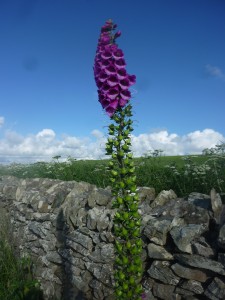 Last week I asked this question: What did Iron-Age people have? Karen’s response was: ‘They’d have had each other.’ The elements were what had been in my mind – earth, air, fire, water. With characteristic insight, Karen thought about the people. Her response has been helping me think through one of the issues that arose from my training day at Castell Henllys on Monday. (more…)
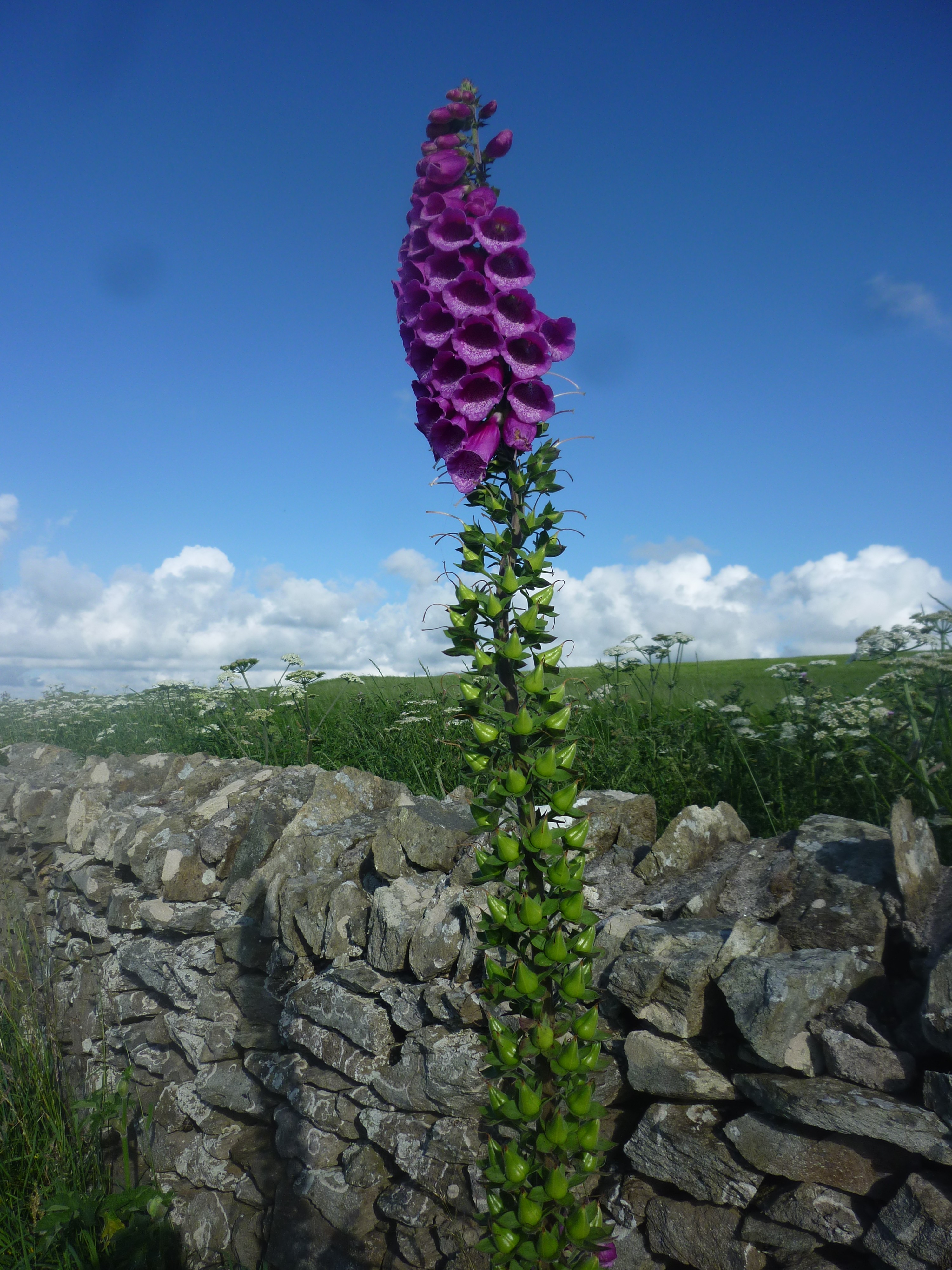
Tags: Castell Henllys, foxglove, guided walks, historical sites, Iron-Age fort, role and costume, stance
Posted in Adults, Creating, Managing problems, Personal experience, Preparing, Themes | No Comments »
Saturday, June 27th, 2015
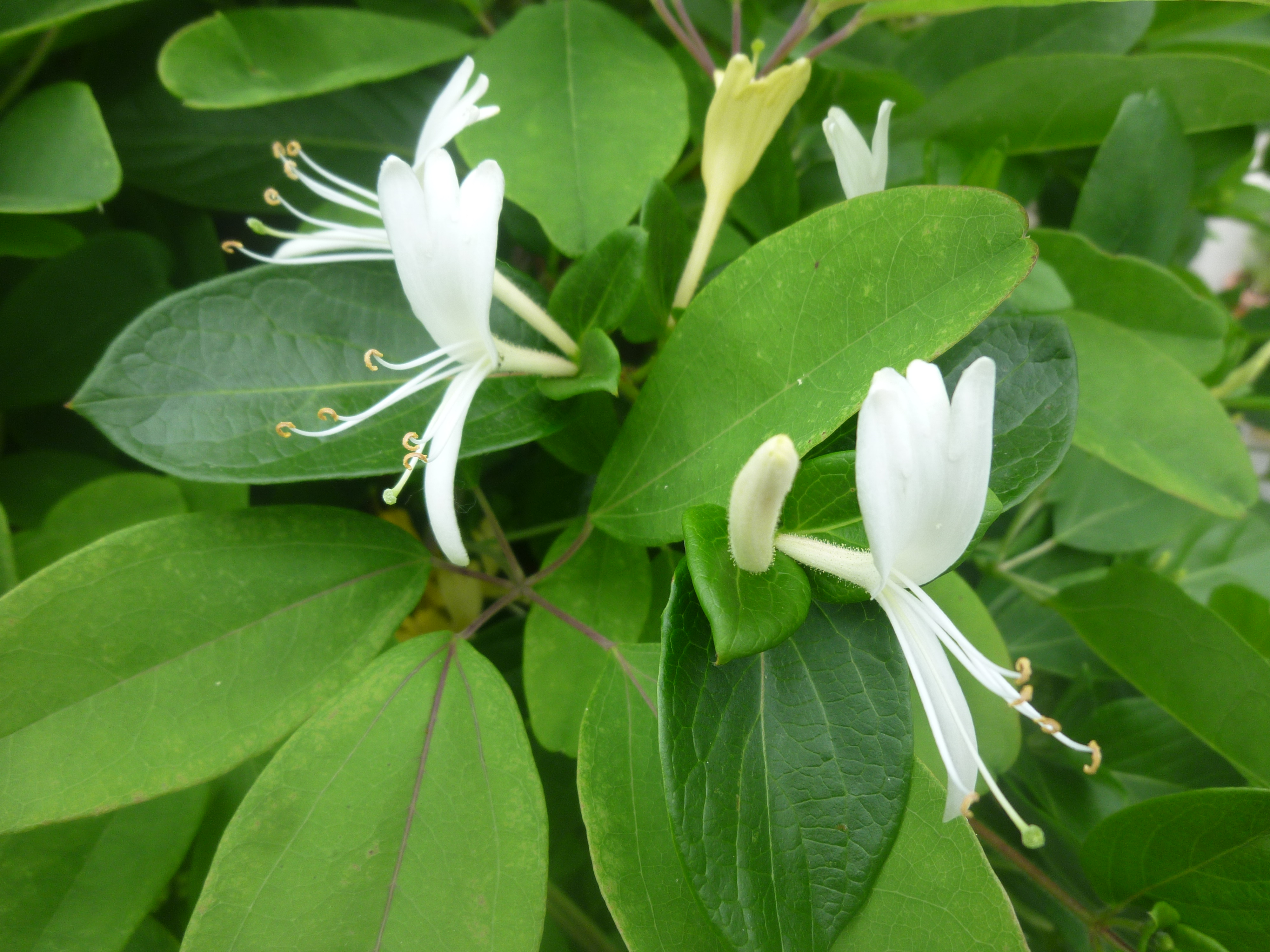
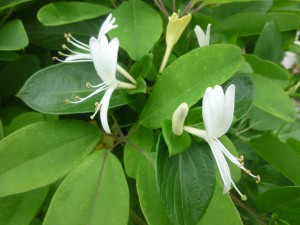 I wish I could encapsulate the honeysuckle growing in the next street from me and somehow include it in this blog so you could smell it as you read. Maybe some day that’ll become possible. Meantime Iron-Age forts have been on my mind.
Why Iron-Age forts? Because next Monday I’m doing some storytelling training for guides at Castell Henllys, the Iron-Age fort in North Pembrokeshire. It’s the only such place which today has roundhouses on the exact site of the ones that were there back then.
The length of time:
What strikes me, thinking about that long-ago time is the very length of the time from then to now. And how can you possibly get that across? Almost as hard as electronically encapsulating the honeysuckle, the challenge reminds me of how I once had to try to make a class of 10-year old Stevenage children conscious of Ancient Egypt at the same time as taking into account their other current project – Ourselves Now.
Miraculously – for the results were fantastic – I got the idea of giving the children some sense of the passage of time by coming up with memories from each year of their lives and then creating hieroglyphs to represent them like the hieroglyphs from Ancient Egypt they’d already been learning about. This led on to them making memory charts and this then led to them telling their personal stories and deciding (this was entirely their own idea!) to punctuate each of the 10 years for which they had stories with the sound of a gong.
What the Iron-Age had: (more…)
Tags: 10-year olds, Castell Henllys, chant, honeysuckle, Iron-Age fort, Pembrokeshire, Stevenage
Posted in All ages, Chants and songs, Follow-up activities, Personal experience, Remembering, Themes | 8 Comments »
Saturday, May 9th, 2015
 In folklore, bears are the harbingers of Spring and last weekend, visiting friends in Berlin, I saw a good many of them. Like the painted elephants that appeared all over London in the summer of 2010, these were extremely colourful creatures. Unlike the London elephants, which disappeared at the end of the summer when they were auctioned off for charity, the Berlin bears are there to stay. The bear. after all, is one of the symbols of the city and they are among its new emanations.
Bear stories
Covered in slogans or embellished with pictures, upside down or arms raised in a wave, the Berlin bears kept reminding me of bear stories. One I recalled while walking around is a foundation myth of the Modoc Indians of California. A very touching story, it tells how the little daughter of the Great Spirit is peeping out of the mountain in which they live when a great wind catches at her hair and blows her out of the mountain. After sliding down the snowy side of the mountain, the little girl ends up being found and raised by a mother bear. When she is grown, she marries one of the mother bear’s sons. Their children become the Modoc people.
But alas, when stories are prompted, it’s not always a matter of remembering them fully. One of the curses of the storyteller is sometimes being plagued by half-remembered things, flotsam from stories that, once encountered, are no longer there in your mind. Back in London, I’ve had to try and catch up. One question that was bugging me had been prompted by my favourite among the Berlin bears, the blue one painted with signs of the cosmos. Wasn’t there a constellation or two that represents bears? And the answer, of course, is yes. It’s a story that occurs in Greek mythology. (more…)
Tags: bear, Bear Skin, Berlin, Greek myth, Modoc myth, Thinking about memory
Posted in Adults, Folktales, Myth and Legend, Personal experience, Remembering, Symbolism, Themes | 2 Comments »
Saturday, September 20th, 2014
This week I’ve been preparing for a Storytelling evening I’ll be giving in Llangollen on 10th October. The event is for the Story Circle regularly organised there by storyteller Fiona Collins . My preparations for it feel a bit like the gardening I’ve also been doing in my garden this week. A garden takes time and effort to make and time and effort to maintain. When it’s going right, it gives great pleasure.
From the Land of the Magic
 My Llangollen programme is a new one – From the Land of the Magic. The title comes from the Welsh, gwlad yr hud, which is a phrase that has been applied to Penfro, Pembrokeshire, the part of Wales I come from. The light there really is magic. It’s no surprise to me that so many Pembrokeshire stories reflect its enchanting effects.
My stories for Llangollen will include some smaller ones I’ve often told before as well as one big one I’ve told before but not often, namely the story of Manawyddan which comprises the Third Branch of the early Welsh cycle of stories, the Mabinogion. I feel this ancient story is extremely relevant to our world today dealing as it does with how to bring a halt to the incessant taking of vengeance.
As for the work of preparing my overall programme, I’ve adopted my normal technique – Mind-Mapping. Mind-Maps are what work for me. They prompt me to remember what stories I know, bring them into fresh focus and enable me to create new programmes and themes. So, how to do it?
Making a Mind-Map (more…)
Tags: Cinnamon Press, Fiona Collins, gardens, gwlad yr hud, Llangollen Story Circle, magic, New Zealand, Rebecca Hubbard
Posted in Adults, Folktales, Myth and Legend, Personal experience, Preparing, Themes | 2 Comments »
Saturday, February 1st, 2014
 My current series of postings is about how to get children actively participating in stories. As the basis of today’s tip, I’m focussing on a well-known nursery rhyme. It’s come back to mind because of what’s been going on recently in the outside world. The pot-holes in my road have been overflowing with it. People at London bus-stops have been moaning about it. Friends have asked glumly if it’s ever going to stop. And of course the ‘it’ has been the rain. Here’s the nursery rhyme:
Doctor Foster went to Gloucester
In a shower of rain
He fell in a puddle
Right up to his middle
And he never went there again.
Because of the incessant rain – and today’s clear skies in London serve as a reminder of how bad it’s been – this rhyme could be a good one to include in Story-time soon. It may even be an advantage if the rhyme is already familiar to the children. Handled in a different way from usual, it can help you build up your techniques for getting participation from them. (more…)
Tags: Doctor Foster, nursery rhymes, pause, question, scenarios
Posted in Children's stories, Early years, Getting participation, Managing problems, Themes, Uncategorized | No Comments »


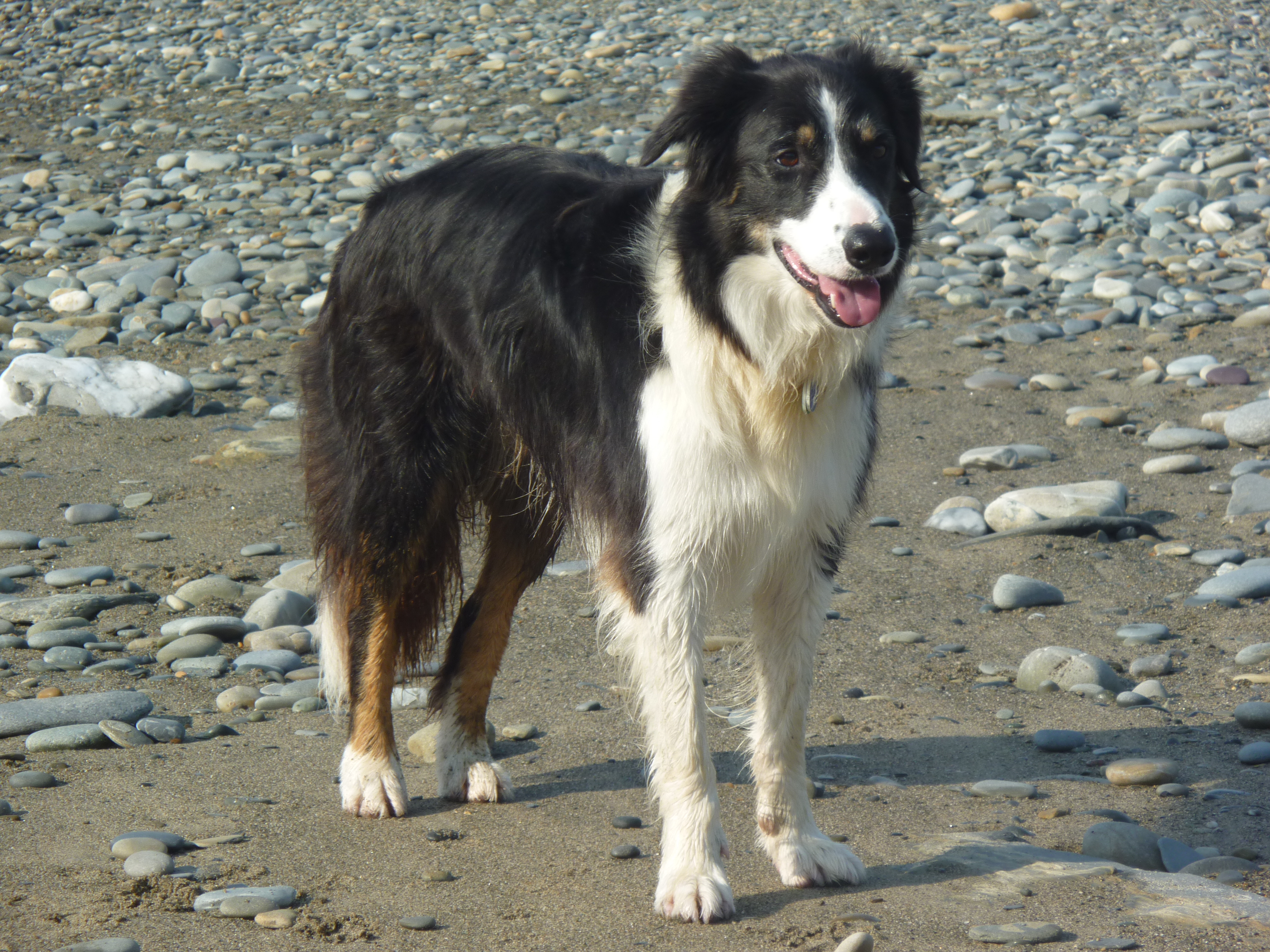 This week the problem occurred to me in relation to dogs. There I was on Abermawr beach when up came Storm. Storm is a black and white collie. His owner lives about half-an-hour’s walk from the beach. But Storm is always on the beach. For ten years or more, I’ve seen him whenever I go there. One day, I even spotted him from high on the coast path quite a distance away. A black and white dog? Yes, it was Storm.