Archive for the ‘Primary’ Category
Saturday, September 26th, 2015
 OK, I admit it, I’ve been darning. It’s not a fashionable thing to do. But when warm clothes come out of storage as winter hoves into view, that’s when you spot the frayed ends and the tears – and also in my case the moth holes, moths being a plague in South London.
Hence the darning. It’s something I was taught as a child and, to be honest, I enjoy it. It’s satisfying, it saves on money and shopping and it makes me love my clothes all over again.
Yesterday while sitting darning in a spot of sunshine, I was reminded of the story below. But it wasn’t only the darning that brought it to mind. Among my emails had been a message from someone who’d come on a storytelling course of mine ages ago. I recognised her name as it popped up in my Inbox. We’d exchanged emails for a while after the course was over because she’d wanted to tell me how much she was enjoying becoming a storyteller to children in the school where she worked. And hey presto, she’s still doing it! Her message this week lets me know how much the storytelling means to her following some personal troubles she’s suffered. She describes it as ‘healing’.
No wonder today’s story about a sewing box popped into my mind. I’m fairly sure it wasn’t one that we did on the course she attended. But it’s one I’ve often told to Primary children – sometimes with the effect that afterwards I’ve heard that they’ve been sewing story-titles too!
The story: A Stitch in Time (more…)
Tags: darning, healing, needle, sewing-box, storytelling courses, thread
Posted in Adults, Folktales, Follow-up activities, Primary, Props and Resources | No Comments »
Saturday, March 14th, 2015
 What makes children sit up and listen?
What makes children remember what they’re told?
What makes children respond and comment without being obliged to do so?
Well, storytelling does. The trouble is, if you’re reading this blog, you probably already know the truth of that. It’s how to spread the awareness that is the problem.
All day this last Wednesday came evidence of how children can listen and be gripped. The supply of questions and comments was fulsome and never chaotic (evidence of a good school, I’d say). But the most extraordinary thing was how, all day, children were remembering stories I’d told them before. From Reception to Year 6, there was enormous keenness not just to identify what stories they’d heard but exactly what happened in them. They also remembered my props. And it wasn’t just one or two children that were doing this, just about all of the children were bursting to say what they remembered. Only the Nursery children didn’t – but then, they were new to the school.
The school was St Stephen’s in Shepherd’s Bush. I’d been there three times before. In the course of this week’s visit, one girl in one session put her hand up looking troubled. ‘I can’t remember these stories,’ she said. It obviously really bothered her that she didn’t, as if she was feeling really hurt that she’d missed out on something everyone else had experienced. We thought perhaps she’d been off school when I’d come before and she seemed content with that thought. But seeing her face, I realised the power of a communal event in which everybody can share and experience enjoyment. (more…)
Tags: Arabian Nights, Golden Water, Richard Hughes, Singing Tree, St Stephen's, Talking Bird, The Glass Ball
Posted in Folktales, Performance, Primary, Remembering, Storytelling in Education | 2 Comments »
Saturday, February 14th, 2015
So here’s the third of my blogs about that beautiful story from the Arabian Nights which I’m preparing for telling in a fortnight’s time. The first blog gave a brief idea of the story as I’d remembered it over a number of years. The second itemised the three treasures in the story that I’d completely forgotten about. Now here’s the main body of the story. I’ve simmered it down to its bare bones. That’s how I work when I’m starting from a written story. Visualisation must do the rest. Here goes.
The set-up:
 Farizad and her two brothers, Farid and Faruz, live in the beautiful garden which was created by the gardener and his wife who were their parents.
Now the parents have died.
One day an old woman comes to the garden and says to Farizad: This garden is beautiful but it would be perfect with 3 rare treasures – the Talking Bird, the Singing Tree and the Golden Water. Farizad asks where these can be found? In the mountains on the road into India.
Farizad says she must go and find them. Farid and Faruz say, ‘No, we’ll go.’ But then they agree that one brother must stay to look after Farizad.
Quest of Brother No. 1 (more…)
Tags: Arabian Nights, Farizad, knife, pearls
Posted in Adults, Folktales, Preparing, Primary, Props and Resources, Remembering, Visualisation | 1 Comment »
Saturday, October 25th, 2014
 A bit of patter is part of the art. It may be only to say where a story comes from, where and from whom you heard it. Or it may be something about the weather, the event or the audience you’re addressing. It may be some introductory narrative that includes something about being a storyteller (after all, lots of people still don’t know what to expect) or you may have a joke that puts people at their ease. Whatever it is, it’s all part of creating a receptive atmosphere.
Dylan Thomas in Fitzrovia:
This week, I participated in the Fitzrovia Festival, an annual week of events that take place in the area round London’s Fitzroy Square. This year’s festival has been dedicated to Dylan Thomas. I did two sessions of Dylan Thomas readings and, among other things, my patter for my second session included a delightful (and true) little story I once heard from one of the people involved. This was an English lecturer on a visit to South Wales to see her daughter and her daughter’s two little children. An excursion to Laugharne had been planned so as to visit The Boathouse where Dylan Thomas lived and the shed where he worked. The children had heard a lot about this proposed excursion and on the way in the car, one of them piped up from the back, ‘Mum, will we see see Dill and Thomas?’
For my first session, which I knew in advance would be for young children, one piece of patter that came in handy was what I’d discovered a few days previously when making decisions about what poems and prose-readings I’d offer. Two possible poem options – Poem in October and Poem On His Birthday sent me scurrying to look up when Dylan Thomas was born. A hundred years ago, yes. But when exactly? The answer was 22nd October – the very day of my readings.
Preparing for the 6-year olds: (more…)
Tags: Charles Stephens, Child's Christmas in Wales, Dylan Thomas, Fitzrovia Festival, Tales from the Shepherd's Hut
Posted in Adults, Personal experience, Preparing, Primary, Props and Resources, True tales | No Comments »
Saturday, June 7th, 2014
 Riddle-me-See: this week it’s eyes. Riddle-me-See is a deliciously gruesome story. When I told it, ages back, to storyteller Kate Portal who is blind, she said she loved it, she’d add it to her collection of eye stories. But first, a word about the Comments that flooded in response to last week’s Blog.
Empathetic, innovative, optimistic, creative, sentimental, thoughtful and deliciously perfumed: so many qualities made themselves felt in the answers to Riddle-me-Rose. Look back and you’ll see.
The answer to the question – how did the gardener know which rose was his wife? – is, of course, down-to-earth. He’s a gardener. He knows that, in early morning, the blossoms in the rose-bed will sparkle with dew. The rose that is his wife does not. She’s been inside the cottage with him long enough for any dew-drops to disappear.
Karen, I think, might have known or guessed but gave her answer an innovative twist in making dew-drops into tears. Delicious clouds of perfume emanated from nearly everyone else – Jean, Claire, Sal, Larry – and, Larry, the Shakespearean reference feels very apt. Liz thought he knew his wife by looking into the eyes of the flower, for it’s in the eye that you see another person’s soul. As for Annalee’s suggestion – that the wife was the rose with a name-tag – it immediately reminded me of that extraordinary occasion some ten years after I got married when, in the course of weeding my garden, I pulled out a piece of columbine and saw, hanging from its root, the wedding ring I’d lost eight years before. The ring glistened. I felt amazed.
Eyes: a riddle (more…)
Tags: Comments, Eye riddle, glass eye, Riddle-me-See
Posted in Adults, Age Range, Personal experience, Primary, Props and Resources, Riddles, rhymes, sayings, Teenagers | No Comments »
Saturday, May 31st, 2014
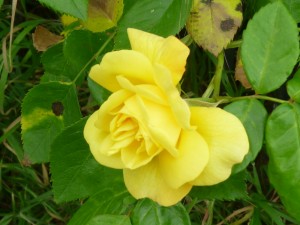 The Handel Rose (yellow), Paul’s Scarlet (red) and Mary Rose (pink) are all positively flourishing in our garden right now, only slightly battered by this week’s heavy showers. They made me think about roses as my theme for this week’s blog. Or how about eyes? I’ve seen several lively pairs of eyes in recent comings and goings that started me trying to identify what was so appealing about them.
Yesterday, I got my answer: when walking down the back of Whitehall, two stories popped into my mind. One was about roses, the other about eyes. And several links between them became immediately clear. Both I first heard from other storytellers. Both are great for telling to older children or adults. Both have a riddling aspect. Suddenly it was obvious what I should do. This week, I’ll give you roses. Next week, eyes. (more…)
Tags: eyes, riddle, roses
Posted in Adults, Nature stories, Primary, Riddles, rhymes, sayings | 14 Comments »
Saturday, May 24th, 2014
 Two separate events have brought monkeys into my mind this week. One was receiving a message from a student on the Warwick University course I visited a few weeks ago. She was getting in touch to ask me where she could find a copy of the Little Red Monkey story that I’d told in my session. She’d liked it and now hoped to tell it. But she hadn’t been able to find a copy either on this blog or my website.
This surprised me: it’s one of my favourite stories for children and I thought I’d posted it on this blog a while ago. So I sent her a copy and told her she could also find it in my book, Stories for Young Children and How to Tell Them (A & C Black).
Now, of course, I feel I must remedy my previous omission. So please look below for the story with, at the end, a few hints on how you might tell it. Also if you’d like to hear me telling it there are links to my website.
First, though, here’s a thought-provoking little poem. It’s called The Prayer of the Monkey and it comes from the set of poems, Prayers from the Ark, that I acquired a few weeks ago. Prayers from the Ark was written in French by the little-known poet, Carmen Bernos de Gasztold. It was translated into English by Rumer Godden and, in the version I have, was published by Macmillan in 1966. Last Sunday, I read the whole set to a special group to which I belong. We call the group Works in Progress or WIPs for short. When we meet, each of us presents something creative that we’ve been working on.
This time, I presented Prayers from the Ark. I feel the poems are ideal for speaking aloud (reciting poetry was one of my loves as a child) and I hope soon to be offering public readings of them, for example for charity concerts. I see them as fables that are in tune with one of the world’s great needs of today – that we should as a species become far more aware that we share this beautiful earth with all kinds of other creatures, both wild and domestic. So here is The Prayer of the Monkey. But the monkey is not the loveably cheeky monkey of most people’s imaginations. It’s a melancholy monkey. It might make us think! (more…)
Tags: Carmen Bernos de Gasztold, hints, John Astrop, Little Red Monkey, monkey, Prayers from the Ark
Posted in Adults, Animal stories, Getting participation, Primary, Props and Resources | No Comments »
Saturday, March 8th, 2014
 A girl pushes her fingers down the back of the rear seat of an abandoned Renault car in the scrapyard near her home. As she exlores the hole her fingers have found, she feels the hard-edged corner of what is surely a box. Determined to get it out, whatever it is, she returns to the scrapyard a day or two later. This time, she succeeds. She sees that the top of the box is covered with fabric which could be Indian or Chinese and inside, when she opens it, she finds a shining glass figurine of what looks like an elephant man. The elephant man will turn out to be a statuette of Ganesh, the Hindu god. But even before the girl finds that out, her questions have begun.
Questions on World Book Day:
At Ysgol Dafydd Llwyd in Newtown, Powys, on World Book Day this week, the children were brilliant at thinking what those questions might be. How had the box got down the back of the seat? Who put it there? Why? Who did it belong to? What might the figure be worth? How old could it be? Where was it made? Did it have any special significance? How much might you get if you put it on eBay? How long had it been in the Renault? Could you trace its rightful owner?
Ysgol Dafydd Llwyd: (more…)
Tags: celandines, Elephant Luck, Ganesh, Kenya, Nairobi, Ysgol Dafydd Llwyd
Posted in Getting participation, Personal experience, Preparing, Primary, Telling and Writing, Uncategorized, Visualisation | No Comments »
Saturday, January 25th, 2014
‘In the middle…’ That’s what was often said to me by a therapist I used to visit in one difficult phase of my life. ‘I don’t know where to begin,’ I’d say. And that’s how she always replied: ‘How about in the middle?’
 The theme of the series:
So in the middle is where I’m starting this new series. The theme is how to get children actively involved in a story, not only listening but joining in. My emphasis will be on Early Years children. But the same idea works with all ages. And there’s an awful lot to say.
1. Let your listeners do the expanding …
For example, take the topic of jewellery. Maybe your is story about highway robbers (I used to tell one of these once.) So there you are, in the middle, describing how the fiendish robbers hold up a carriage at night and order everyone inside to hand out their jewels.
Here’s your opportunity. ‘So that’s what the people started to do,’ you’re saying. ‘They were frightened. They started to take off their jewellery …’ (more…)
Tags: categories, getting participation, jewellery
Posted in Early years, Getting participation, Primary | No Comments »
Saturday, December 14th, 2013
Why is it that the stars in the sky especially draw our attention in winter? In the deep darkness of this part of the year, they seem to shine all the brighter.
 As well as playing a prominent part in the story of the birth of Jesus, stars are present in so many of our Christmas traditions – at the top of the Christmas tree, in street decorations, on Christmas cards. For me, they are a vital theme in stories for this time of the year.
Stars are about the magic of looking up into the sky and feeling an immensity that’s beyond our imagining. Yet our imaginations lengthen and widen in the very act of looking.
Loawnu Mends the Sky: a Chinese story
One star story I love telling to children is about how the stars first got into the sky. I came to know it in a beautifully written version which was sent to me by Vivienne Corringham for possible inclusion in my collection of stories, Time For Telling.
Time For Telling came out in 1991. It proved very popular and ‘Loawnu Mends The Sky’ deserved its place there. It’s very well worth looking up. If you can’t find Time For Telling, (it’s out of print but is still held by many libraries), you might be able to track down the two paperback volumes into which it was later divided. ‘Loawnu Mends The Sky’ is included in the volume entitled, The Big-Wide-Mouthed Toad-Frog. What follows is my summary of it – but it’s really not difficult to imagine how to fill it out for a full telling. (more…)
Tags: filling holes, Loawnu Mends the Sky, stars, Time For Telling, Vivienne Corringham
Posted in Christmas, Early years, Folktales, Primary, Props and Resources, Symbolism | No Comments »


 OK, I admit it, I’ve been darning. It’s not a fashionable thing to do. But when warm clothes come out of storage as winter hoves into view, that’s when you spot the frayed ends and the tears – and also in my case the moth holes, moths being a plague in South London.