Archive for the ‘Primary’ Category
Saturday, October 12th, 2013
 This evening I’m off to the BASE Awards event in Wolverton. And if you don’t know where Wolverton is, it’s right next to Milton Keynes.
Ancient Egypt and Us
Milton Keynes is a resonant place-name for me. I once worked with a brilliant class of 10-year olds there. One of the topics in their class at the time was Ancient Egyptians. The other was Ourselves. Their teacher wanted a project to bring the two topics together.
Of course, it’s possible to tell stories from Ancient Egypt. I did – and the children loved them. But how is it possible to imagine the length of time that has passed since the Ancient Egyptians existed? These children certainly couldn’t. Like most children of their age, they had little sense at all of time passing. So I came up with the idea of a Memory Chart on which each child would use hieroglyphs of their own design to notate one memory for each year of their lives so far. We made an exception for their first four years: most people have few recollections from that period. So those years, we decided, could be lumped together and occupy just one box in each person’s chart.
Memory work
The children were brilliant. When we did the initial memory work, there was a lot of jotting down, telling and retelling of what had happened. Then came the making of the memory charts. Each person creating their own, the hieroglyphs designed by the children were fun and inventive. Last came the bit of the project when, working in small-ish groups, the children worked out clever creative ways to tell their small stories as a group. One group, I recall, created a fascinating audio-spiral of their stories where each different year in their memories was signalled by the sound of a gong.
Milton Keynes again
So Milton Keynes it will be tonight. The BASE awards organisers have worked very hard. I hope their Awards event proves a lovely, sociable success. What’s more, I hope it helps to promote and encourage all aspects of the art of storytelling. (more…)
Tags: Ancient Egyptians, BASE Awards, gong, Milton Keynes, Ourselves, Wolverton
Posted in Adults, Children's stories, Follow-up activities, Personal experience, Primary, Props and Resources, Remembering, Symbolism | 2 Comments »
Saturday, October 5th, 2013
 Monsters make an excellent theme for developing children’s creativity. Monsters appeal to young people – there’s something essentially subversive in both.
So whether you’re a parent, teacher or children’s club leader – and whatever the age of the children you work with – you can get a lot out of monsters.
Here’s a programme for pursuing a Monsters theme:
• Find one or two good monster stories – for instance the Greek story of Typhon with older children
• Prepare the stories for telling, then tell them to your children, be they in class, at home or in some kind of children’s club
• Allow time for the children to come up with comments and questions (in class or clubs, working in pairs or groups is best)
 • Ask the children to suggest some modern-day monsters – you might be impressed by their ideas – and make a list of the monsters
• Invite them to draw, paint or make models of the monsters they’ve thought of (this gives them useful thinking time)
• Give them the time to make up a story about their particular monster (working in groups is best in a class)
• Get them to tell their story (each group can tell in turn to the others)
Fantastic!
This whole enterprise could take a full morning or evening session or be spread out over several sessions. (more…)
Tags: CLPE, Jack Zipes, literacy, Monsters, storywork
Posted in Adults, Children's stories, Follow-up activities, Managing problems, Personal experience, Preparing, Primary, Props and Resources, Storytelling in Education, Uncategorized | No Comments »
Saturday, September 14th, 2013
 It’s great to come across a new collection of extremely tellable tales. Girls, Goddesses and Giants by Lari Don (A & C Black) has just this week come into my hands as one of a lovely pile of books I’ve been sent to review for School Librarian magazine. Chris Brown, the magazine’s long-term Books Editor, is just about to retire from that position. He’s done a marvellous job over all of the years. I shall miss him. He always seems to know what books I will value receiving.
Girls, Goddesses & Giants addresses a continuingly important need in stories, namely for strong girl heroines. When I was growing up, I always identified with the young men who were the usual fare in the hero department. Heroines were in shorter supply. Whenever a brave prince was rescuing a kidnapped princess doomed to be sacrificed to a voracious dragon, I became the sword-wielding prince as well as the princess.
Lari Don is not only an author. She’s a practising storyteller too. She has felt the same strong need. And as she says in notes at the back of her book (these include helpful hints on adapting stories to suit your own style), she has felt compelled to satisfy it even while actually being in the middle of telling to an audience of children. The 12 stories in her collection come from all over the world. One of my favourites is a Cameroonian tale, Mbango and the Whirlpool. It brought back to my mind Philip Pullman’s point, made in the interview I quoted a week or two back, that a main reason why children love folktales and fairytales is their belief in justice. They want to see fair play being done. (more…)
Tags: calabash, Chris Brown, eggs, Girls, Goddesses & Giants, Lari Don, Margaret Read MacDonald, Mbango and the Whirlpool, Philip Pullman, School Librarian, Twenty Tellable Tales
Posted in Fair Play, Folktales, Personal experience, Preparing, Primary, Themes | No Comments »
Saturday, May 11th, 2013
 Storytelling Cookbook was the title I gave the first little book I put together with stories for children and hints on telling them. No doubt the name came to mind because I can’t help thinking of cooking and eating in connection with storytelling. Listening to stories or people talking about them just feels like participating in a feast. A traditional Scandinavian tale-ender gives the idea another twist:
‘And all I know is, that if they are not yet done feasting, then they are probably at it still.’
In other words, when a story ends well, it’s not hard to imagine the characters in it sitting long into the night , chewing things over in more ways than one. When I’m finishing a story with children, I often bring in that idea of eating afterwards – it’s a little bit of a tease.
A tale from India
For instance, in that marvellous Indian tale, Bhambhutia, (you can find it in The Singing Sack by Helen East), an old lady is threatened with being devoured on her way through the forest to visit her daughter.
 The story describes how she succeeds in getting back home inside a life-size clay pot she constructs. But the old lady is clever enough to stay in the pot till the animals who still want to eat her have gone to sleep and are snoring around her. It’s when she hears their snores that the old lady knows it’s safe to climb out and quickly run into her house. But that’s not quite the end of the story. Next morning, she gives the pot its reward for bringing her safely home. Either it can go round the world or it can stay with her.
It’s a good point for a bit of discussion. In my experience, lots of children say they’d choose to go round the world – and in multi-ethnic Britain, many say they’d visit the countries where their families originated. Equally, lots of children decide that, if they were the pot, they’d stay at home with the old lady. We talk about it. Then I end the discussion like this: ‘Well, in the story, it says the pot decided to stay with the old lady. And I know that’s what it did because the last time I went to have tea with her, it was still there.’
The proof of the pudding – Kensington Palace revisited
The proof of the storytelling pudding lies in the eating. Thursday was the 6th session of my Kensington Palace storytelling course for parents. It was intended as an opportunity to reflect on what has happened up till now and what might happen after this. The parents’ reports provided a feast. (more…)
Tags: Bhambhutia, Chelsea Library, eating, Helen East, Kensington Palace, The Singing Sack
Posted in Adults, Folktales, Performance, Personal experience, Primary, Storytelling in Education | No Comments »
Saturday, March 30th, 2013
 On Thursday four wonderful stories were told by participants on my Kensington Palace storytelling course for parents. I’ve mentioned some of the stories before. For me, the making of them was one marvellous element of the course. Other elements included my imparting some of the techniques of storytelling with Early Years children, such storytelling essentials as visualization and, of course, aspects of the history and life of Kensington Palace including the 18th century mural by William Kent and other objects and paintings in the palace which in turn gave rise to our storymaking.
All the stories we heard on Thursday were made up by the parents working in groups, all revolved around an object real or imagined and what follows is one of the four. It’s a Cinderella-type story and I hope I can do it justice. Its makers said they were willing for me to retell it but the retelling is in my own words.
The necklace of pearls
Once there was a king and a queen who had a son. When the son grew up, his royal parents decided it would be good if he got married. So they announced a great ball to be held at the palace. At the ball, they were thinking, he might meet a suitable bride.
After the ball was announced, there was a great deal of preparing. Extra people were brought to the palace to help – cooks, cleaners, hat-makers, musicians.
One person who was sent to help at the palace was a quiet, shy and good-hearted young girl. The job she was given was to assist with the cleaning. On the morning of the ball, she was sent to clean a particular room in which was a beautiful painting. The painting was of a lovely-looking woman with a little girl beside her who looked as if she was her daughter. Both the woman and the girl in the painting were wearing necklaces made of pearls.
But the painting was very dusty. The cleaning maid took out her duster and carefully started to dust it down. She began at the top – dusting, dusting, dusting – and it was when she came to the face that she experienced a very big surprise. As she dusted the face of the woman, the woman in the painting began to smile. Then as the cleaning maid continued, the woman’s necklace began to glow and slowly, gradually, it came out of the painting and clasped itself round the cleaning girl’s neck.
Just then, a strange creaking noise came from the wardrobe that was the only other thing in the room and when the maid turned round, she saw that the wardrobe’s doors had opened and inside was a most beautiful ball-gown. Then she heard a woman’s voice speaking. It was the woman in the painting. ‘You must put on this dress,’ the woman said, ‘and wear it with the necklace to the ball tonight.’ (more…)
Tags: Kensington Palace, parents course, story-making, Storyworks philosophy, The Necklace of Pearls
Posted in Adults, Creating, Early years, Personal experience, Primary, Props and Resources | No Comments »
Saturday, February 23rd, 2013
Two significant dates are in view. March 1st is St David’s Day. Whether you’re religious or not, it’s an important day for people in Wales and for Welsh people outside it. It’s the time to pay special attention to the gentle Patron Saint who as he was dying urged those around him ‘to do the little things’. Gwnewch y pethau bychain. I think what St David said is important, namely attending to the detail of people’s needs in the world around you. Which I hope includes valuing the part stories can play.
 A great story for St David’s Day is the one I call The Door in the Mountain. To find it, please look back in my Blog Archives to my posting for February 2012. When you read the story, you’ll see it’s not only got daffodils in it – and of course daffodils (or leeks) are the St David’s Day emblem. In the story, a single daffodil becomes an apt symbol of wonder, living on in the mind long after the real daffodils the little girl finds have gone brown and withered and died.
World Book Day 2013
A week later on March 7th comes World Book Day 2013. This day gives a chance to celebrate what books do for all of us who have access to them. Fact or fiction, they can take us into worlds we might never otherwise reach, transcending time and place and our own physical selves to enable us to see things from other points of view. I hope it also prompts us to remember organisations like Book Aid – for there are still too many people in this world who do not have access to any books (or Kindles or the Internet).
One of my best stories for telling makes a bridge between St David’s Day and World Book Day. The kernel of it was told to me at a Local Legends workshop I led in St David’s. The rest developed around that kernel as I told it and retold it. I recently wrote it – not the story itself so much as my experience of telling it. I hope you enjoy what I wrote. (more…)
Tags: Book Aid, daffodil, like a blanket, St David's Day, The Door In The Mountain, World Book Day
Posted in Adults, Folktales, Personal experience, Primary, Seasonal Tales, Symbolism | No Comments »
Saturday, January 12th, 2013

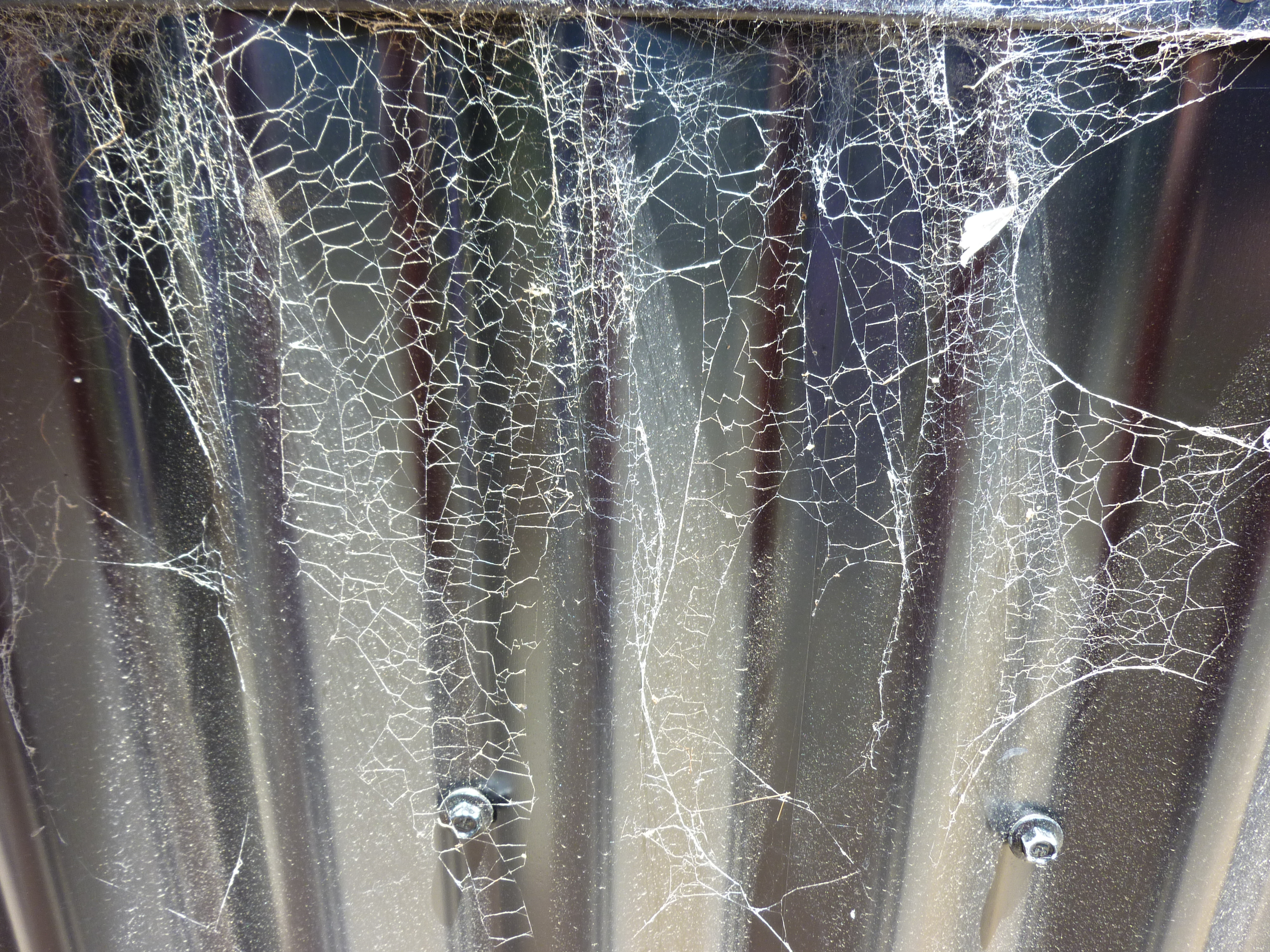
I don’t mind spiders. Some people can’t abide them. One summer in my childhood, I remember my father crushing a Daddy-Long-Legs against the window of the caravan where we were staying. My father used the bread knife. I was upset for the spider and rather appalled by my father. Spiders don’t do any harm – at least not the sort that I know.
But some people are really frightened even when the spiders are small and harmless. You know that North American Indian story – The Man Who Was Afraid Of Nothing?
The Man Who Was Afraid Of Nothing
The man who was afraid of nothing was a terrific hero among his people. One night four ghosts who were sitting together happened to mention this man: ‘He’s not afraid of us, so they say,’ said one.
‘I bet I could scare him,’ said another. A third said, ‘Let’s make a wager. Whichever of us scares him most is the one who wins the wager.’
So the four ghosts set about the challenge. The next moonlit night, the first ghost suddenly materialized in front of the young man and challenged him to a game. ‘If you lose,’ said the ghost, ‘I’ll make you into a skeleton like me.’ (more…)
Tags: bravery, buzzard, Daddy-Long-Legs, fear, ghosts, Grandmother Spider, my father, possum, skeletons, spider, The Man Who Was Afraid of Nothing, why tell stories, woodpecker
Posted in Adults, Early years, Folktales, Nature stories, Personal experience, Personal Tales, Primary | No Comments »
Saturday, December 1st, 2012
A chance encounter
 Wow! Coincidence and Storytelling in Education – two of my favourite themes in one chance encounter. There I was, on the train back from Cardiff last Saturday after watching New Zealand beating Wales at rugby (alas!) when, falling deep into conversation with the woman sitting next to me, I soon learned that she was American, a school librarian currently working in Germany and also – amazing! – a committed storyteller.
So all the way back through flooded Southern England, we exchanged experiences and ideas. Back in the 8Os she’d fallen in love with storytelling when she was sent to the big Jonesborough Festival that happens each year in Tennessee. Since then, as everything she said attested, she has developed a deep awareness of its power with children. More than that, she too believes that storytelling is especially important at this time when, spending so many hours on their Gameboys and watching TV, children have so much less of the vital experience of engaging with other people.
Reason for action
 We know it to be true, all those of us who’ve told stories with children. It is such a powerful thing to do. It creates engagement, develops imagination and encourages language. But it’s in dire danger of falling by the wayside at this time when social media and the internet are getting overwhelming attention. Not that Twitter and Facebook and Google are not also marvellous for the sharing of stories and communication. What they do not have, however, is the face-to-face, ear-to-ear immediacy that storytelling gives.
So please spread the word.
It’s time for everyone who is committed to storytelling in education to speak to their friends about it and to think about what they can do to bring it back to public attention. Otherwise I fear the experience of a whole generation of storytellers who have gained a huge amount of know-how in the schools and libraries of our country is about to be lost.
This week’s seasonal tale
This little tale – The Little Fir Tree – went into my Blog at about this time last year. I’m repeating it now for two reasons – first, because I like it, second because it is about finding value in what can so easily be overlooked. (more…)
Tags: Jonesborough, spread the word, The Little Fir Tree, value of stories
Posted in Early years, Folktales, Personal experience, Primary, Seasonal Tales, Storytelling in Education | No Comments »
Sunday, September 30th, 2012
 First, thanks to all you lovely people who have voted for me to get the Lifetime Achievement Award which will be given out later today, September 29th, in the BASE Awards ceremony in York. Lots of people have written to tell me they voted for me and I feel extremely touched. Whether I get the award or not feels quite unimportant compared with that kind of support.
Secondly, I’m glad to report that I did stop dithering about what my next series will be. Come back to next week’s Blog to see.
Thirdly, I just can’t resist two excellent items for telling that I came across this week. One is a loveable limerick that I’d written down in my Storytelling Journal back in the year 2000. The other – like my hay bales picture – has to do with harvests.
The Loveable Limerick:
Little Miss Myrtle sat on a turtle
Thinking it was a chair.
‘Ow-ee!’ said the turtle
‘I’m sorry,’ said Myrtle.
‘But I didn’t know you were there.’
By the way, my Storytelling Journal is an invaluable resource. Looking back at what I wrote in the year 2000 makes it obvious that someone who attended one of my storytelling workshops had told me that loveable limerick. Yet when I came across it all this time later, I had not a single recollection of it. Odd since I must have written it down because I was thinking it would be ideal for storing in that mental file of stuff that can come in amazingly handy on some entirely unexpected occasion. I still think so! All I’ve got to do now is not only remember it but remember that I know it.
My second item fits into the category of stories for Autumn which is one of the things I was dithering over last week. It’s a traditional tale, here retold by me, and I think it’s ideal for young children. As to why I’d forgotten all about this too, I have no idea. I’m glad to have come across it again. It was in a neglected folder labelled Seasonal Tales that was languishing in my filing cabinet. (more…)
Tags: cumulative tales, How Little Red Hen Got a Loaf of Break, Lifetime Award, Little Miss Myrtle, storytelling journal
Posted in Early years, Folktales, Primary, Riddles, rhymes, sayings, Seasonal Tales | No Comments »
Saturday, September 15th, 2012
The website is open, voting has started and this year’s BASE awards are now being decided. The numerous categories range from Outstanding Male or Female Storyteller to Trailblazer and Life Achievement. The voting deadline is the witching hour of midnight on September 27. The results get announced the next day.
Lifetime Achievement Award
The Lifetime Achievement Award is what I’m up for. If you’d like to give me your vote (and the three of us shortlisted include Sheila Stewart and Taffy Thomas), here are the steps to take. Be patient, they’re quite straightforward but a bit long-winded:
- Go to http://www.storyawards.org.uk/
Click on Register to Vote
- On the USER ACCOUNT page that comes up, fill in the boxes marked Full Name / Username / E-mail address and Word verification and then click on Register
- Note that a message then comes up at the top of the page saying an acknowledgement email is being sent at once to your email address
- When you look up that email, click on the link that is given so that, on the form that comes up, you can set a password
- On the form that comes up, fill in your Username and select a password
- Click on Save
- Now at the top of the page click on Vote
- In the first category – Lifetime Achievement Award – click on Vote (hopefully for me!)
If you do give me a vote – and thanks so much if you do – I’ll see it as an affirmation of all the 30 years of extraordinary, ordinary stuff that storytellers like me get up to – the schools, the workshops, the training, the performing, the supporting, the talking, the sharing.
‘Thank you for teaching us thinking’
Stuff, in fact, like at Craig Yr Hesg school this last week. The school is small and very friendly – about 100 children – and in a pretty deprived area of South Wales. My Shemi stories went down well and, with the 5 and 6 year olds, there was also a very lively response to the excellent Pembrokeshire legend of Skomar Oddy, the giant who sleeps under the Preseli Hills.
Bringing such stories to children always feels like a privilege. It’s a joy to see them becoming absorbed and a pleasure to stimulate them into responding in a whole variety of ways. It made me remember how a Junior-age child once wrote to me after a session: ‘Thank you for teaching us thinking.’ (more…)
Tags: Craig Yr Hesg, Lifetime Award, Shemi's Tall Tales, Time-Banking
Posted in Folktales, Personal experience, Primary | No Comments »