Mary Medlicott, Storyteller and Author - Storyworks

Archive for the ‘All ages’ Category

Storytelling Starters ~ Encapsulating honeysuckle

Saturday, June 27th, 2015
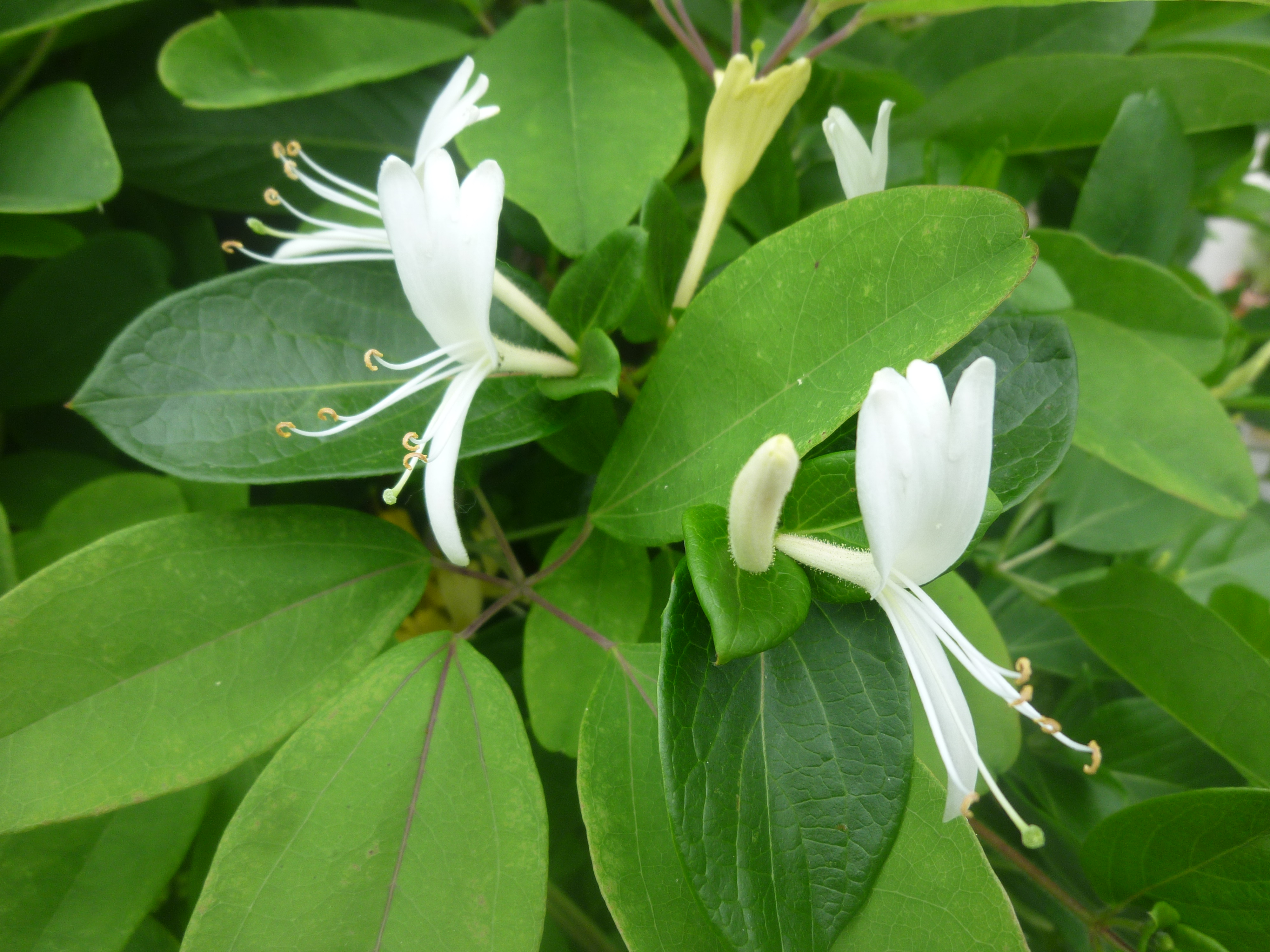
P1070435I wish I could encapsulate the honeysuckle growing in the next street from me and somehow include it in this blog so you could smell it as you read. Maybe some day that’ll become possible. Meantime Iron-Age forts have been on my mind.

Why Iron-Age forts? Because next Monday I’m doing some storytelling training for guides at Castell Henllys, the Iron-Age fort in North Pembrokeshire. It’s the only such place which today has roundhouses on the exact site of the ones that were there back then.

The length of time:

What strikes me, thinking about that long-ago time is the very length of the time from then to now. And how can you possibly get that across? Almost as hard as electronically encapsulating the honeysuckle, the challenge reminds me of how I once had to try to make a class of 10-year old Stevenage children conscious of Ancient Egypt at the same time as taking into account their other current project – Ourselves Now.

Miraculously – for the results were fantastic – I got the idea of giving the children some sense of the passage of time by coming up with memories from each year of their lives and then creating hieroglyphs to represent them like the hieroglyphs from Ancient Egypt they’d already been learning about. This led on to them making memory charts and this then led to them telling their personal stories and deciding (this was entirely their own idea!) to punctuate each of the 10 years for which they had stories with the sound of a gong.

What the Iron-Age had: (more…)

Storytelling Starters ~ The blackbird’s song

Saturday, June 20th, 2015

Know any stories about the blackbird? After racking my brain, I’ve concluded I don’t. But I’d like to. For this year, the blackbirds round us seem more beautiful than ever. With one pair out the front, one at the back, it feels like we’re surrounded by golden song – and it goes on from dawn to dusk. With some friends the other day, we all agreed. Yes, they said – and they weren’t all from round here – the blackbirds are especially brilliant this year. As good as the nightingale, two of us ventured. Maybe even better.

And that put me in mind of a story. You probably need no reminding. It’s the one about how the nightingale got its song. But at first it masquerades as the story of how the birds got their colours.

How the birds got their colours

P1060296One day long ago when the world was new, God sent a message to the birds to let them know that he’d soon be coming to give them colours. He even appointed a day and told them not to be late. The birds became very excited. On the day, they were ready and waiting, fascinated to know what these colours would be.

When God arrived with his suitcase, he got them all to line up. Then he opened his case, arranged his paints, picked up his brushes and began. You should have seen what he did – how beautiful he made them look and how different from each other in different combinations of reds and greens and yellows and blues.

After he’d finished, God was putting his things away when one little brown bird came hurrying up, all dishevelled and sad because he was late. God said he was terribly sorry: all his paints were used up by now, he had nothing left. When the little bird heard this, he was so distressed that God said he’d take another look just in case he could find a little something for him. ‘Ah yes,’ God said as he rummaged around. ‘Here is something, it’ll be just right.’

What God had found was a tiny spot of gold at the bottom of one of his pots. ‘Now open your beak,’ God told the little brown bird as he picked up the gold with one of his finest brushes. When the little bird’s mouth was open wide, God placed that tiny spot of gold right at the back of its throat. And ever since, that otherwise undistinguished little bird – it was the nightingale – has had gold in its song. (more…)

Storytelling Starters ~ Ground of our being

Saturday, June 13th, 2015

P1040896This Thursday night, I attended an event in a fine old house in Hackney. The house was Sutton House, a Tudor manor house that now belongs to the National Trust. The event consisted of two authors, Rob Cowen and Dominick Tyler, talking about their relationship with nature and landscape. Some of what Dominick said was personally recognisable to me: I’ve known him since his childhood in Cornwall. What both authors said about the impact of nature made me recall an important theme in story work I’ve done.

Rob Cowen’s book, Common Ground, is about the Yorkshire edgeland near where he grew up. One of those strangely absorbing places on the fringes of towns and cities where you can still find yourself immersed in the world of nature, he rediscovered his childhood edgeland as an adult. In Dominick’s book, Uncommon Ground, you see remarkable photos of landscape features and read about the terms for those features that have fallen almost completely out of knowledge. Finding the terms and the places which illustrate them was Dominick’s way of reconnecting with nature for behind his book, as with Rob Cowen’s, was his strong realisation of how much he’d lost in becoming urbanised as an adult.

And so to stories:

In story work I’ve done in schools, it’s always proved productive with pupils in the 10 – 13 age-range to ask them about places they value. I start with an invitation: ‘Think about somewhere you’ve enjoyed going to play, somewhere you like to lurk about.’ (more…)

Storytelling Starters ~ The unexpected

Saturday, June 6th, 2015

P1070402


 Hey, what’s this?

      A swing – but not where the old one used to be.

What’s it say on that bit of paper that’s hanging on the end?

     ‘Swing on this at your leisure.’

Wonder who put it there?

     Don’t know.

(more…)

Storytelling Starters ~ Catch the magic

Saturday, May 30th, 2015

P1070369In Pembrokeshire (again), I’m starting to prepare some workshops for Pembrokeshire National Parks. They’ll be training sessions for wardens, rangers and volunteers. But more of that anon. This week’s unmissable experience was another kind of storytelling – an art installation in Narberth.

Place of magic

Narberth – or Arberth in Welsh – is a crucial place in the Mabinogion, the epic cycle of medieval Welsh stories.  It’s where the stories and their magic begin. Today, Narberth is a dynamic little town where many varied artistic events take place – including oral storytelling. But the installation I went to see is an unique work of storytelling of another kind –  in painting, carving, words, animation and film.

Magic-makers

Sarah and Tim Williams are the makers. Sarah is becoming well-known throughout Wales as an artist. I’ve known her since she was born and value her work very highly. Tim is an enormously skilled craftsman in wood and also a musician. Tim and Sarah got married a few years ago and Tim recently persuaded Sarah to sing with him on one of his albums, thus revealing that she also has a fine voice.

Together, Sarah and Tim have created an extraordinary, gallery-filling piece about their Pembrokeshire world. Sarah’s place of upbringing is in the north of the county, Tim’s in the south. Their new work brings both parts together in a circular installation which you enter to view. (Tim used a portable swimming pool as its basis).

The installation (more…)

Storytelling Starters ~ A unique story

Saturday, May 23rd, 2015

P1070361In the Africa section of my boxes of stories, I have a file of stories from Benjamin Kipkorir, my Kenyan friend. They’re animal stories in the main, many about clever Rabbit, and they’re the stories Ben and his friends used to tell as children. In the evenings,  gathered round the fire with their elders, they’d rival each other to tell them and – as Ben put it – to tell them well. Ben gave them to me years ago after I’d got involved with storytelling. 

On Thursday morning this week, Paul and I got a message from one of Ben’s twin daughters telling us he’d died the day before, peacefully and surrounded by his family at his home in Nairobi. In the succeeding hours, in the midst of my sadness, I felt another story – the extraordinary story of Ben’s own life and how I’d come to know him – all coming together inside me like a massive part of me that has been there, persisting and enriching, for a very long time.

Short story of a very long friendship

Ben was a member of the Marakwet  people. He grew up a poor boy, walking a long distance to school. When he got into High School, he began to do extremely well. After Makerere University and later Cambridge, where he came to do his PhD, he became a University history teacher. Later, he was appointed Chairman of Kenya Commercial Bank and made a great difference to Kenya’s economy by extending the Bank’s presence to cover the whole country. Then he was made Kenya’s Ambassador to the United States.

I first met Ben when I was 18 and in Kenya doing Voluntary Service Overseas. I met him because one of the unmarried mothers at the convent where I worked arranged for me to meet her friend Lea, the wonderful woman Ben later married who sadly died some years ago. The friendship strengthened when Ben came to Cambridge (I was by then at Girton College) and when Lea came to join him for their wedding. It has survived and grown ever since. It’s very hard to know it has gone – except it hasn’t. Ben’s dear family is still there and my relationship with him and Lea will always live on inside me surrounded by all the awareness of Africa the friendship gave me. 

‘When an old person dies,’ says the African proverb, ‘ a whole library goes up in flames.’ Ben was only in his 70s. But what a huge library his story was. And here’s one of his childhood’s animal tales. (more…)

Storytelling Starters ~ Duck Confit

Saturday, March 21st, 2015

P1070169Ducks in Brockwell Park this week made me laugh. I love it when they go tail up, head down, orange legs flapping like mad. Then when the eclipse was occurring this Friday morning, I thought about Earth’s dependence on the Sun. Although only a small darkening happened, the birds in the garden went quiet and it felt strangely cold.

After the eclipse, I found myself plunged – this upcoming Blog in mind, no doubt –  into the characteristic mode of the storyteller. Down inside, you start digesting and sorting all kinds of stuff that may have gone into your mind in the past. Then suddenly up come findings – stories, poems, odd bits of memory. And the magic is that, somehow, the findings are all linked in some way.

So here are three items from my cosmic soup of yesterday morning accompanied by two photos of those Brockwell Park ducks. I hope you enjoy the mixture and see the links between the items. For me as a storyteller, they bring the additional pleasure of realising that, between them, they have something to offer for all ages.  

1. Five Little Ducks (more…)

Storytelling Starters ~Repertoire Refreshment 4: Happy end

Saturday, February 21st, 2015

What is a calumniated wife? You may well ask. In the terminology used by folklore scholars, it’s a wife who has been much wronged, spoken against with lies and bitterness and then sent away. One wife who suffered this fate was the mother of Valentine and Orson, vastly popular heroes of the French romance of the Middle Ages. Another calumniated wife is part of the beginning and end of the story I’ve been writing about here over the last few weeks.

How the story begins:

P1070119There’s a mighty king, the King of Persia. His wife gets pregnant and gives birth to a son. All would be well except that the queen has two jealous sisters. They snatch the baby away, put it in a basket, push the basket down the river and tell the king his wife has given birth to a dog.

When the king’s wife gives birth a second time,  it’s another son. The same thing happens. Now the jealous sisters tell the king his wife has given birth to a cat.

The third time the king’s wife is pregnant, she has a daughter. The jealous sisters do the same thing again and tell the king his wife has given birth to a mouse.

This time, the king is so appalled (as if his wife had deliberately wronged him!) that he has her taken away and imprisoned somewhere in the depths of the Palace. But meantime, each of the queen’s three babies has been rescued by the king’s gardener, the one who has been making that most beautiful garden. He and his wife take pity on each of the children in turn and bring them up. They are Fariz, Faruz and Farizad.

 So that’s the start of it. Now for the end. You already know the middle. (more…)

Storytelling Starters ~ ‘Come on, lads’

Saturday, January 10th, 2015

Playfulness is realising how stories can dance as they start to whirl between us, inviting us to join the fun and giving us energy and things to remember.IMAG3051

I recall how, at my secondary school, the very proper senior mistress who organised and led our folk dancing sessions would start getting pink in the face, especially as we did The Tennessee Wig Walk, strands of hair coming loose from her hair-gripped bun as she got the naughtiest boys to  partner her  in the dance. How her foot would start to tap, her hips to sway, her face begin to melt in laughter.

 This week, still down in Pembrokeshire after the New Year, I heard one of the funniest stories ever from our great friend, Eddie. ‘All true, of course, every word of it,’ he said as his story began to dance.

Eddie’s story:

Eddie’s story happened during the days when he and his friend Graham were in the business of catching crabs in the sea off Lower Town, Fishguard. They’d load up the crabs they caught and then take them to sell in the fish market down in Milford.

 On this particular occasion, Eddie and Graham had got a bumper catch, lots more crabs than normal, in fact enough to fill ten whole tea-chests. So they got them into the chests, covered each chest with netting to keep the crabs inside, loaded the chests onto their pick-up and set off on the road to Milford. (more…)

Storytelling Starters ~ The Overview

Saturday, December 20th, 2014

Christmas is coming and … (more…)