Mary Medlicott, Storyteller and Author - Storyworks

Archive for the ‘Remembering’ Category

Storytelling Starters ~ BASE Awards

Saturday, October 12th, 2013

This evening I’m off to the BASE Awards event in Wolverton. And if you don’t know where Wolverton is, it’s right next to Milton Keynes.

Ancient Egypt and Us

Milton Keynes is a resonant place-name for me. I once worked with a brilliant class of 10-year olds there. One of the topics in their class at the time was Ancient Egyptians. The other was Ourselves. Their teacher wanted a project to bring the two topics together.

Of course, it’s possible to tell stories from Ancient Egypt. I did – and the children loved them. But how is it possible to imagine the length of time that has passed since the Ancient Egyptians existed? These children certainly couldn’t. Like most children of their age, they had little sense at all of time passing. So I came up with the idea of a Memory Chart on which each child would use hieroglyphs of their own design to notate one memory for each year of their lives so far. We made an exception for their first four years: most people have few recollections from that period. So those years, we decided, could be lumped together and occupy just one box in each person’s chart.

Memory work

The children were brilliant. When we did the initial memory work, there was a lot of jotting down, telling and retelling of what had happened. Then came the making of the memory charts. Each person creating their own, the hieroglyphs designed by the children were fun and inventive. Last came the bit of the project when, working in small-ish groups, the children worked out clever creative ways to tell their small stories as a group. One group, I recall, created a fascinating audio-spiral of their stories where each different year in their memories was signalled by the sound of a gong.

Milton Keynes again

So Milton Keynes it will be tonight. The BASE awards organisers have worked very hard. I hope their Awards event proves a lovely, sociable success. What’s more, I hope it helps to promote and encourage all aspects of the art of storytelling. (more…)

Storytelling Starters ~ Noticing the Dog-Poo

Saturday, September 28th, 2013

A Memory Walk is a fantastic thing to do with children. This week I was reminded of its potential while thinking about Dylan Thomas whose work is to be celebrated this coming Saturday, October 5th, in the evening entertainments at the London Welsh Literature Festival that follow my performance of my storytelling piece, Travels With My Welsh Aunt.

Dylan Thomas lived in Carmarthenshire in the village of Laugharne. Back in 2001, I was asked to join with Welsh artist Catrin Webster to run The Boathouse Project. This was to be a week-long project to explore Dylan Thomas, his work and the place where he lived, with Top Juniors and Year 7s from Carmarthenshire schools. Catrin would work with them through the medium of art. I would work with them through storytelling.

The Memory Walk I used with the groups of children attendeding was one of the best techniques I’ve ever invented to prime children’s language and their storytelling. With each new group at the beginning of each day session, I began by talking a bit about storytelling, telling a couple of stories and introducing some of Dylan Thomas’ characters and story ideas. A lot of people liked the thought of Captain Cat in Under Milk Wood, also the grandfather in A Visit to Grandpa’s who imagines every night that he’s driving a cart and horses when actually he’s sitting in bed. The idea of a boathouse proved inspiring too and so did the Voices of the Drowned that also figure in Under Milk Wood. Whose voices could they be today? And when might we hear them? (more…)

Storytelling Starters ~ Travels

Saturday, September 21st, 2013

Between 4 and 5 p.m. on Saturday 5th October, I’ll be giving a performance at the London Welsh Centre. My session is part of the London Welsh Literature Festival, three days of Welsh culture with poetry, fiction, music, drama and talks as well as my storytelling.

My preparations have made me think about what revisiting a sequence of stories involves. Do come along! See booking details below.

Travels With My Welsh Aunt

Travels With My Welsh Aunt was the first whole-evening, one-woman show that I did. Actually, it wasn’t quite a one-woman show: the storytelling all came from me, but there were points where singing welled up from the audience from some of my fellow-members of the London Welsh Chorale, the choir in which I sing. Of course, this had been prepared. I’d asked them if they’d be willing to participate and their apparently spontaneous joining-in with some hymns and songs added greatly to the evening’s atmosphere. It added too to my theme. For my Aunty Mali, on whom Travels With My Welsh Aunt is based, was a notable music teacher also well known for her conducting of hymn-singing Cymanfa Ganu festivals in Wales long before it was normal for a woman to be seen in that role.

Travels With My Welsh Aunt first got performed in full in 1999. (I’d previously done a pilot at Festival at the Edge.)

Revisiting it now on October 5th, it’s going to feel very different. For a start, it will be up in the bar at the London Welsh Centre and not in the main hall so less formal. Also, the piece will be shorter. Back in 1999, as on subsequent occasions in Village Halls and other venues , it consisted of two halves, each of about three-quarters of an hour. This time, it will last an hour.

Besides, I’ll be returning to a piece that has lived in my mind for a long time since I first brought my conception of it into being. So I’ve been thinking a lot this week about what happens when a storyteller revisits a favourite story or stories. Of course, it’s something storytellers do frequently. You have stories you love: you retell them and, in the process, you observe how much they’ve changed or stayed the same as the last time. You also become highly aware of how venues, the weather, season and different audiences affect the telling. However, specifically setting out to revisit a whole series of stories in a piece that’s especially important to you – well, maybe that involves a process all of its own. (more…)

Storytelling Starters ~ Forgetting

Saturday, July 13th, 2013

This week I’ve been been thinking about forgetfulness. Memory is so important to storytellers. It’s our lifeblood. Can we actually now recall the details of a story we think we might like to tell? If we forget them in the telling, can we improvise?

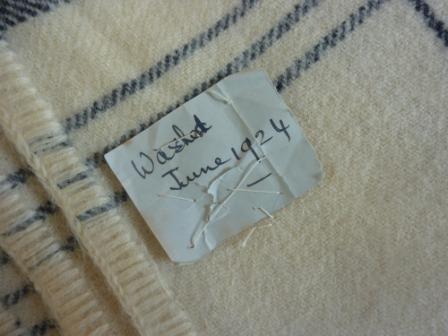
Memory is also vital to us in our lives as human beings. (And don’t you love the fastidiousness of the memory-aid pinned onto the old Welsh blanket that’s in my photo this week?) But what about forgetting? And is forgetting something different from forgetfulness?

Forgetfulness, it seems to me at present, is something we may just have to accept as a process that happens as we get older. It certainly seems to happen more and more to me and my contemporaries. Perhaps sometimes the problem in remembering something is just a temporary blip – you remember again a few hours later. At the time it occurs, however, it doesn’t half cause annoyance and frustration.

Forgetting, though: now what is that? (more…)

Storytelling Starters ~ Duck

Saturday, January 19th, 2013

On Thursday this week, there was ice. I went with my camera to Brockwell Park . The mid-day sun had turned the surface of the bigger pond into kaleidoscopes of sparkle and glitter. Ducks and Canada Geese and seagulls and moorhen were taking deliberate steps across the ice like little old men with sticks. Where ice had melted, they lowered themselves gingerly into the water and paddled about. When pieces of bread were thrown towards them – for several people arrived with bags of it – there’d be a sudden great flapping of wings and huge cacophonies of cawing as the birds rose up, chasing each other to the food.

Ducks

‘Ducks,’ I was thinking. ‘Ducks …’ The image must have been stirring my thoughts. For when I was on my way home, my brain suddenly dived back to a snapshot image that I remembered from an old story. It was an image of one or two ducks turning head down, tail up, diving for something deep below the surface and bringing up beakfuls of mud.

Snapshots from stories can display a powerful tenacity, lingering in the sub-conscious for years until something happens to reanimate them. (This is, of course, one of the reasons why stories are so important to humans, feedings our brains, creating connections.) But what was this story with its image of ducks? (more…)

Storytelling Starters ~ Memory Work 4

Tuesday, January 31st, 2012

Thinking about how you present a story can really help your memory of it. Props, rhythms, sounds, actions – this blog has talked about all these before. On the right, for instance, is my sea-tray which I featured in The Magic of Objects. But thinking about memory gives a timely prompt for thinking about such things again. Also useful is beginning to think about how different stories relate to each other. All over this earth, in every culture past and present,  are stories with similar themes. Developing an awareness of the relationships between them – what’s similar, what’s different – helps with an awareness of story in general. It develops the memory muscles. And that’s what storytelling is all about – developing your muscles as a storyteller so as to feel confident about sharing your stories and giving your listeners the pleasure of them too. It’s not work that ever ends. But as you go on, the process becomes part of the way that you think.

1. Developing effective presentation

Developing your thoughts about how to present your story can really help you as the storyteller. Decisions about presentation help embed your memory of what you are going to tell. For instance,  it’s important to pay attention to how your story will sound and where you may add good sound-effects. This applies whether your story is destined for adults or children. Refrains where appropriate can also add texture and help your audience to follow the direction the story is taking.

Another possibility if you’re telling to children is to introduce the story with some kind of game that not only relates to the story but encourages visualisation. (more…)

Storytelling Starters ~ Memory Work 3

Saturday, January 21st, 2012

Stories have shapes and structure – just like people or tables or trees. I love thinking about stories in these terms. It’s another kind of visualisation and it can lead to many happy half-hours with pencils and paper, doodling and drawing and finding ways to discover the different patterns underlying your stories.

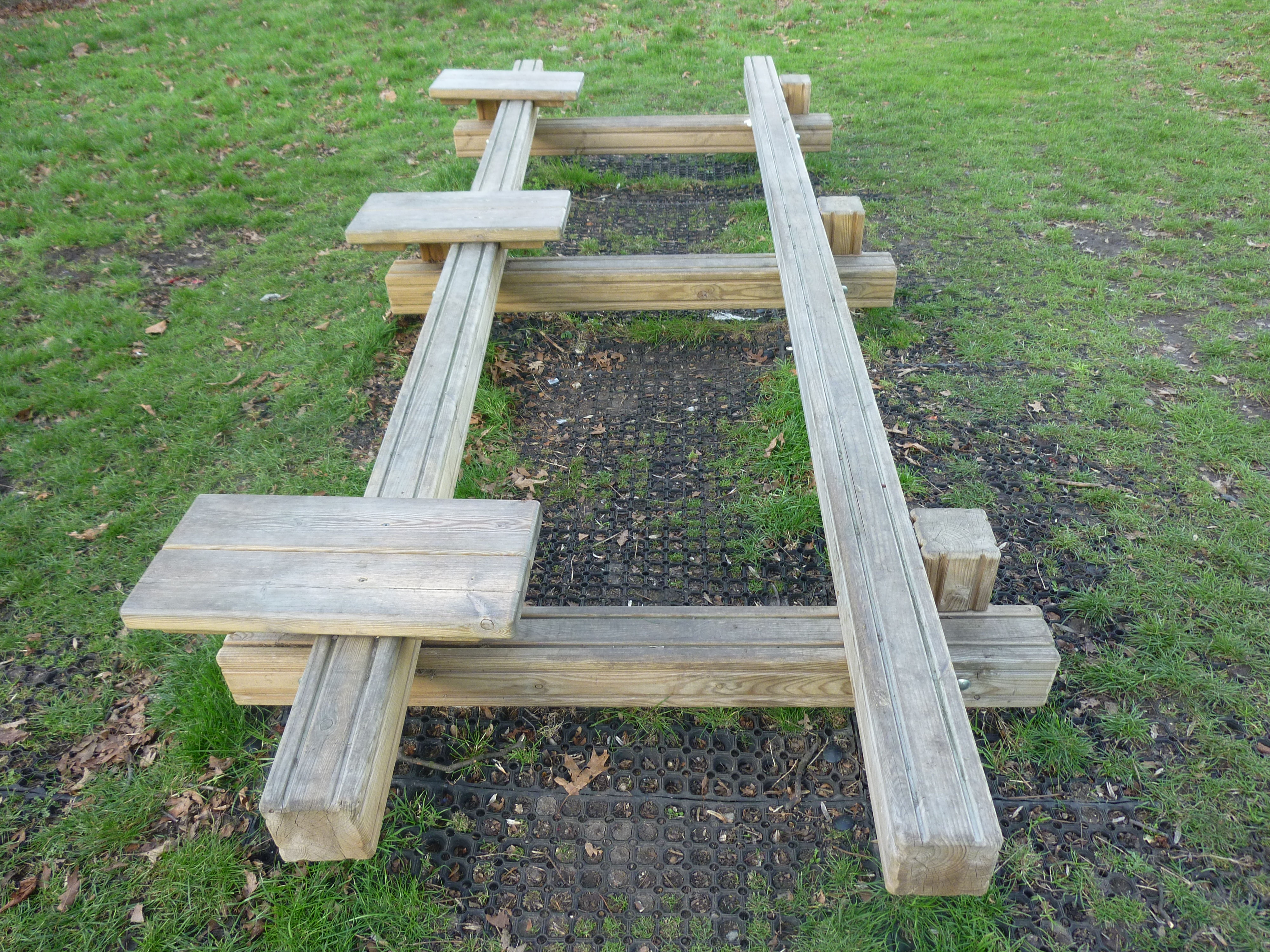
But how do you see it? There’s a question! Maybe you’re the kind of person who likes to look at things in a geometrical way, making patterns that look a little bit like the exercise structures in my local park.

Or perhaps you prefer to look for natural patterns such as those made by the branches of trees? (more…)

Storytelling Starters ~ Memory Work 1

Saturday, January 7th, 2012

What better time for thinking about memory than the start of a new year. And thinking about memory is what I plan to do in this blog over the next few weeks. I want to write about it in a descriptive way, paying account to how different kinds of remembering interconnect with each other. I hope you might respond with points from your own experience. Maybe they’ll tally with mine, maybe not.

Getting ready

As National Storytelling Week comes closer at the end of this month (details at http://www.sfs.org.uk/nsw), there’ll be people all over the UK engaged in work on remembering stories. Some may be nervously planning to tell a story for the very first time. Others will be old hands at both remembering and telling. Yet, though well-practised in the techniques, they too will be engaged in memory work – perhaps preparing a new story for one or other of the week’s events or maybe ‘re-remembering’, namely revisiting a story that they already know in preparation for retelling.

Some of my most fascinating chats about how memory works have been with a concert-pianist friend of mine who used to be my piano teacher. He has dozens of large-scale pieces of music literally at his finger-tips. If he was so disposed, he could sit down and play any or all of them straight off. Poor me, in contrast, I’m daunted at the prospect of memorising even one single page of music. How on earth do pianists do it? (more…)

Storytelling Starters ~ Making Connections 3

Saturday, November 19th, 2011

Time is key in modern life. In so many ways, we are governed by it. We keep track of it on watches and phones, schedule appointments on calendars and computers, set electronic beeps to remind us of upcoming events, timetable weekends and holidays along with our work. This week, Making Connections tells a traditional Native American story about the power that time exerts. It also suggests a key storytelling method that can help to get that power back.

Keys – and a tale for adults and older children

Background to the Story

How Mink Stole Time is a myth of the Salish people, a North American Indian people of the North West Pacific region. I myself have a personal link with Salish traditions. Some years ago, when the North American Welsh Choir asked me to suggest a story that could form the basis of a new commission for piano, choir and storyteller, I put forward a Salish story about the lifting of the sky and the bringing of light to the people. The resulting piece – Lifting the Sky – was composed by Canadian composer Victor Davies and American poet Carolyn Maddux and in its first performances in the Olympic Peninsula, I narrated the story. (more…)

Storytelling Starters ~ Making Connections 2

Saturday, November 12th, 2011

Making Connections moves on this week to another story involving a key and the role of pattern in it. It’s a story in the style of the traditional tale.

Keys – and a tale for telling to children

Traditional tales

Traditional tales are one of the three great categories of stories where storytellers look for stories to tell. For some, their favourite category is personal tales like my last week’s story of a forgotten key. Others believe that storytelling is essentially about creating new stories, maybe even making them up on the spot. That’s something we’ll move to in a couple of weeks.

For most of the working storytellers I know, however, traditional tales form the bedrock of the stories we tell. We may reformulate a story, update it, relocate it or otherwise change it in all kinds of ways. But we like to maintain that, whatever we do, traditional stories are fundamental. They’ve stood the test of time. They occur in all cultures. They contain keys to the problems of life. Myth or legend, fairy story or fable, ballad or morality tale, they are at the heart of storytelling.

For many people – new storytellers especially – this raises one immediate problem. (more…)